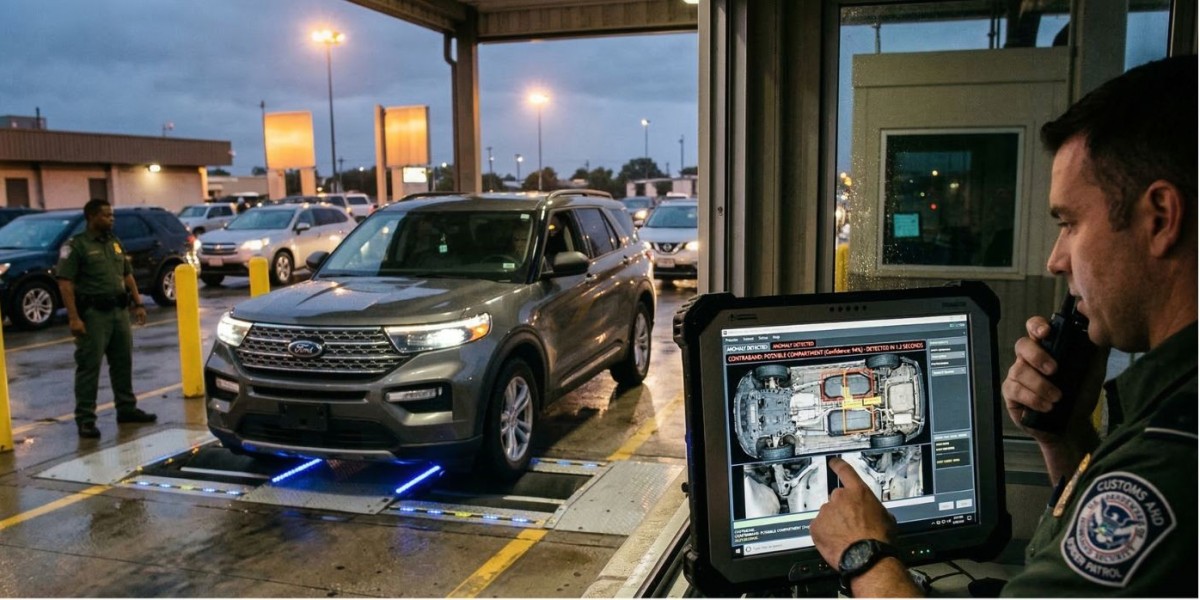

Security threats targeting facilities have evolved significantly over the past decade. Vehicles entering high-risk locations such as government buildings, data centers, military installations, airports, and industrial campuses are no longer simple to assess with basic visual checks. While manual vehicle inspections were once considered sufficient, they are increasingly unable to detect the sophisticated and concealed threats of today. Modern facilities are now turning to advanced screening technologies to close these gaps and ensure comprehensive protection.
This shift is not about replacing human security teams, but about empowering them with intelligent tools that reveal what the human eye can easily miss.
The Inherent Limitations of Manual Vehicle Inspections
Manual vehicle checks typically involve guards visually inspecting vehicles, using mirrors to glance underneath, or performing random physical searches. Although this approach may identify obvious issues, it suffers from several inherent weaknesses:
Limited visibility of the vehicle undercarriage
Inconsistent inspection quality across personnel
Human fatigue during long shifts
Time pressure at high-traffic entry points
Lack of reliable documentation
Threats hidden in vehicle underbodies, compartments, or structural modifications can easily escape notice, especially during peak traffic hours when inspections must be rushed. This creates security blind spots that modern facilities can no longer afford.
Why Vehicle Undercarriages Are High-Risk Zones
The underside of a vehicle is one of the most vulnerable and frequently exploited areas for concealment. It offers ample space for hiding unauthorized attachments, tracking devices, contraband, or even explosive components. Since undercarriages are rarely visible without specialized tools, they present an ideal location for threats designed to bypass conventional checks.
Manual inspections cannot provide a complete or detailed view of this area, making advanced detection methods essential for any facility serious about perimeter security.
Advanced Screening Technologies Close Critical Gaps
Modern vehicle screening solutions use a combination of high-resolution imaging, intelligent lighting, and automated analysis to inspect areas that manual methods simply cannot access effectively. These systems capture detailed visuals of the vehicle’s underside in real time and analyze them for irregularities.
By automating the inspection process, facilities gain:
Full undercarriage visibility
Consistent inspection quality
Immediate detection of anomalies
Faster processing without compromising security
This approach ensures that every vehicle is screened thoroughly, regardless of traffic volume or staffing limitations.
How Intelligent Analysis Improves Threat Detection
Advanced screening systems do more than just capture images—they analyze them. Intelligent software can compare current scans with baseline images, identify unusual shapes, and highlight changes that may indicate tampering or hidden objects.
Unlike human inspectors, these systems do not rely on memory or subjective judgment. They apply the same criteria to every vehicle, every time. This consistency significantly reduces the risk of oversight and strengthens overall security posture.
Facilities that deploy technologies such as UVIS benefit from automated undercarriage analysis that delivers precise, actionable insights to security teams, allowing them to focus attention where it is truly needed.
Maintaining Traffic Flow Without Compromising Security
One of the biggest challenges facilities face is balancing security with operational efficiency. Manual inspections often slow down entry points, causing long queues and frustration for authorized personnel and visitors.
Modern screening technologies are designed to operate seamlessly within traffic flow. Vehicles can be scanned as they move slowly over inspection zones, allowing:
Reduced wait times
Smoother entry operations
Higher throughput during peak hours
Consistent security enforcement
This ensures that strong security measures do not come at the cost of productivity or user experience.
Improved Documentation and Audit Readiness
Another critical advantage of modern vehicle screening is automated documentation. Manual inspections rarely produce detailed records, making audits, investigations, and compliance reporting difficult.
Advanced systems automatically log:
Inspection timestamps
High-resolution images
Vehicle identification data
Alerts and flagged anomalies
These records provide a reliable digital trail that supports regulatory compliance, internal reviews, and post-incident investigations. Facilities gain transparency, accountability, and confidence in their security processes.
Reducing Risk for Security Personnel
Manual under-vehicle inspections often require guards to kneel or lie near vehicles, placing them in close proximity to potential threats. This exposes personnel to unnecessary risk.
Automated screening systems eliminate this need by allowing inspections to be conducted remotely from a secure control area. This not only improves safety for security staff but also enhances morale and efficiency by reducing physically demanding tasks.
A Smarter Approach to Modern Facility Security
The role of security is no longer just about detection—it is about prevention, consistency, and intelligence. Modern facilities recognize that relying solely on manual checks leaves too many vulnerabilities exposed. By adopting advanced vehicle screening technologies, organizations can proactively detect threats that would otherwise remain hidden.
These systems provide deeper visibility, faster decision-making, and reliable documentation, enabling facilities to stay ahead of evolving risks while maintaining smooth operations.
Conclusion
Manual vehicle checks are no longer sufficient in an era of complex and concealed security threats. The limitations of human-led inspections create blind spots that can put facilities, personnel, and critical assets at risk. Modern screening technologies address these challenges by delivering comprehensive visibility, intelligent analysis, and consistent performance.
By embracing automated vehicle inspection solutions, facilities gain the ability to detect what manual checks miss—transforming vehicle screening from a routine task into a powerful layer of proactive security.