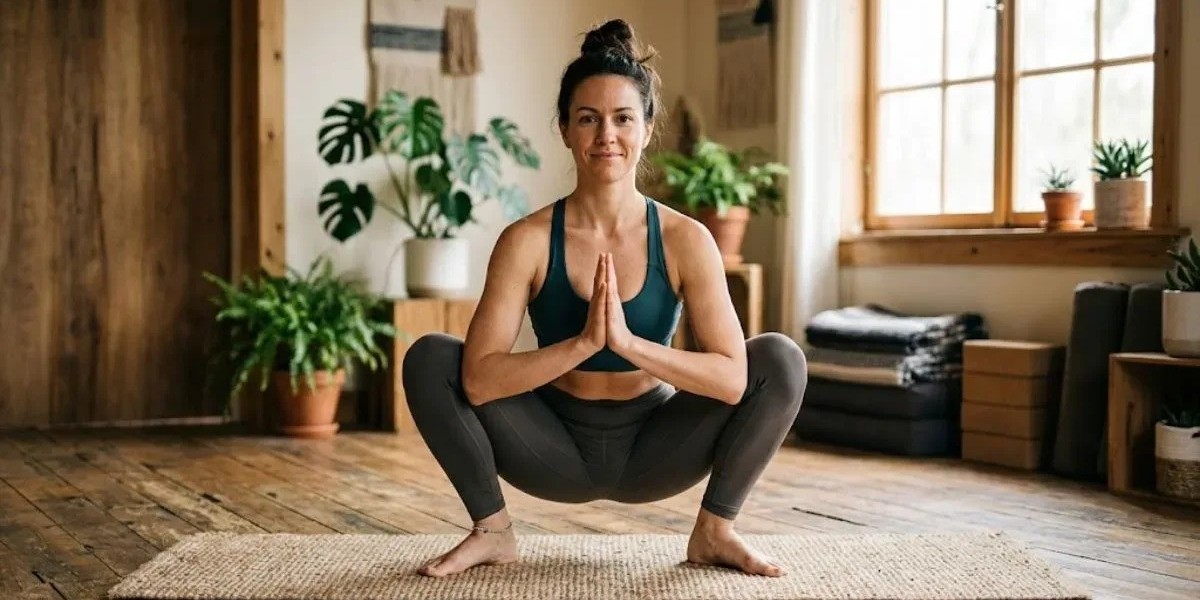

Yoga is a powerful practice that improves flexibility, balance, strength, and mental wellness. Among the many poses practiced in yoga, the yoga squat is one of the most effective postures for improving lower body mobility and overall body alignment. If you are wondering How to do a yoga squat, this detailed guide will help you understand the correct technique, benefits, precautions, and tips for mastering this grounding posture.
The yoga squat, also known as Malasana or Garland Pose, is a deep squatting posture commonly practiced in yoga sessions. It stretches the hips, strengthens the legs, opens the groin, and improves posture. This pose is suitable for beginners and advanced practitioners alike when performed correctly.
What Is a Yoga Squat?
A yoga squat is a deep squat posture where the feet remain grounded while the hips lower toward the floor. Unlike regular gym squats that focus mainly on strength training, yoga squats combine flexibility, mobility, balance, and mindful breathing.
Malasana is considered a natural resting position in many cultures. It encourages proper alignment of the spine while deeply stretching the hips, ankles, knees, and lower back.
Learning How to do a yoga squat properly can help reduce stiffness caused by long hours of sitting and improve overall movement in daily life.
Benefits of Practicing Yoga Squat
Before learning the steps, it is important to understand why yoga squats are beneficial for the body and mind.
1. Improves Hip Flexibility
The yoga squat deeply opens the hips and groin area. This helps increase mobility and reduces tightness caused by sedentary lifestyles.
2. Strengthens Lower Body Muscles
Practicing yoga squats engages the thighs, calves, glutes, and core muscles. Regular practice builds strength and endurance in the lower body.
3. Enhances Digestion
The compression created in the abdominal area during the pose stimulates digestive organs and may improve digestion naturally.
4. Supports Better Posture
A yoga squat encourages spinal elongation and alignment, helping improve posture and reduce lower back discomfort.
5. Increases Ankle Mobility
Many people experience stiff ankles due to limited movement. The yoga squat helps improve ankle flexibility and stability over time.
6. Relieves Stress and Tension
Like many yoga poses, mindful breathing during the squat promotes relaxation and mental calmness.
How to Do a Yoga Squat Step by Step
If you are a beginner, follow these simple instructions carefully to understand How to do a yoga squat safely and effectively.
Step 1: Start in a Standing Position
Stand upright with your feet slightly wider than hip-width apart. Keep your spine straight and shoulders relaxed.
Step 2: Turn Your Toes Slightly Outward
Point your toes outward at about a 30 to 45-degree angle. This positioning helps create space for the hips.
Step 3: Lower Your Hips Slowly
Begin bending your knees and lower your hips toward the floor as if sitting down. Keep your chest lifted and spine long.
Step 4: Bring Your Palms Together
Once you are in a deep squat, bring your palms together in a prayer position at the center of your chest.
Step 5: Press Elbows Against Knees
Use your elbows to gently press the knees outward. This helps deepen the hip stretch and maintain balance.
Step 6: Keep Your Heels Grounded
Try to keep your heels touching the floor. If your heels lift, place a folded blanket or yoga mat underneath for support.
Step 7: Breathe Deeply
Take slow and deep breaths while holding the posture for 30 seconds to 1 minute.
Step 8: Return to Standing
To release the pose, slowly straighten your legs and return to a standing position.
Practicing these steps regularly will help you understand How to do a yoga squat with better stability and comfort.
Common Mistakes to Avoid
Beginners often make small mistakes while practicing yoga squats. Avoiding these errors can help prevent discomfort or injury.
Rounding the Spine
Keep your chest lifted and spine straight instead of collapsing forward.
Lifting the Heels
Grounding the heels helps maintain stability and alignment.
Forcing the Hips Down
Do not push your body beyond its flexibility level. Gradually deepen the pose over time.
Holding the Breath
Breathing is essential in yoga. Maintain smooth and steady breaths throughout the posture.
Modifications for Beginners
If you find the yoga squat difficult initially, these modifications can help.
Use a Yoga Block
Place a yoga block or cushion under your hips for extra support.
Practice Near a Wall
Holding onto a wall can improve balance and reduce strain on the knees.
Widen the Feet More
A slightly wider stance may make the pose more comfortable for tight hips.
Support the Heels
Using a folded blanket beneath the heels helps improve stability if ankle flexibility is limited.
These beginner-friendly adjustments make learning How to do a yoga squat easier and safer.
Advanced Variations of Yoga Squat
Once you become comfortable with the basic yoga squat, you can explore advanced variations.
Twisting Yoga Squat
In this variation, rotate the upper body and place one hand on the floor while extending the opposite arm upward.
Bound Garland Pose
This advanced variation involves wrapping the arms around the legs and clasping the hands behind the back.
Yoga Squat with Forward Fold
Transitioning from a squat into a forward fold enhances flexibility in the spine and hamstrings.
Best Time to Practice Yoga Squat
The yoga squat can be practiced at different times depending on your routine.
Morning practice helps loosen stiff muscles and energize the body.
Evening practice releases tension accumulated during the day.
It can also be included in warm-up sequences before yoga sessions.
Avoid practicing immediately after heavy meals.
Who Should Avoid Yoga Squats?
Although yoga squats are generally safe, some individuals should practice caution.
People with Knee Injuries
Those with severe knee pain or injuries should consult a healthcare professional before attempting deep squats.
Individuals with Hip Problems
Certain hip conditions may require modifications or avoidance of the pose.
Pregnant Women
Pregnant women should practice under guidance from a qualified prenatal yoga instructor.
Tips for Improving Your Yoga Squat
If you struggle with the pose, these tips can help improve your progress.
Practice Daily
Consistency gradually improves flexibility and strength.
Stretch the Ankles and Hips
Warm-up exercises targeting the hips and ankles can make the squat more accessible.
Strengthen the Core
A strong core improves balance and posture during the pose.
Focus on Breath Awareness
Deep breathing helps relax the body and deepen stretches naturally.
Yoga Squat in Daily Life
The yoga squat is not only beneficial during yoga sessions but also useful in everyday activities. Improved mobility and posture can make movements like bending, lifting, and sitting more comfortable.
Many fitness experts also recommend yoga squats for maintaining healthy joints and reducing stiffness caused by prolonged sitting.
Yoga Squat vs Regular Squat
People often confuse yoga squats with gym squats, but they serve different purposes.
Yoga Squat | Regular Squat |
Focuses on flexibility and mobility | Focuses on strength and muscle building |
Held for longer durations | Repetitive movement |
Includes mindful breathing | Often performed quickly |
Opens hips and stretches muscles | Primarily targets lower body strength |
Understanding these differences helps practitioners choose the right exercise according to their fitness goals.
How Long Should You Hold a Yoga Squat?
Beginners can start by holding the posture for 20 to 30 seconds. As flexibility improves, gradually increase the duration to one or two minutes.
The key is maintaining proper form rather than holding the pose for too long.
Combining Yoga Squat with Other Yoga Poses
The yoga squat works well with many yoga sequences.
Cat-Cow Pose
Helps warm up the spine before entering the squat.
Downward Dog
Stretches the hamstrings and calves, improving squat mobility.
Child’s Pose
Provides relaxation after practicing deep squats.
Mountain Pose
Helps restore alignment and posture after the pose.
Final Thoughts
Learning How to do a yoga squat can greatly improve flexibility, strength, posture, and overall body awareness. This simple yet powerful pose opens the hips, strengthens the legs, and promotes relaxation through mindful breathing.
Beginners may initially find the pose challenging due to tight hips or ankles, but with consistent practice and proper modifications, the yoga squat becomes more comfortable over time. Whether you practice yoga for fitness, relaxation, or mobility, incorporating yoga squats into your routine can offer long-term physical and mental benefits.
Take your time, focus on alignment, and practice regularly to experience the full benefits of this grounding yoga posture.