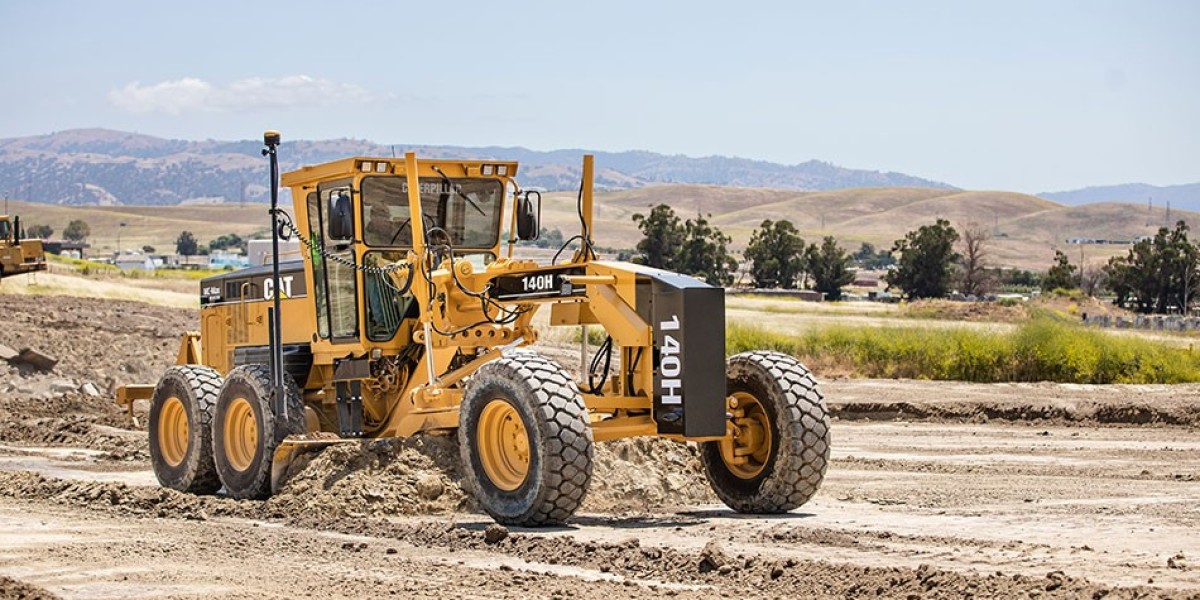

The issue that many contractors now ask is straightforward: can used motor graders support predictive maintenance? Predictive maintenance is transforming how construction fleets manage equipment. To put it simply, predictive maintenance makes use of real-time data to foresee faults before they occur.
Predictive maintenance is condition-based and significantly more effective than preventive maintenance, which adheres to set service intervals, or reactive maintenance, which repairs machinery following malfunctions. Fleet managers are increasingly investigating whether used motor graders may fit into this more intelligent maintenance strategy due to growing fuel prices, shorter project timeframes, and demand to minimize downtime.
Depending on how you handle technology, data, and machine capability, the solution is practical rather than merely theoretical.
What Is Predictive Maintenance in Motor Graders?
In motor graders, predictive maintenance refers to using data to monitor equipment health and forecast faults before they happen. For operators, this means more scheduled service intervals and fewer unplanned malfunctions.
Three essential technologies form the basis of the system. Fuel consumption and engine hours are among the operational data that telematics systems gather. IoT sensors gauge things like vibration, hydraulic pressure, and temperature. This data is then examined by machine learning technologies to find trends and spot irregularities.
For instance, pressure variations and a slow increase in hydraulic temperature can indicate a pump problem weeks before it fails. Predictive maintenance is so beneficial because it replaces guessing with data-driven decisions.
Do Used Motor Graders Have Predictive Maintenance Capabilities?
Predictive maintenance can be supported by used motor graders, although usually not natively. Rather, smart data integration, external devices, and retrofitting make it feasible.
New graders are often equipped with built-in sensors and telematics from the factory, preparing them for predictive systems. On the other hand, these features are frequently absent from older PCs. An age-based breakdown is a helpful way to comprehend this. Prior to 2010, graders mainly relied on scheduled maintenance and human inspections.
Models constructed between 2010 and 2018 might have limited data visibility and feature minimal telematics. With improved integration capabilities, machines built after 2018 are frequently more predictive-ready.
How Predictive Maintenance Works on Used Motor Graders
Several data sources are combined to perform predictive maintenance on used machinery. It is possible to install external telemetry devices to monitor performance and consumption. Digital logs of manual inspections provide an additional level of knowledge. Internal wear can be found using fluid analysis, particularly oil sampling, and recurrent problems can be contextualized with service history.
A condition monitoring system is produced by combining these inputs. For example, if a grader exhibits anomalous vibration and higher fuel consumption, it may be a sign of drivetrain issues or engine inefficiencies. Operators have enough time to take action since early warning indicators, such as temperature spikes or pressure decreases, can detect breakdowns weeks in advance.
Retrofitting Used Graders for Predictive Maintenance
Used motor graders can actually do predictive maintenance through retrofitting, which is something that rivals in the industry sometimes ignore.
The first approach is to use add-on telematics solutions. Installing many plug-and-play devices doesn't require significant changes, especially if the machine supports a CAN bus system. Sensor retrofits go one step further by equipping vital components with temperature gauges, oil condition monitors, and vibration sensors.
Fleet management platforms combine all incoming data into a single dashboard on the software side. Machine learning is used by sophisticated systems to automatically identify abnormalities and evaluate trends. Even older graders become data-generating assets thanks to this tiered method, which combines hardware and software.
Benefits of Predictive Maintenance for Used Motor Graders
The advantages are quantifiable and useful. The most direct benefit is decreased downtime since problems are found before they get worse. Since minor repairs are significantly less expensive than large component failures, lower repair costs automatically follow.
Additionally, predictive maintenance increases the lifespan of equipment, enabling operators to maximize the return on investment from older assets. By allowing maintenance scheduling based on real consumption rather than set intervals, it also enhances fleet planning.
Predictive maintenance can lower maintenance costs by up to 25% and breakdowns by over 70%, according to studies, making it an appealing tactic for fleets on a tight budget.
Limitations and Challenges
The strategy is not without difficulties, though. Older devices frequently don't have sensors built in, which means they need more money. Data accuracy may also be a problem, particularly if previous data are inconsistent or lacking.
Another challenge is integration. Not every legacy system can interact with contemporary software platforms with ease. The cost-versus-value argument is another. When machines are functioning in critical conditions or are heavily utilized, predictive maintenance is most beneficial. The investment might not always be worth the rewards for low-use equipment.
Cost Considerations: Is It Worth It?
Telematics hardware, sensor installation, and software subscriptions are all part of the expense of putting predictive maintenance into practice. Although this can seem important, return on investment is where the true assessment is found.
Even one prevented breakdown can cover the initial expense if a grader works on high-value assignments every day. Value is mostly determined by variables including utilization rate, jobsite criticality, and repair history. The investment frequently makes excellent financial sense for large fleets or high-hour machinery.
Real-World Use Cases
In reality, small contractors frequently begin with simple telematics to track consumption and receive repair warnings. Bigger fleets integrate predictive analytics across several machines. A hybrid strategy, in which older machines stick to improved preventative schedules and newer ones use predictive technologies, is advantageous for mixed fleet environments.
Best Practices for Implementation
To implement predictive maintenance effectively, start simple. Begin with telematics before moving into advanced analytics. Focus on high-failure components like engines and hydraulic systems. Use historical maintenance data to identify patterns, and train operators to report early warning signs.
Combining digital insights with manual inspections creates a balanced and reliable system that works even for older machines.
Future Trends: What’s Next?
The future points toward greater accessibility. Aftermarket telematics solutions are becoming more affordable, while AI tools are easier to deploy. Manufacturers are also expanding support for older equipment, and the concept of connected fleets is rapidly gaining traction.
Conclusion: Should You Use Predictive Maintenance on Used Motor Graders?
Indeed, used graders can benefit from predictive maintenance, but reasonable expectations are necessary. It works well in high-utilization settings and when downtime is expensive. It is available through retrofitting, however it should support appropriate maintenance methods rather than take their place. It provides a clear route to increased productivity and long-term savings for contractors who are prepared to make smart investments.