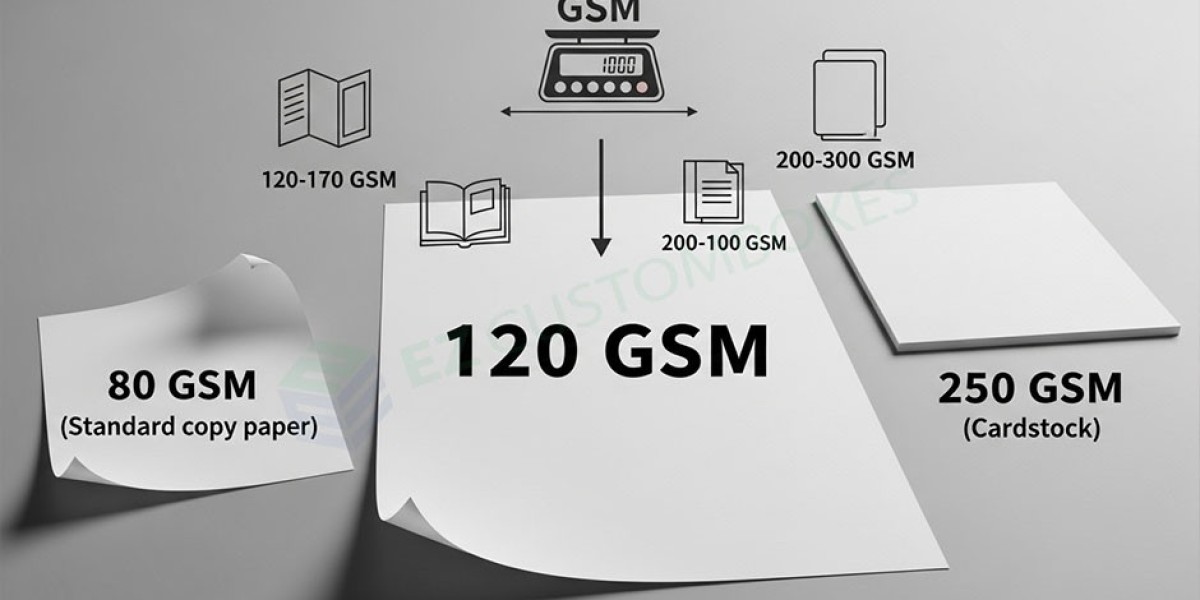

The first thing people get attracted to is the visual appearance of the packaging. But to make it visually appealing, it needs to be crafted from high-quality material. Let's talk about the GSM paper thickness. It is one of the reasons that makes the box strong and looks premium. Research suggested that people associate heavy packaging with high quality. If the brands want to impress their customers. To protect the product inside and create their high-quality image in the market, they should consider GSM essential, not just optional.
What is a GSM paper?
What is a GSM paper. GSM is a worldwide measurement used to define the weight and thickness of paper or cardboard. The higher thickened means more durable the box is.
For example:
80 GSM = this is thin paper usually used in offices
200 GSM = means medium thickness, which is preferred for brochures and flyers
350+ GSM = These are thick papers considered to be premium packaging.
Note: GSM measures weight; it does not usually mean stiffness. This is the reason the two papers with the same GSM can feel completely different depending on their manufacturing process.
Why GSM Matters More Than You Think
The brands that are really serious about their products have to understand the real value of GSM and how it impacts performance.
1. Product Protection
The use of higher GSM makes the box stronger to stand against external pressure or mishandling. They also keep the product fully safe from other environmental factors, such as moisture. So the brands can be carefree when they choose high-quality GSM for their fragile items.
2. Brand Perception
People associate high quality with heavier packaging. They perceive the thick box with the high value and build their trust.
“Packaging isn’t just a container—it’s a communication tool.”
— Packaging Industry Insight Report
3. Printing Results
The thickness of the GSM paper also affects printing; for example, thicker paper gives more vibrant and sharper colors. It is most important to choose the correct thickness; otherwise, it will lead to dull prints or ink bleeding.
Common GSM Ranges and Their Uses
Here’s a practical breakdown that helps you choose wisely:
35–55 GSM → Newspaper, lightweight prints
70–100 GSM → Office paper, notebooks
120–170 GSM → Flyers, posters
200–300 GSM → Brochures, premium leaflets
350–600 GSM → Packaging boxes, luxury cards
How to Choose the Right GSM for Your Needs
Choosing GSM isn’t about picking the highest number—it’s about selecting what fits your purpose.
The most important factor is to consider the product weight; if the product is heavy, then it requires a higher GSM or corrugated support. Whereas light items can use a lower GSM.
Consider the travelling distance; if the product has to travel for a longer distance, then the brands need to opt for a thicker GSM. It will protect the product inside.
Brands also choose how they want to position themselves; if they want to portray themselves as a luxury brand, they can choose the thicker GSM paper, while for everyday products, the 250-300 GSM paper can work for them.
Before finalizing the paper, GSM brands should request the samples.
The Hidden Factors Most People Ignore
This is where many guides fall short—but understanding these can give you a real advantage:
1. Paper composition, such as virgin fiber paper, is stronger compared to recycled paper, even if the GSM is the same.
2. Coating and Finish: Use of lamination or coating also affects the thickness perception.
3. Moisture Resistance: Thicker paper provides better resistance to humidity.
4. Folding Behavior: Thicker paper may get cracked when folded, and this is important for packaging design
Final Thoughts
As a brand, if you want to understand the GSM paper sizes, do remember it's not just a technical detail, but it's a strategic decision. It may be considered a weight measurement, but actually, it affects the product's safety. To get the perfect GSM paper size for your products, you should consider the packaging company EZ Custom Boxes. They offer packaging and guidance to select the perfect GSM for performance, cost-efficiency, and brand impact.
Email: support@ezcustomboxes.com
Phone: +1-888-515-1263
Frequently Asked Questions (FAQs)
1. Is a higher GSM always better for packaging?
If the product is lightweight, the higher GSM adds unnecessary cost.
2. Can two papers with the same GSM feel different?
Yes, because it also depends on fiber quality, coating, and the manufacturing process.
3. What GSM is best for eco-friendly packaging?
Recycled paper between 250–350 GSM is commonly used.
4. Does GSM affect printing quality?
The thicker GSM absorbs ink better and gives sharp printing.
5. How do I test the right GSM before ordering?
Request the samples and test them according to your product
6. Is GSM the same as thickness in mm?
GSM measures weight, but the thickness means the density and composition of the paper.
7. What GSM is ideal for luxury packaging?
Typically, 350–600 GSM; to make them more luxurious, the brands can combine it with lamination or rigid material