
In the world of shooting—whether for tactical applications, professional competition, or recreational hunting—the connection between the eye and the target is everything. This connection is defined by the gun sight. While the fundamentals of aiming haven't changed, the optoelectronic technology behind these devices has undergone a massive transformation in 2026.
At ARVR Optical, we specialize in the high-precision lenses and micro-display modules that power the next generation of sighting systems. Understanding the different types of sights and the technical specs behind them is essential for any buyer looking to improve their accuracy and target acquisition speed.
What is a Gun Sight?
A gun sight is an optical or physical device used to assist in the precise aiming of a firearm. Its primary job is to align the shooter's line of sight with the weapon's barrel, ensuring that the point of aim matches the point of impact.
Modern sights have evolved from simple "iron" markers to sophisticated electronic systems that use lasers, holograms, and digital overlays to provide real-time ballistic data. For both new buyers and seasoned experts, choosing the right system depends entirely on the shooting environment and the distance to the target.
Types of Modern Sighting Systems
At ARVR Optical, we categorize high-performance sights into four main groups based on their optical architecture:
1. Iron Sights
The classic, battery-free choice. These consist of a front post and a rear notch. While they are incredibly durable and reliable, they require the shooter to align three points (the rear sight, the front sight, and the target), which can be slow in high-pressure situations.
2. Red Dot Sights (Reflex Sights)
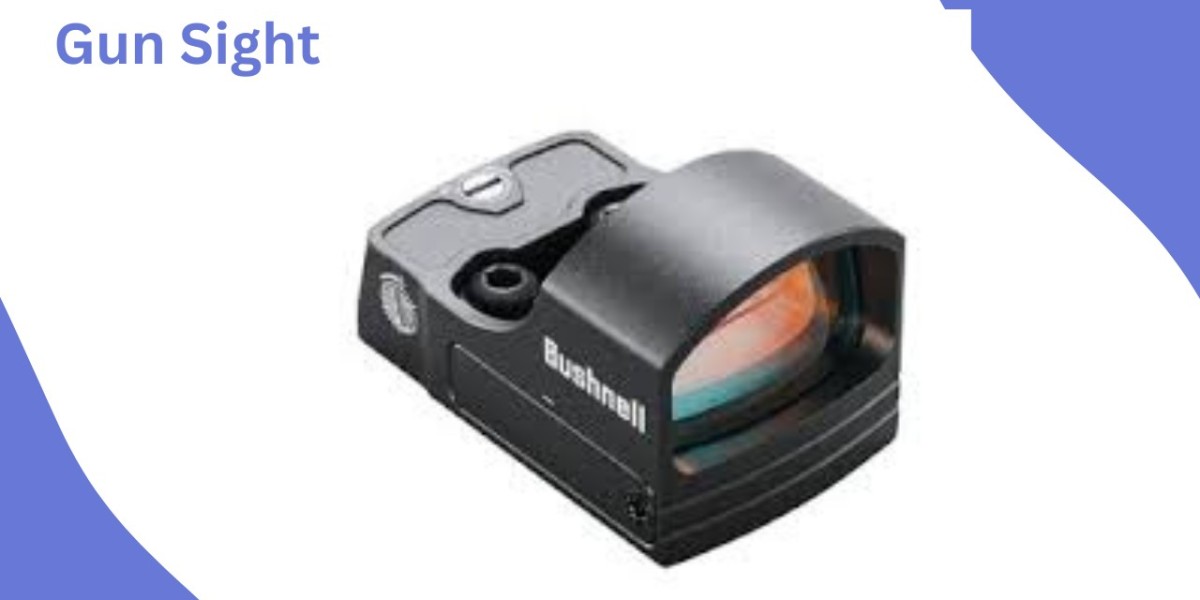
Red dots are the gold standard for close-to-mid-range shooting. They project an illuminated "dot" onto a lens that reflects back to the shooter's eye. Because the dot appears to float on the target, you can keep both eyes open, maintaining full situational awareness.
3. Holographic Sights
Unlike red dots, which reflect light off a lens, a holographic gun sight uses a laser-recorded hologram of a reticle. This technology, perfected by brands like EOTECH, ensures that the aiming point remains sharp even if the front lens is damaged or covered in mud.
4. Telescopic Sights (Scopes)
For long-range precision, a telescopic sight uses a series of magnifying lenses. In 2026, these are often "Smart Scopes" that integrate digital displays to show windage, elevation, and target distance directly in the shooter's field of vision.
Key Technical Specs to Consider
When you are looking to outrank the competition on the range or in the market, these technical details make the difference:
Parallax Free: A high-quality gun sight should be "parallax-free" at certain distances. This means that even if your head moves slightly, the reticle stays on the target.
MOA (Minute of Angle): This measures the size of the dot. A 1 MOA dot covers 1 inch of the target at 100 yards. Smaller dots are better for precision; larger dots are better for speed.
Light Transmission: The quality of the glass and its coatings determines how much light reaches your eye. ARVR Optical uses multi-layer anti-reflective coatings to ensure clear vision even in low-light dawn or dusk conditions.
Eye Relief: This is the distance from your eye to the lens. For high-recoil firearms, long eye relief is critical to prevent the sight from hitting the shooter during firing.
The Role of Optoelectronics in 2026
The industry is currently moving toward "Multi-Spectral Sighting." By integrating a gun sight with thermal or night-vision sensors, shooters can now see targets through smoke, fog, or total darkness.
At ARVR Optical, we provide the micro-display modules and "Birdbath" optical engines that allow these digital overlays to appear crisp and lag-free. We are also seeing a rise in Bluetooth-connected sights that sync with smartphone apps to track shooting performance and store ballistic profiles for different types of ammunition.
Maintenance and Durability
A gun sight is only as good as its ability to hold "zero"—meaning it stays aligned with the barrel after thousands of rounds of recoil.
Shockproofing: Modern sights are nitrogen-purged and O-ring sealed to be both shockproof and fog-proof.
Battery Life: With the advent of motion-sensing technology (where the light turns off when the gun is still), modern LED sights can now last over 50,000 hours on a single battery.
Why Choose ARVR Optical?
Why do professionals trust ARVR Optical? We bring the precision of the AR/VR world to the tactical industry. We understand that in a high-stakes environment, there is no room for lens distortion or electronic lag.
Our sighting components are built using semiconductor-grade manufacturing, ensuring that every lens and every reticle is mathematically perfect. We don't just build sights; we build the confidence that when you pull the trigger, you are exactly on target.
Conclusion
Choosing a gun sight is a deeply personal decision that depends on your mission, your weapon, and your skill level. From the simplicity of a red dot to the advanced intelligence of a digital telescopic scope, the right optic is the most important upgrade you can make to your firearm.
As technology continues to integrate AI and thermal imaging into smaller, more durable housings, the line between "analog" and "digital" shooting will continue to blur. At ARVR Optical, we are proud to be leading this charge, providing the clarity and innovation that the modern shooter demands. Invest in quality, understand your specs, and always aim for excellence.