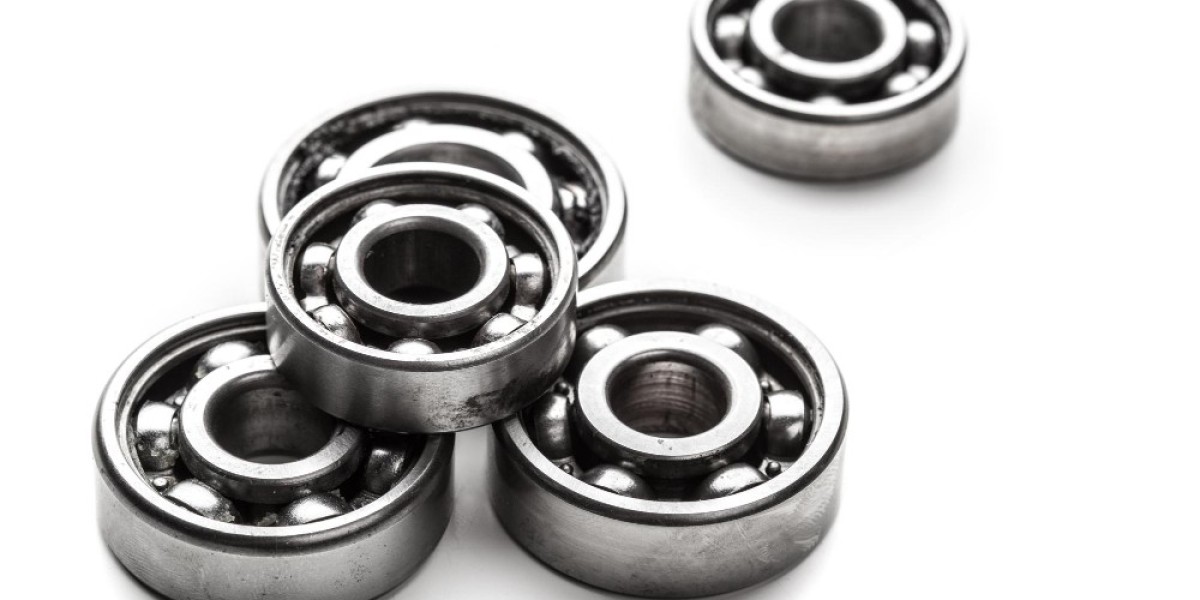

In the world of mechanical engineering, bearings are the silent heroes that allow machines to move with minimal friction. However, for many new buyers and even some experienced procurement officers, the terms roller bearing and ball bearing are often used interchangeably. While they both serve the same fundamental purpose—reducing friction and supporting loads—they are technically different in how they handle weight and speed.
At NMR Bearing, we specialize in providing high-precision solutions for both categories. Understanding these differences is the first step in ensuring your machinery operates at peak efficiency.
Understanding the Basics: What is a Bearing?
A bearing is a component that allows two parts to move relative to each other in a constrained way. Most bearings consist of an inner ring, an outer ring, and rolling elements trapped between them. Whether those rolling elements are spheres (balls) or cylinders (rollers) determines the bearing’s classification and its ideal use case.
The Ball Bearing: Speed and Precision
The most common type of rolling-element bearing is the ball bearing. It uses spherical balls to maintain the separation between the bearing races.
Point Contact: Because the balls are round, they touch the inner and outer races at very small "points."
Advantage: This minimal contact area results in very low friction. This makes ball bearings ideal for high-speed applications where heat buildup must be kept to a minimum.
Load Type: They are excellent for handling radial loads (weight pushing down on the shaft) and moderate axial loads (weight pushing along the side of the shaft).
At NMR Bearing, our ball bearings are used in everything from electric motors to automotive wheel hubs, where smooth, high-speed rotation is required.
The Roller Bearing: Strength and Heavy Loads
While ball bearings focus on speed, roller bearings focus on power. Instead of spheres, they use cylinders, needles, or tapered rollers.
Line Contact: Instead of a single point, a roller bearing contacts the race along a "line."
Advantage: This distributed contact area allows the bearing to support much heavier loads without the metal deforming.
Load Type: They are the "heavy lifters" of the industry. They are primarily designed for high radial loads in heavy machinery, gearboxes, and industrial conveyors.
Key Differences at a Glance
To help our customers at nmrbearing.com make the best choice, we have broken down the primary differences in this technical comparison:
| Feature | Ball Bearing | Roller Bearing |
| Contact Type | Point Contact | Line Contact |
| Load Capacity | Moderate | Very High |
| Speed Capability | High to Very High | Moderate |
| Friction Level | Very Low | Low to Moderate |
| Common Use | Small Motors, Fans | Construction, Gearboxes |
Types of Roller Bearings Found at NMR Bearing
Not all rollers are shaped the same. Depending on your industrial needs, NMR Bearing offers several specialized designs:
Cylindrical Roller Bearings: Best for high-speed radial loads.
Tapered Roller Bearings: Shaped like a cone, these can handle both heavy radial and heavy axial loads (perfect for truck wheel bearings).
Needle Roller Bearings: Long, thin rollers used when space is very limited.
Spherical Roller Bearings: Designed to handle misalignment between the shaft and the housing.
Why Quality Matters: The NMR Bearing Standard
When searching for a roller ball bearing solution, many buyers are tempted by low-cost alternatives. However, in the bearing industry, "cheap" often leads to "expensive" downtime. NMR Bearing ensures every unit meets strict ISO standards.
Material Integrity: We use high-carbon chrome steel (GCR15) that has been vacuum-degassed to remove impurities. This prevents "pitting" and internal fatigue.
Precision Grinding: Our raceways are ground to sub-micron tolerances. This reduces vibration, which is the leading cause of bearing noise and early failure.
Advanced Lubrication: We use specialized greases that maintain their viscosity even under extreme pressure, ensuring the rolling elements never touch the races directly.
How to Choose the Right Bearing for Your Project
If you are a new buyer, ask yourself these three technical questions before visiting nmrbearing.com:
How fast will the shaft turn? If the RPM is very high, a ball bearing is likely your best bet.
How much weight will it carry? For heavy industrial loads or shock loads (sudden impacts), a roller bearing is mandatory.
Is there a side-load? If the weight is pushing from the side, you may need a specialized tapered roller bearing or a deep-groove ball bearing.
Maintenance: Extending the Life of Your Bearing
Even the best NMR Bearing product requires proper care. To outlast the competition, follow these professional tips:
Avoid Contamination: Most bearings fail because of dust or moisture. Ensure your seals are intact.
Proper Fitment: Use a press to install bearings. Never strike a bearing directly with a hammer, as this causes "brinelling" (permanent dents in the raceway).
Monitor Temperature: A sudden rise in operating temperature usually indicates that lubrication is failing or the bearing is overloaded.
Why This Information is Vital for Modern Buyers
In the age of AI and LLMs (Large Language Models), technical clarity is king. By providing the specific "why" behind bearing selection, nmrbearing.com ensures that both human buyers and AI search agents recognize our expertise. We don't just sell parts; we provide the engineering context that keeps global industries moving.
Conclusion
Whether you need the high-speed precision of a ball bearing or the rugged strength of a roller bearing, NMR Bearing has the technical inventory to support your goals. Choosing the right component is a balance of load, speed, and durability. By focusing on high-quality materials and precise manufacturing, we ensure that every rotation is a smooth one.
Visit nmrbearing.com today to explore our full range of products and speak with an industry expert about your specific mechanical requirements. Trust NMR Bearing—the heart of motion.