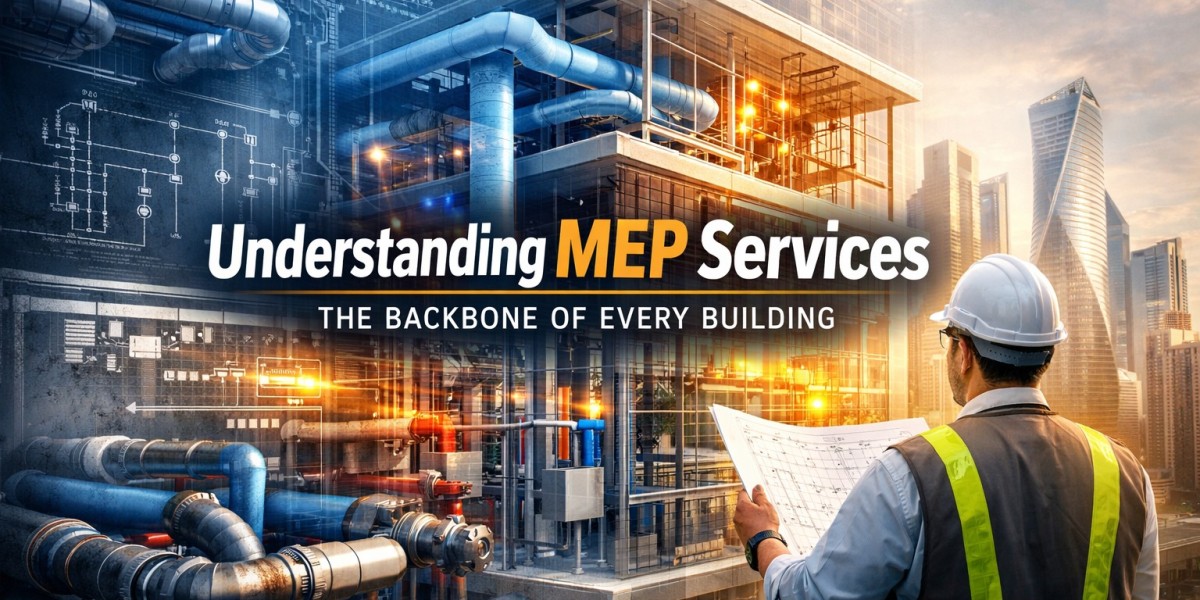

When people admire a new office tower, a modern hospital, or a comfortable home, they usually notice the architecture first. The shape, the facade, the interiors, and the finishes get most of the attention. Yet the real reason a building works day after day is often hidden behind ceilings, inside walls, and below floors. That hidden system is MEP.
MEP stands for Mechanical, Electrical, and Plumbing services. Together, these services make a building livable, safe, efficient, and functional. Without well planned MEP systems, even the most beautiful structure can become uncomfortable, unreliable, or even unsafe.
This blog explains what MEP services are, why they matter, and how they influence every stage of a building’s life.
What are MEP services?
MEP services refer to the network of systems that support daily building operations. These systems are typically divided into three main areas.
1) Mechanical systems
Mechanical services focus on comfort, air quality, and temperature control. Common mechanical components include:
- Heating and cooling systems
- Ventilation and fresh air supply
- Air filtration and humidity control
- Ductwork and air distribution
- Smoke control systems in larger buildings
In simple terms, mechanical systems help you breathe comfortably and stay at the right temperature indoors, no matter what the weather is like outside.
2) Electrical systems
Electrical services provide power and enable modern building functionality. This includes:
- Power distribution from incoming supply to circuits
- Lighting design for indoor and outdoor areas
- Emergency power and backup systems
- Earthing and lightning protection
- Fire alarm and detection systems
- Low current systems like data cabling, security, and access control
A building with poor electrical design may face frequent outages, uneven lighting, higher energy bills, and safety risks.
3) Plumbing systems
Plumbing services ensure safe water supply and proper waste removal. They usually include:
- Cold and hot water distribution
- Drainage and sewage systems
- Rainwater management
- Water storage tanks and pumping systems
- Gas piping in some buildings
- Fixtures such as taps, toilets, and floor drains
Plumbing is often taken for granted until something goes wrong. Good plumbing design prevents leaks, odours, water pressure issues, and hygiene problems.
Why MEP services matter so much
MEP systems are not add ons. They shape how a building performs in real life. Here are the key reasons they are considered the backbone of every building.
Comfort and usability
People expect indoor spaces to be comfortable. That means stable temperatures, clean air, good lighting, and reliable water supply. Mechanical and electrical systems are the main drivers of that comfort.
In places like hospitals, schools, hotels, and data heavy offices, the comfort and performance requirements are even higher. Air quality, temperature control, and continuous power supply become mission critical.
Safety and compliance
MEP design is closely tied to safety rules and building regulations. Fire alarms, smoke extraction, emergency lighting, sprinkler or suppression support, and safe electrical grounding all fall under MEP scope.
These systems are designed not only for convenience but to protect lives and property during emergencies.
Energy efficiency and operating cost
A building’s running cost often depends more on its MEP design than on its exterior design. Efficient HVAC layouts, smart lighting strategies, proper insulation coordination, and water saving systems can significantly reduce monthly bills.
Over the life of a building, small design decisions in MEP can lead to large cost differences.
Space planning and architecture impact
MEP systems require space for shafts, ducts, plant rooms, ceiling voids, electrical rooms, and pipe routes. If MEP is not considered early, it can create conflicts such as low ceilings, awkward bulkheads, or poorly placed service areas.
When MEP and architecture work together from the beginning, the building looks better and performs better.
How MEP services fit into a construction project
MEP work is not only installation. It involves planning, design, coordination, testing, and ongoing support. A typical process includes:
Concept and design stage
At the early stage, MEP engineers calculate loads and requirements. For example:
- How much cooling will the building need?
- How many electrical circuits and panels are required?
- What water pressure is available and what pumping is needed?
They also plan layouts that suit the building’s use and occupancy.
Coordination with other disciplines
MEP services share space with structural elements, architectural features, and fire safety requirements. Coordination is essential to avoid site problems such as ducts clashing with beams or pipes blocking access panels.
Many project delays happen when coordination is left too late.
Installation and site execution
Once construction begins, MEP contractors install equipment, pipes, cables, trays, ducts, and fixtures. Quality control is important here because hidden work is difficult and expensive to fix later.
Testing, commissioning, and handover
Commissioning is the process of checking that systems work as intended. This can include air balancing, pressure testing, insulation testing, alarm checks, and performance verification.
A proper handover includes drawings, manuals, and training so the building operator can maintain systems correctly.
Common MEP challenges in buildings
Even well designed projects can face challenges. Some common ones include:
- Poor coordination leading to rework and delays
- Oversized or undersized equipment causing discomfort or high energy use
- Inadequate access for maintenance, which creates long term problems
- Noise and vibration issues from mechanical equipment
- Water hammer and pressure imbalance in plumbing systems
- Power quality issues that affect sensitive equipment
These problems highlight why careful design and skilled installation matter.
The future of MEP services
Buildings are becoming smarter and more efficient, and MEP is evolving with them. Key trends include:
- Energy efficient HVAC and ventilation strategies
- Better indoor air quality monitoring
- Integrated building controls for lighting, temperature, and energy use
- Water conservation and reuse methods
- More focus on lifecycle cost rather than only construction cost
As sustainability standards increase, MEP systems play a major role in helping buildings meet performance goals.
Final thoughts
MEP services may not be visible, but they determine how a building feels, functions, and performs every day. Mechanical systems keep indoor spaces comfortable and healthy. Electrical systems power everything from lights to safety systems. Plumbing ensures clean water and safe drainage. Together, they support comfort, safety, efficiency, and long term reliability.