
Wholly Owned Subsidiary in India: A Complete Expansion Guide for UK & European Companies
Expanding into international markets is a strategic move for any business looking to grow revenue, diversify operations, and strengthen brand visibility. For UK and European companies, India represents one of the fastest-growing economies in the world, offering access to a vast consumer base, skilled workforce, and investment-friendly policies.
One of the most effective ways to enter the Indian market is through a wholly owned subsidiary (WOS). This approach allows companies to retain full control over their operations, protect intellectual property, and streamline business strategy while complying with Indian regulations.
This guide provides a comprehensive overview of establishing a wholly owned subsidiary in India, including benefits, legal requirements, step-by-step setup, costs, challenges, and strategic considerations.
Understanding a Wholly Owned Subsidiary
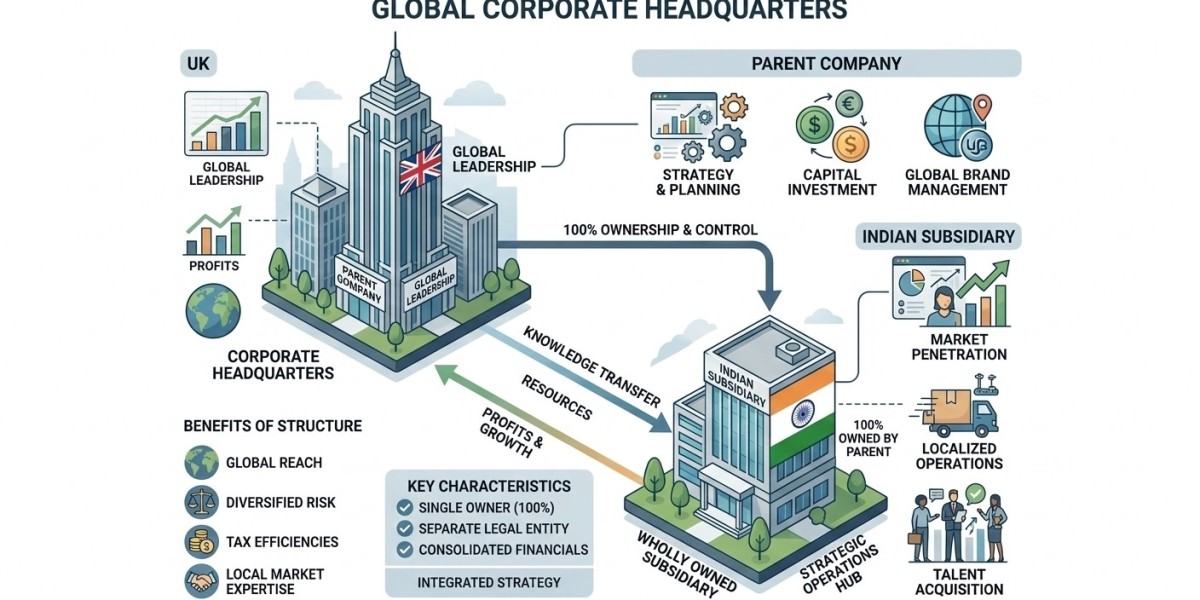
A wholly owned subsidiary is a company registered in India that is 100% owned by a foreign parent company. Unlike joint ventures, where ownership and control are shared, a WOS allows the parent company to manage operations independently, ensuring alignment with global business strategy.
This structure is particularly advantageous for UK and European businesses seeking direct market entry, control over local operations, and long-term growth potential.
Advantages of a Wholly Owned Subsidiary in India
1. Full Operational Control
A WOS provides the parent company with complete authority over all business decisions, including marketing, sales, operations, and human resources.
2. Protection of Intellectual Property
With 100% ownership, the parent company safeguards its technology, trademarks, patents, and proprietary processes from potential misuse.
3. Market Credibility
Having a legal entity in India strengthens the company’s brand presence, builds trust with clients and partners, and demonstrates commitment to the market.
4. Profit Repatriation
Earnings from the subsidiary can be legally repatriated to the parent company in accordance with Indian regulations, providing financial flexibility for international operations.
5. Access to Skilled Workforce
India offers a large pool of skilled professionals. A wholly owned subsidiary allows direct recruitment, ensuring adherence to global standards and operational efficiency.
6. Compliance and Incentives
Most sectors in India permit 100% foreign direct investment (FDI), simplifying regulatory compliance and offering potential government incentives.
Legal Requirements for a Wholly Owned Subsidiary
Setting up a WOS in India involves compliance with several legal frameworks:
- Companies Act, 2013: Register as a private or public limited company under the Ministry of Corporate Affairs (MCA).
- Foreign Direct Investment Policy: Most sectors allow automatic approval for 100% FDI, while certain sectors require government approval.
- Taxation: Obtain PAN (Permanent Account Number), GST registration, and comply with corporate tax laws.
- Labor Compliance: Follow Indian labor laws, provident fund contributions, and employee benefit regulations.
- Annual Filings: Submit annual returns, audited financial statements, and maintain statutory records in compliance with the Companies Act.
Step-by-Step Process to Establish a WOS
1. Decide on Company Structure
Foreign investors commonly choose a private limited company for flexibility and limited liability. A public limited company may be suitable for large-scale operations with plans to raise capital from the public.
2. Reserve a Company Name
Apply for name approval through the MCA portal. Ensure the name is unique, complies with regulations, and avoids trademark conflicts.
3. Prepare Incorporation Documents
Documents typically include:
- Memorandum of Association (MoA)
- Articles of Association (AoA)
- Proof of parent company registration
- Board resolutions approving Indian incorporation
4. Obtain Digital Signatures and DINs
Directors must secure Digital Signatures and Director Identification Numbers (DINs) to submit filings online.
5. File Incorporation Forms
Submit forms electronically to the MCA. Upon approval, a Certificate of Incorporation is issued.
6. Open Bank Account and Inject Capital
Open an Indian bank account and deposit the initial share capital while adhering to RBI regulations.
7. Register for Taxes and Licenses
Obtain PAN, GST, and any sector-specific licenses required for business operations.
8. Commence Operations
Once all registrations, licenses, and approvals are complete, the wholly owned subsidiary can legally operate in India.
Estimated Costs
The cost of establishing a WOS varies based on company structure, authorized capital, and professional fees:
- Incorporation and registration fees: ₹50,000–₹2,00,000 (~£500–£2,000)
- Legal, accounting, and consultancy services: ₹50,000–₹1,50,000 (~£500–£1,500)
- Ongoing compliance and operational costs: ₹1,00,000–₹3,00,000 (~£1,000–£3,000) annually
Challenges and Considerations
While a WOS offers numerous advantages, UK and European companies should consider:
- Cultural Adaptation: Indian business practices differ from Europe; understanding local customs is essential.
- Regulatory Complexity: Navigating FDI regulations, labor laws, and taxation requires expert guidance.
- Long-Term Commitment: A WOS demands financial investment and active management.
- Operational Planning: Human resources, supply chain, and marketing strategies must be carefully structured.
Strategic Best Practices
- Conduct Market Research: Analyze demand, competitors, pricing, and consumer preferences before entering the market.
- Hire Local Experts: Legal, accounting, and business consultants help ensure smooth regulatory compliance.
- Build Strong Relationships: Networking and cultural understanding enhance business partnerships and credibility.
- Financial Structuring: Plan profit repatriation, investment allocation, and operational budgets carefully.
- Brand Development: Establish trust through transparency, compliance, and quality services.
How Stratrich Supports Your Expansion
Stratrich helps UK and European businesses establish wholly owned subsidiaries in India by providing:
- End-to-end company incorporation and registration
- FDI approvals and regulatory compliance support
- Tax registration, accounting, and audit assistance
- Market entry strategy and advisory services
- Ongoing operational and compliance support
With Stratrich, companies can confidently enter India, streamline operations, and achieve long-term growth.
Conclusion
A wholly owned subsidiary in India provides UK and European businesses with complete control, access to a growing market, and protection of intellectual property. By understanding the legal framework, following a structured setup process, and leveraging expert guidance, companies can successfully establish a WOS that drives long-term success.
India’s dynamic economy, skilled workforce, and investment-friendly policies make it an ideal destination for international business expansion. Partnering with Stratrich ensures a smooth, compliant, and profitable entry into this promising market.