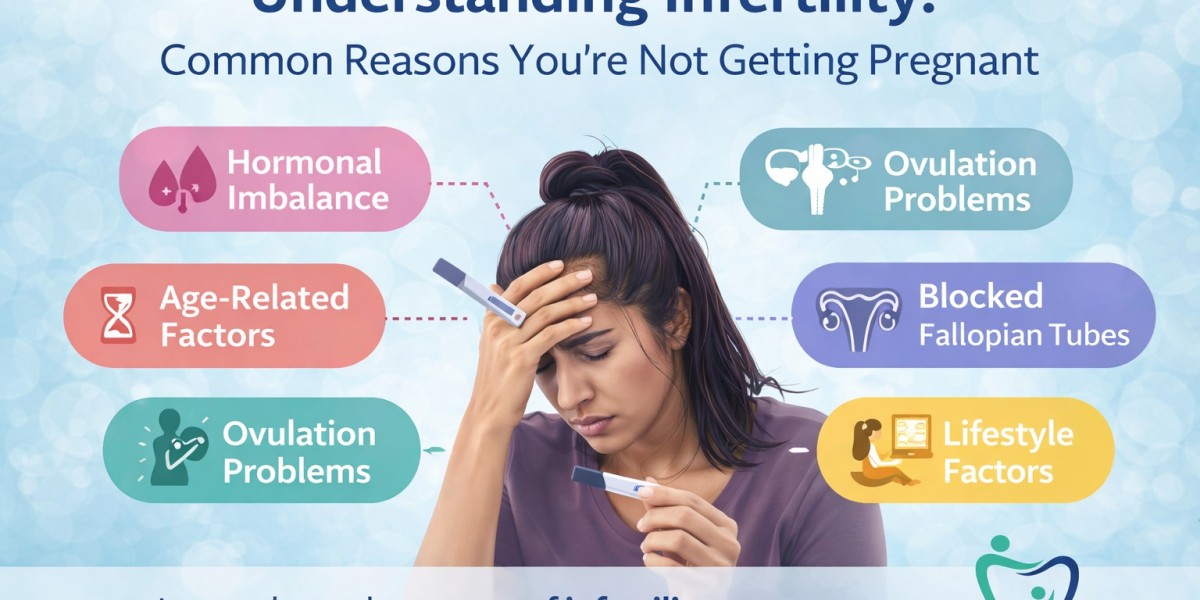

Struggling to get pregnant can feel overwhelming, especially when your reports look normal and you don’t know what’s going wrong. Many couples in Ravet and PCMC experience delays in pregnancy due to hidden medical, hormonal or lifestyle issues. The good news is that most fertility problems can be identified and treated with the right guidance. Infertility does not mean you can never conceive—it simply means your body needs support at the right time.
In this blog, we explain the common reasons for not getting pregnant, early signs of fertility issues, and when to meet a fertility specialist in Ravet, Pune. With expert care from Dr. Dipak S. Kolte at Kolte Hospital, many couples achieve pregnancy safely and confidently.
What Does Infertility Mean?
Infertility means you are trying for pregnancy but not able to conceive even after:
- 12 months of trying (if you are under 35)
- 6 months of trying (if you are above 35)
It does not mean you will never get pregnant.
It only means your body needs some support, treatment, or guidance.
Many couples conceive naturally after simple lifestyle changes, medicines, or basic fertility treatments offered at Kolte Hospital Ravet, PCMC.
How Pregnancy Happens?
For pregnancy to happen naturally:
- Your ovary must release an egg (ovulation).
- Sperm must reach the egg through the fallopian tube.
- The egg gets fertilized.
- The fertilised egg must settle inside the uterus (implantation).
If any one of these steps has a problem, pregnancy may get delayed.
Common Reasons You're Not Getting Pregnant:
Below are the most common medical and lifestyle causes of infertility.
1. Irregular or No Ovulation:
This is the most common reason for women not conceiving. If your ovulation is irregular, your fertile window becomes unpredictable. Without ovulation, there is no egg for fertilisation.
Common causes:
- Hormonal imbalance
- Thyroid issues
- Stress
- Underweight or overweight
- PCOS
What helps:
Blood tests and an ultrasound with a gynecologist in Ravet, PCMC, can confirm ovulation. Medicines and lifestyle changes often restore regular cycles.
2. Age-Related Fertility Decline:
Fertility decreases naturally after 35 and declines sharply after 40. Egg quantity and quality reduce over time.
Women above 35 trying for pregnancy should meet a fertility specialist within 6 months.
At Kolte Hospital Ravet, early testing like AMH helps plan the best fertility strategy, including IVF if needed.
3. PCOS (Polycystic Ovary Syndrome):
PCOS is very common in young women today.
It causes:
- Irregular periods
- No ovulation
- Weight gain
- Acne or facial hair
When ovulation is irregular, conceiving becomes difficult.
Good news:
PCOS is treatable. With diet, exercise, and medicines, many women conceive naturally.
4. Endometriosis:
Endometriosis causes tissue to grow outside the uterus.
It leads to:
- Severe period pain
- Heavy flow
- Pain during sex
- Blocked tubes
- Poor egg quality
This condition makes a natural pregnancy difficult.
Help available:
Laparoscopic treatment at Kolte Hospital can remove the problem areas and improve fertility.
Blocked Fallopian Tubes
If tubes are blocked, sperm cannot reach the egg.
Causes:
- Infection
- Endometriosis
- Previous surgery
- Past ectopic pregnancy
Tests:
HSG (dye test) or ultrasound.
Treatment:
Laparoscopic correction or direct IVF treatment at Kolte Hospital Ravet when tubes cannot be reopened.
5. Low AMH or Poor Egg Quality:
AMH tells how many eggs are left in your ovaries.
Low AMH means low egg reserve.
This can happen at any age, though more common after 35.
Treatment:
Early planning, IVF, or egg-support medicines based on your condition.
6. Uterine Problems:
The uterus is where the baby grows.
Issues like:
- Fibroids
- Polyps
- Adenomyosis
- Abnormal uterus shape
Can stop the embryo from implanting.
Treatment:
Minor procedures like hysteroscopy or laparoscopy can correct the problem.
Male Factor Infertility
Almost 40% of infertility cases come from the male side.
Common problems:
- Low sperm count
- Slow sperm
- Abnormal sperm shape
- Erectile issues
Test:
A simple semen analysis.
Treatment:
Lifestyle changes, medicines, IUI, or IVF with ICSI depending on sperm quality.
7. Hormonal Imbalances:
Hormones control your cycle, ovulation, and implantation.
Problems may include:
- Thyroid disorder
- High prolactin
- Low progesterone
These can be easily diagnosed with blood tests.
8. Lifestyle Factors:
Several daily habits can delay pregnancy:
- Smoking
- Alcohol
- High caffeine
- Junk food
- Stress
- Less sleep
- Obesity
- No exercise
Improving lifestyle boosts fertility for both men and women.
9. Unexplained Infertility:
- Sometimes, all reports are normal, but pregnancy still doesn’t happen.
- This happens in about 15% of couples.
- In such cases, IVF is usually the most successful treatment.
10. Past Medical Conditions or Surgeries:
These can also affect fertility:
- Thyroid problems
- Diabetes
- Pelvic infections
- Appendicitis surgery
- Ovarian cyst surgery
- Miscarriage D&C
- Cancer treatment
Early evaluation helps plan the right treatment.
Conclusion:
Infertility is common, but it is treatable. Understanding the reason behind the delay in pregnancy is the first step toward becoming parents. At Kolte Hospital Ravet, PCMC, Pune, Dr. Dipak S. Kolte provides complete fertility care including evaluation, IUI, IVF, gyne-laparoscopy, and advanced reproductive treatments.