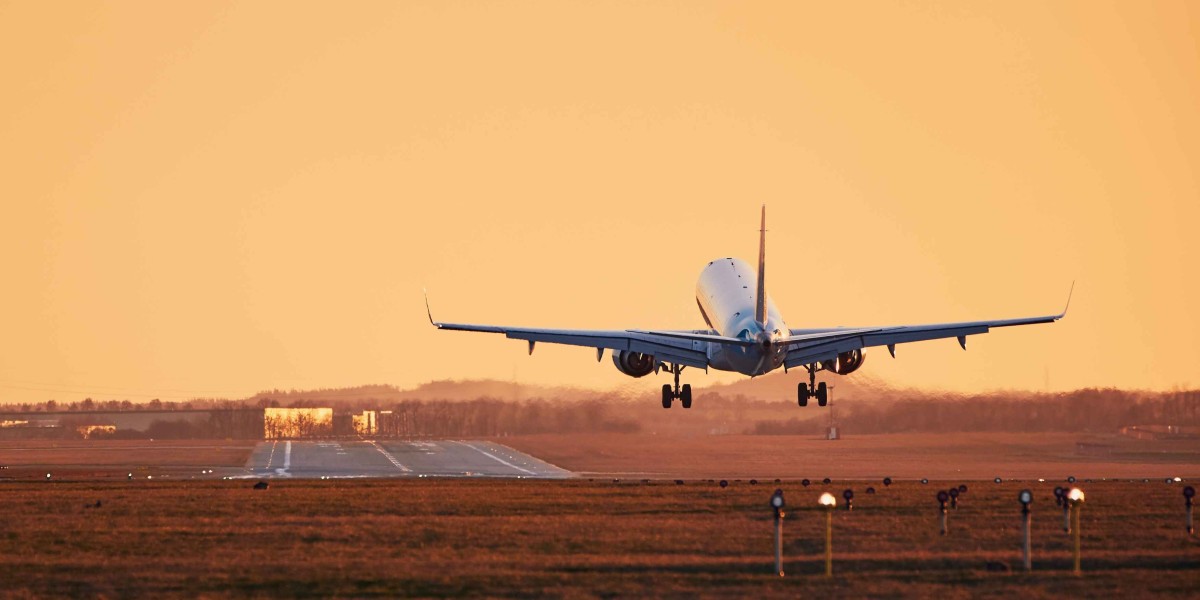

Imagine piloting a 300-ton aircraft at 160 miles per hour toward a runway you cannot see. Outside the cockpit window, there is nothing but an impenetrable wall of white fog. You are seconds away from the ground, yet the world outside is indistinguishable from the inside of a cloud. For early aviators, this scenario was a guaranteed disaster. For modern pilots, it is a routine procedure, executed with mathematical precision thanks to one of aviation's most critical technologies.
The Invisible Safety Net
To understand how a plane lands without visual cues, we must first understand what replaces the pilot's eyes. In clear weather, a pilot visually aligns the aircraft with the runway centerline and judges the descent angle based on the appearance of the runway threshold. In zero visibility, these visual references are gone. They are replaced by radio waves.
This is the domain of Instrument Landing Systems, which project a pair of radio beams from the runway out toward the approaching aircraft. These beams create an invisible funnel in the sky.
The Localizer: Finding the Center
The first component, the localizer, handles horizontal guidance. Located at the far end of the runway, it emits a signal that defines the runway's centerline. If the aircraft drifts left or right, the signal strength changes, and the instruments in the cockpit (or the flight computer) detect the deviation instantly. This ensures the aircraft remains perfectly aligned with the pavement, even if crosswinds are pushing it sideways.
The Glideslope: Managing the Descent
The second component is the glideslope. Transmitted from the side of the runway near the touchdown zone, this signal creates a precise descent path, usually angled at 3 degrees. It prevents the aircraft from coming in too high (risking a runway overshoot) or too low (risking a collision with terrain). By locking onto this signal, the aircraft descends on a calculated trajectory that guarantees clearance over all obstacles.
The ability to land in zero visibility is not just a technological marvel; it is the cornerstone of reliable global transportation. Without it, the world's weather would dictate the flight schedule, grounding fleets and stranding passengers whenever the fog rolled in.
This article explores the mechanisms that make blind landings possible. We will delve into the precision of the guidance signals, the stringent safety categories involved, and how robust infrastructure—exemplified by advanced developments in regions like the Middle East—supports these operations in even the harshest environments.
Category III: The Gold Standard for Zero Visibility
Not all instrument approaches are the same. In aviation, approach capabilities are divided into categories (CAT) based on visibility minimums.
- CAT I: Requires the pilot to see the runway from 200 feet above the ground.
- CAT II: Lowers that requirement to 100 feet.
- CAT III: This is the realm of zero visibility.
Category III operations are subdivided based on just how "blind" the landing is permitted to be. In CAT IIIB and CAT IIIC operations, the visual range can be less than 50 meters—effectively zero. In these conditions, the pilots are not actually flying the plane manually. The risk of human spatial disorientation is too high. Instead, the aircraft’s autopilot couples directly to the ground signals.
The autopilot tracks the radio beams with a frequency and reaction time far superior to human reflexes. It makes micro-adjustments hundreds of times per second, keeping the aircraft glued to the center of the invisible path. As the wheels touch the concrete, the system even guides the aircraft down the runway centerline during the rollout until it slows to a safe taxi speed.
The Critical Role of Integrity and Redundancy
For a computer to land a plane full of passengers without the pilots seeing the ground, the system essentially has to be perfect. There is no margin for error. If the radio signal were to falter or transmit incorrect data for even a second, the consequences could be catastrophic.
To ensure safety, these systems rely on extreme redundancy.
Ground Equipment Redundancy
The transmitters on the ground are never solitary units. There is always a "hot standby." If the primary transmitter fails or deviates from its strict tolerances, a monitor detects the fault and switches to the backup unit in less than a second. If both fail, the system shuts down immediately rather than transmitting a potentially hazardous signal.
Aircraft Redundancy
The aircraft itself operates with triple redundancy during a CAT III approach. Three independent flight computers process the landing data simultaneously. They constantly "vote" on the correct course of action. If one computer disagrees with the other two, it is voted out and ignored, and the remaining two continue the landing. This fail-operational capability ensures that a hardware failure onboard does not compromise the safety of the flight.
Infrastructure Challenges in Extreme Environments
While the electronics are sophisticated, they are also sensitive. The radio beams can be distorted by physical obstacles, other aircraft, and even environmental factors. This makes the physical environment around the runway just as important as the technology itself.
Maintaining the integrity of these signals requires rigorous "safeguarding" of the runway area. When low visibility procedures are in effect, air traffic controllers increase the spacing between aircraft. Taxiing planes are held further back from the runway to ensure their metal fuselages do not reflect or block the guidance signals.
This challenge is magnified in regions with harsh climates. Extreme heat, humidity, and dust can degrade equipment performance. This is where engineering excellence becomes a safety necessity.
The Qatar Example
The approach to airport engineering Qatar has implemented at Hamad International Airport serves as a prime case study in resilience. The region faces a unique combination of blistering summer heat, high humidity, and fine desert dust. Any of these factors could cause standard equipment to drift or fail.
To counter this, the infrastructure is designed with advanced protective measures:
- Thermal Management: Critical transmitters are housed in industrial-grade, climate-controlled shelters that maintain a precise operating temperature regardless of the 50°C (122°F) heat outside.
- Signal Protection: The terrain around the antennas is carefully graded to prevent signal reflection.
- Power Stability: Massive uninterruptible power supplies (UPS) ensure that even a micro-second power fluctuation from the grid does not interrupt the guidance signal.
This level of engineering ensures that the "invisible safety net" remains intact 24/7, allowing one of the world's busiest logistics hubs to operate seamlessly regardless of visibility conditions.
The Human Factor in an Automated Loop
It is a common misconception that in a zero-visibility landing, the pilots are just passengers. In reality, their workload is incredibly high. While they may not be manipulating the yoke, they are monitoring the systems with intense scrutiny.
The pilots act as the ultimate fail-safe. They are constantly cross-checking the instruments against expected values. Is the altitude decreasing at the correct rate? Is the speed stable? Is the aircraft tracking the centerline? If any parameter exceeds a safety limit, the pilot must be ready to instantly disconnect the autopilot and execute a "go-around," powering up the engines to climb away and try again.
This synergy between human judgment and machine precision is what makes zero-visibility operations safe. The machine handles the precise execution, while the human provides the strategic oversight.
Conclusion
The ability to land an aircraft safely when the world outside is white is a triumph of modern engineering. It transforms what was once a terrifying hazard into a manageable, routine procedure. It allows global commerce to flow uninterrupted and families to reunite on time, regardless of the weather.
Behind every smooth landing in the fog lies a complex ecosystem of technology: the triple-redundant computers on the jet, the highly stable transmitters on the ground, and the robust infrastructure that protects them both. As aviation continues to evolve, these systems will likely become even more integrated and precise, but the fundamental promise remains the same: guiding travelers safely home, even when they cannot see the way themselves.
Key Takeaways
- Guidance over Vision: Radio beams replace visual cues, providing precise lateral and vertical guidance to the runway.
- Automated Precision: In zero visibility (CAT III), the aircraft's autopilot flies the approach with higher precision than humanly possible.
- Fail-Safe Redundancy: Both ground and air systems operate with backup units that can take over instantly in case of failure.
- Infrastructure Matters: Robust engineering is essential to protect sensitive signals from environmental interference and extreme climates.