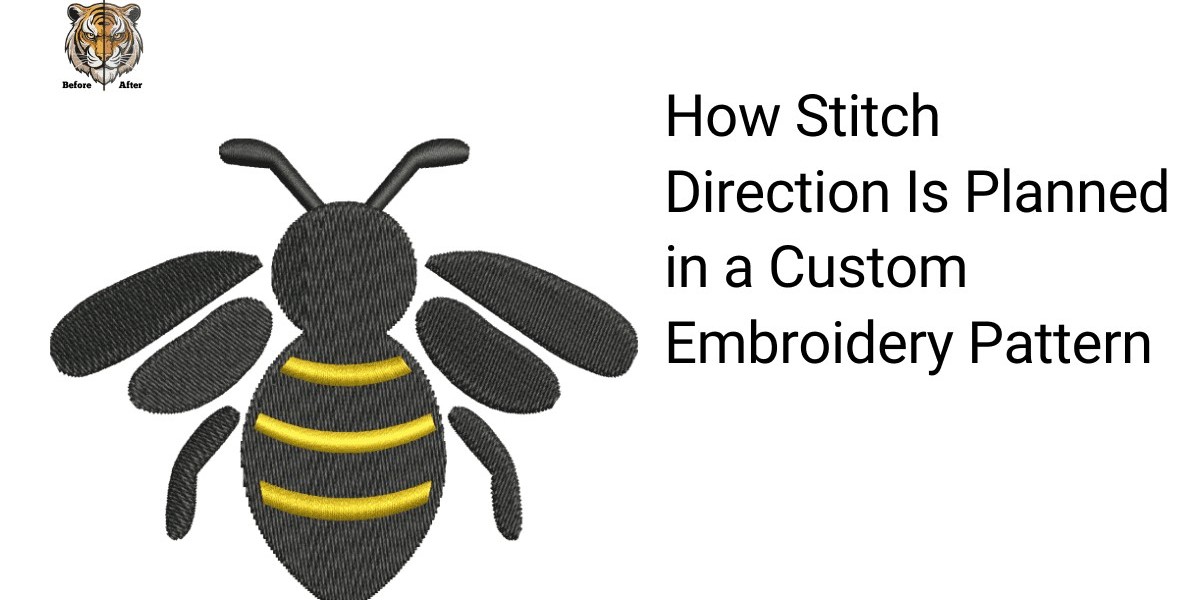

Stitch direction is one of the most important technical decisions in embroidery digitising. It controls how light reflects on the design, how fabric behaves during stitching, and how clearly shapes and text appear. In a custom embroidery pattern, stitch direction is never random. It is carefully planned to support fabric stability, design accuracy, and long-term durability.
This article explains how stitch direction is planned in a custom embroidery pattern and why it directly affects embroidery quality.
What Stitch Direction Means in Embroidery
Stitch direction refers to the angle and flow in which stitches are placed within a design. It determines how stitches travel across the fabric and how different sections connect to each other.
Proper stitch direction helps:
Control fabric pull
Define design edges
Improve visual balance
Reduce thread stress
Incorrect direction can cause distortion, gaps, or uneven surfaces.
Why Stitch Direction Planning Is Necessary
Embroidery machines do not adjust automatically. They follow programmed stitch paths exactly. If stitch direction is poorly planned, the machine will still execute the file, resulting in visible flaws.
Planning stitch direction ensures:
Smooth stitch flow
Balanced tension across fabric
Consistent appearance during production
This planning stage separates professional digitising from automated conversions.
Stitch Direction and Fabric Behavior
Different fabrics react differently to needle penetration and thread tension. A custom embroidery pattern accounts for how fabric stretches, compresses, or resists stitching.
For example:
Knit fabrics require controlled stitch angles to prevent stretching
Twill and canvas need directional balance to avoid puckering
Thick materials need structured stitch flow for stability
Stitch direction is adjusted based on fabric type to maintain clean embroidery results.
Planning Stitch Direction for Logo Shapes
Logos often include curves, angles, and enclosed spaces. Stitch direction must follow the shape logically rather than forcing a single angle across the entire design.
Professional planning includes:
Curved stitch paths for rounded elements
Angle changes between adjacent sections
Direction shifts to separate overlapping shapes
This prevents thread buildup and keeps logo elements visually distinct.
Impact on Text and Letter Clarity
Small text and fine lettering are highly sensitive to stitch direction. Poor planning can cause letters to fill in or lose shape.
In a custom embroidery pattern:
Stitch direction follows letter structure
Narrow columns use single-direction stitching
Direction changes improve edge definition
This keeps text readable even at smaller sizes.
Managing Pull Compensation Through Direction
Every stitch pulls fabric slightly. When stitches run in the same direction over a large area, fabric distortion increases.
To control this:
Stitch directions are alternated between sections
Opposing angles are used to balance pull
Stitch sequencing distributes tension evenly
This technique improves shape retention during stitching and wear.
Visual Depth and Light Reflection
Stitch direction affects how light hits the embroidery surface. Different angles reflect light differently, creating depth and contrast.
Digitisers plan stitch direction to:
Separate design layers visually
Enhance logo details without extra stitches
Prevent flat or dull embroidery appearance
This is especially important for corporate logos and branding elements.
Stitch Direction Sequencing for Machine Efficiency
Stitch direction is also planned to reduce unnecessary machine movement. Clean stitch flow improves production speed and reduces thread breaks.
This includes:
Logical stitch travel between sections
Minimal jump stitches
Smooth angle transitions
Efficient stitch direction planning benefits both quality and production reliability.
Consistency Across Multiple Garments
Once stitch direction is properly planned, the same custom embroidery pattern can be reused consistently across garments.
This ensures:
Identical embroidery appearance
Predictable production results
Reduced setup errors in repeat orders
Consistency is critical for uniforms, promotional apparel, and bulk production.
Conclusion
Stitch direction planning is a foundational step in creating a reliable custom embroidery pattern. It controls fabric behavior, improves visual accuracy, and supports smooth machine operation. By adjusting stitch angles based on fabric, design structure, and production needs, professional digitising delivers clean and consistent embroidery results.
Without proper stitch direction planning, even high-quality machines cannot produce dependable embroidery.
FAQs
Why is stitch direction important in embroidery digitising?
It affects fabric stability, design clarity, and how embroidery appears after stitching.
Can stitch direction reduce fabric puckering?
Yes. Balanced stitch angles help control fabric pull and reduce distortion.
Does stitch direction affect text readability?
Absolutely. Proper direction keeps small letters clear and defined.
Is stitch direction planned manually?
In professional digitising, stitch direction is manually planned rather than automated.