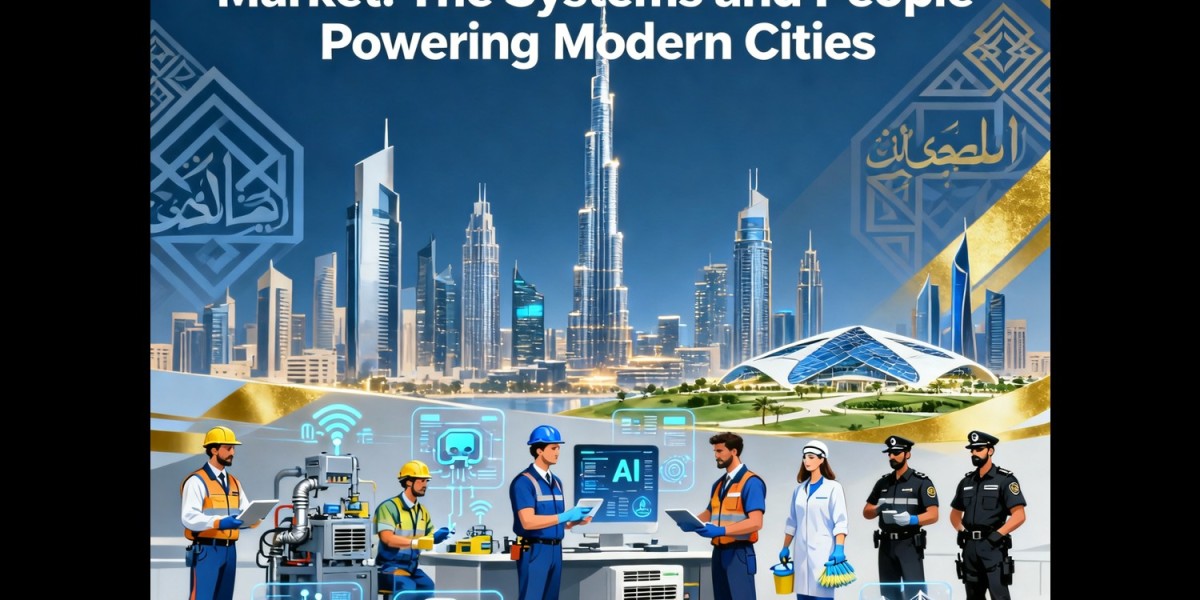

When you walk through cities in the United Arab Emirates Dubai, Abu Dhabi, or Sharjah everything feels polished. Offices stay calm and efficient. Airports operate with impressive precision. Residential towers remain clean, even with constant foot traffic. Behind all of this is a complex system most people never see: facility management.
The facility management sector in the United Arab Emirates has grown rapidly. Large construction projects, high expectations from residents and businesses, and the need for efficiency in a very hot climate have all played a role. As a result, the United Arab Emirates facility management market continues to expand year after year.
This industry is not just about cleaning buildings or fixing air conditioners. It is about keeping entire ecosystems functional, safe, and comfortable day after day, without disruption.
A Market Built on Growth and Complexity
The United Arab Emirates is growing fast, and this growth creates strong demand for facility management services. Massive shopping malls, mixed-use developments, hospitals, data centers, and smart cities all require constant care. When a country has so many valuable assets, fixing things only after they break is no longer enough. Property owners need long-term plans and professional facility management services.
This is where the market finds its strength. The United Arab Emirates facility management market supports both public and private properties, covering commercial buildings, residential communities, industrial sites, and hotels. Each of these environments has different needs, deadlines, and risks. Managing them successfully requires organization, planning, and experience across multiple sectors.
Facility management typically includes two main areas: hard services and soft services. Hard services such as HVAC maintenance, electrical systems, and fire safety form the backbone of any facility. Soft services cleaning, security, and landscaping are just as important because they shape how people experience a space. When hard and soft services are managed together under one strategy, it is known as integrated facility management. Today, this approach is preferred across the market.
This shift did not happen by accident. Integrated models help reduce costs, improve accountability, and simplify daily operations. In a country where uptime matters, this efficiency makes a real difference.
Technology Is No Longer Optional
A few years ago, digital tools were considered a bonus. Today, they are expected. Smart building systems, Internet of Things sensors, and data-driven maintenance schedules are becoming standard across the United Arab Emirates
Facility managers can now monitor equipment health in real time. They can identify potential failures before they happen and track energy usage down to individual floors. This reduces breakdowns and extends the life of expensive equipment two priorities for high-value properties.
Digital platforms also improve reporting and transparency. Clients want clear visibility, not vague updates. Companies such as Tech Formation provide solutions that help organizations connect operational data with decision-making. When information is easy to access, teams can respond faster and plan more effectively.
This is where the UAE Facility Management Market fits naturally into conversations around optimization and performance measurement. In the United Arab Emirates, data-driven facility management is no longer new it is the standard expectation.
Sustainability and Compliance Drive Decisions
The United Arab Emirates’ sustainability goals have significantly influenced how facilities are managed. Energy efficiency, water conservation, and waste reduction are now core responsibilities, not optional extras.
These requirements are written into facility management contracts and used to measure performance. Green building standards such as Estidama and LEED encourage facility managers to think long term. Efficient cooling systems, smart lighting, and preventive maintenance help reduce environmental impact while also lowering operating costs something property owners appreciate.
Compliance adds another layer of responsibility. Health and safety regulations, fire codes, and labor standards are strict and closely monitored. Facility management providers must stay up to date or face serious consequences. As a result, compliance has become a daily priority.
Here, the idea of “UAE Facility Management Market” appears again, this time in relation to compliance tracking and audit readiness. Facility managers who rely on outdated methods struggle to keep pace. Those using structured systems are better prepared and more reliable.
Talent, Training, and Local Expertise
Technology alone does not run buildings people do. Skilled technicians, supervisors, and managers are essential to service quality. The United Arab Emirates benefits from a diverse workforce with experience from around the world, but consistency requires ongoing training.
Clients value providers who invest in their teams. Certifications, safety training, and clear procedures matter. Local knowledge is equally important understanding regional regulations, extreme weather conditions, and cultural expectations.
For example, maintaining cooling systems during extreme summer heat is very different from operating in mild climates. Preventive maintenance schedules must adapt, and emergency plans must account for high occupancy and peak demand. Cooling systems must be ready when they are needed most.
This is where experienced partners stand out. Companies that combine regional insight with structured systems often supported by tools developed by experts like Tech Formation deliver more reliable results.
Where the Market Is Headed
The UAE facility management market is expected to continue growing. Ongoing construction projects, smart city initiatives, and large-scale developments keep demand strong.
Clients will increasingly expect automation, transparency, and clear performance benchmarks. Integrated services will dominate, while fragmented approaches lose relevance. Environmental reporting will become more detailed, and digital maturity will separate industry leaders from those who fall behind.
The final mention of “UAE Facility Management Market” fits here, as long-term planning and measurable outcomes are becoming essential for extended contracts.
A Quiet but Critical Industry
Facility management rarely attracts attention, but without it, cities would not function smoothly. Elevators would fail, energy costs would rise, and safety risks would quietly grow before becoming serious problems.
The strength of the market lies in balance between people and systems, planning and execution, technology and hands-on work. As the United Arab Emirates continues to build upward and outward, facility management will remain the steady force keeping everything operational.
It may not be glamorous, but it is essential. And in a country that values excellence, that importance cannot be overstated.
Key Players Shaping the Market
Several established companies play a major role in shaping the UAE facility management market. Providers such as Emrill Services LLC, Imdaad L.L.C., Farnek Services LLC, EFS Facilities Management Services, Engie, Khidmah LLC, and Al Shirawi Facilities Management LLC support a wide range of commercial, residential, and industrial assets across the country. These organizations offer integrated service models that combine technical expertise, operational planning, and local market knowledge. Their ability to manage large, complex portfolios while meeting strict regulatory and sustainability requirements has helped set service benchmarks and raise overall industry standards.
Conclusion
The UAE facility management market plays a quiet but essential role in keeping cities functional, safe, and comfortable. As buildings become more complex and expectations continue to rise, the need for organized, technology-supported, and people-driven facility management will only grow. The sector’s strength lies in its balance combining skilled professionals, structured systems, and local knowledge to support a fast-moving nation. Without it, the smooth daily operations many take for granted simply would not be possible.