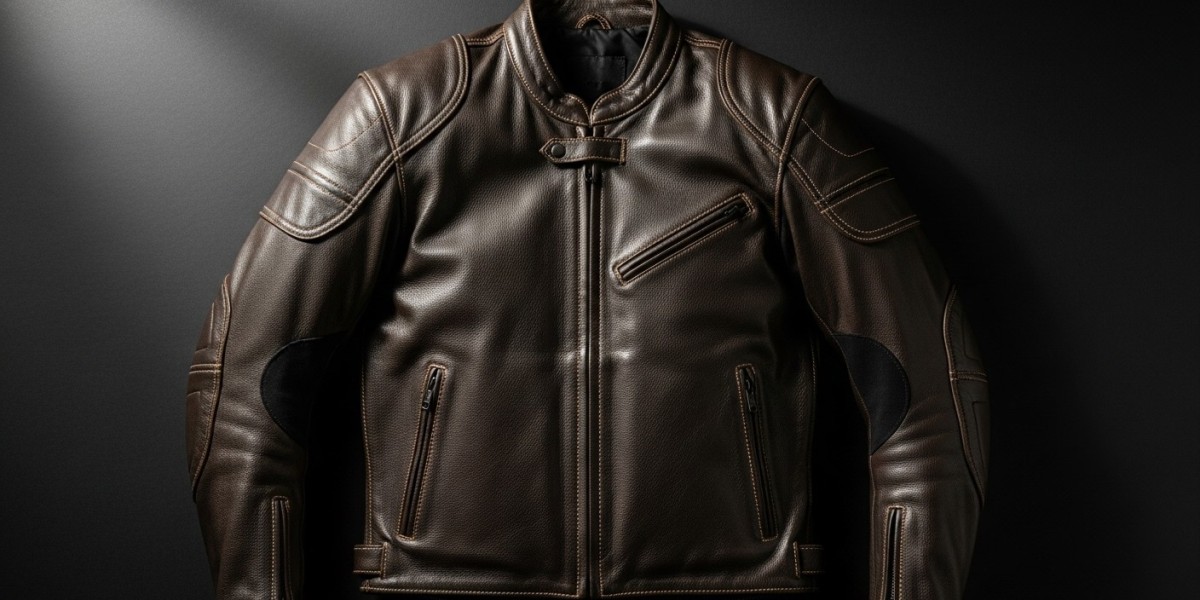

Full-grain leather jackets are widely recognized within the U.S. motorcycle apparel industry for their exceptional durability, structural integrity, and long service life. When manufactured to professional standards, these jackets routinely exceed a decade of use, even under demanding riding conditions. Their longevity is not incidental; it is the result of specific material choices, disciplined production methods, and strict quality controls applied by experienced suppliers.
This article explains—using verifiable industry practices—why full-grain leather jackets consistently outperform lower-grade alternatives. It examines raw material selection, stitching standards, tanning processes, and real-world performance factors, while also comparing leather construction to modern textile alternatives where relevant. The discussion is grounded in established manufacturing norms used by U.S.-based suppliers and aligned with widely accepted material science principles.
Understanding Full-Grain Leather at a Material Level
Full-grain leather is derived from the outermost layer of the hide, retaining the natural grain structure without sanding or buffing. According to material science classifications referenced in leather industry documentation and summarized by Wikipedia’s leather overview, this layer contains the densest fiber structure, providing maximum tensile strength and abrasion resistance.
Key physical properties include:
Unbroken collagen fiber networks, which resist tearing
Natural pore structure, allowing controlled breathability
Higher fiber density improves impact and wear resistance
These attributes are critical in motorcycle apparel, where jackets are subjected to repeated flexing, wind stress, and surface abrasion.
Why Full-Grain Leather Outperforms Corrected and Split Leather?
In professional manufacturing environments, full-grain leather is favored because its intact fibers distribute mechanical stress evenly across the panel. Corrected-grain or split leather lacks this structural continuity due to surface alteration or separation of hide layers.
As a result:
Full-grain panels resist seam blowouts
Stress points (elbows, shoulders, zippers) degrade more slowly
Surface cracking occurs far later in the product lifecycle
This is one of the primary reasons a properly constructed tactical leather riding jacket maintains functional integrity for over ten years when built with professional-grade hides.
Production Methods That Extend Jacket Lifespan
U.S.-based suppliers typically specify leather thickness between 1.1 mm and 1.4 mm for motorcycle jackets, as this range provides an optimal balance between abrasion protection, flexibility, and long-term wear resistance. During professional hide grading, manufacturers deliberately exclude scarred areas, loose-fiber sections, inconsistent thickness zones, and overstretched belly cuts, all of which can compromise structural performance. Instead, only the shoulder and back sections of the hide—areas recognized for their dense, tightly packed fiber structure—are selected for high-stress jacket panels, ensuring superior durability and consistent performance over extended use.
Stitching Standards Used by Professional Manufacturers
Thread Type and Stitch Density
Longevity is not achieved by leather quality alone; stitching standards play an equally critical role in jacket durability. Industry-accepted manufacturing practices specify the use of bonded nylon or polyester thread in the Tex 70–135 range, combined with 6–8 stitches per inch in load-bearing seams to ensure optimal strength without compromising flexibility. Additionally, double-needle or safety stitching is applied at high-stress points such as shoulders, armholes, and zipper bases. Together, these standards significantly reduce the risk of seam separation, allowing the jacket to maintain structural integrity long after surface wear becomes visible.
Seam Construction Methods
Common professional seam constructions are selected to enhance flexibility, prevent material failure, and reinforce high-stress areas. Lapped seams are used to allow controlled movement without placing excessive strain on the leather, while folded edge seams protect raw edges and significantly reduce the risk of tearing over time. In addition, reinforced bar-tacking is applied at pocket openings and zipper ends to secure termination points against repeated stress. These construction techniques are routinely implemented in premium tactical leather riding jacket manufacturing, particularly for designs intended for sustained highway and long-distance touring use.
Tanning and Finishing Processes That Improve Longevity
Vegetable vs. Chrome Tanning in Motorcycle Apparel
While both tanning methods are used commercially, many long-lasting motorcycle jackets rely on controlled chrome tanning followed by oil infusion. This process enhances water resistance, ensures stable color retention, and reduces stiffness as the leather ages, allowing it to remain flexible under repeated use. In contrast, excessively dry or improperly tanned leather is highly susceptible to premature cracking and fiber breakdown, regardless of the original hide grade, significantly shortening the jacket’s usable lifespan.
Protective Finishes Without Fiber Damage
Professional finishing processes deliberately avoid heavy surface coatings that seal the leather’s pores and restrict natural breathability. Instead, manufacturers apply breathable protective finishes designed to reduce UV degradation, resist road contaminants such as oils and debris, and preserve the leather’s natural flex properties. This approach allows the material to age evenly and maintain structural resilience without becoming brittle or stiff over time.
Tactical Leather Riding Jackets vs. Textile Alternatives
A tactical leather riding jacket prioritizes abrasion resistance, impact durability, and long-term structural stability. Full-grain leather excels in these areas because abrasion resistance increases with wear as fibers compress rather than fray. In contrast, a traditional biker textile jacket relies on synthetic weaves and coatings that may degrade through UV exposure, repeated washing, or coating delamination over time. While textiles offer advantages in weight and ventilation, they typically have a shorter usable lifespan under identical riding conditions.
Expert Best Practices That Maximize Service Life
Maintenance Protocols Used by Professionals
Manufacturers and repair specialists recommend:
Cleaning with pH-balanced leather cleaners only
Conditioning every 3–6 months in dry climates
Avoiding prolonged heat exposure or machine drying
These practices preserve internal fiber lubrication, preventing brittleness.
Storage and Use Guidelines
Long-term durability is supported by:
Hanging jackets on wide-shoulder hangers
Avoiding compressed storage
Allowing natural drying after wet rides
Common Misconceptions About Leather Jacket Longevity
All Thick Leather Lasts Long
Thickness alone does not guarantee durability. Poor hide quality, weak stitching, or improper tanning can cause early failure even in heavy leather jackets.
Leather Jackets Don’t Improve With Age
In reality, full-grain leather develops a protective patina over time. This surface evolution increases resistance to abrasion and moisture when properly maintained.
Conclusion
The decade-long lifespan of full-grain leather jackets is the result of disciplined material selection, professional stitching standards, controlled tanning processes, and maintenance-aware design. Within U.S.-based motorcycle apparel manufacturing, these factors are not optional—they are foundational. A well-constructed tactical leather riding jacket represents a long-term protective asset rather than a seasonal garment. While textile alternatives serve specific functional needs, full-grain leather remains the benchmark for durability, repairability, and extended real-world performance. This enduring relevance explains why, even after decades of material innovation, full-grain leather continues to define longevity standards in motorcycle outerwear.
FAQs
1. Why does full-grain leather last longer than top-grain leather?
Full-grain leather retains the complete fiber structure of the hide, providing greater tensile strength and resistance to wear.
2. How long can a professionally made leather riding jacket last?
With proper care, full-grain leather jackets routinely exceed 10–15 years of functional use.
3. Does stitching quality affect jacket lifespan?
Yes. Inferior stitching often fails before leather panels degrade, making thread quality and seam construction critical.
4. Is leather always better than textile for durability?
For abrasion resistance and long-term structural integrity, leather generally outperforms textiles, though textiles may offer other benefits.
5. Can leather jackets handle daily riding?
Yes, provided the jacket is built with professional-grade hides and reinforced seams.
6. Does the tanning method affect durability?
Improper tanning can weaken fibers. Controlled chrome tanning with oil infusion is widely used for durability.
7. Are repairs possible after years of use?
Full-grain leather is highly repairable, unlike many coated textiles that cannot be restitched effectively.
8. Does climate affect leather longevity?
Extreme dryness or moisture requires adjusted maintenance, but leather adapts better than most synthetics over time.
9. Do heavier jackets always last longer?
Weight must be balanced with flexibility. Excessively rigid leather can crack prematurely.
10. Why do professionals still prefer leather for motorcycle jackets?
Because no other material matches its combination of abrasion resistance, repairability, and lifespan.