
Introduction
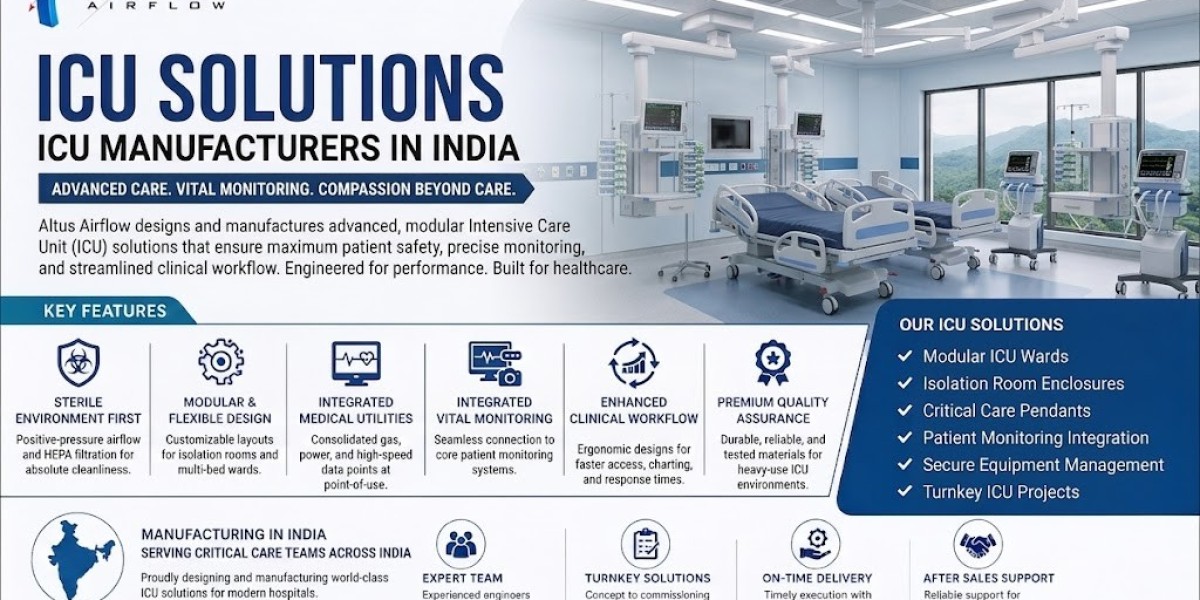
An intensive care unit needs to support continuous patient observation, rapid clinical intervention, and efficient movement of healthcare professionals. ICU Manufacturers In India can contribute to the development of critical care spaces by providing specialized infrastructure, equipment integration, modular solutions, and customized layouts. Their approach can help hospitals organize utilities, equipment, patient areas, and staff workflows according to specific clinical requirements.
Customized ICU Layouts
Every hospital has different space availability, patient capacity, and clinical workflows. Manufacturers can develop ICU layouts according to these individual requirements rather than relying on a standard arrangement.
Customization may consider:
- Number of patient beds
- Bed-to-bed spacing
- Staff movement
- Equipment positioning
- Medical-gas locations
- Electrical requirements
- Storage
- Emergency access
A well-planned layout can help create an organized environment for critical care.
Better Equipment Integration
ICUs contain numerous medical devices that need to remain accessible to clinical staff. Manufacturers can design infrastructure around the equipment selected by the hospital.
Solutions may accommodate:
- Patient monitors
- Ventilators
- Infusion pumps
- Suction systems
- Bedside equipment
- Emergency devices
Proper integration can reduce unnecessary cable clutter and help staff access essential equipment efficiently.
Medical-Gas Integration
Medical gases are essential for many critical-care procedures. ICU infrastructure can incorporate appropriately planned connections for gases required by the hospital.
Depending on clinical requirements, these may include:
- Oxygen
- Medical air
- Vacuum
- Other specified gases
The distribution system should be designed according to relevant engineering and safety requirements.
Electrical and Emergency Power Systems
Critical-care equipment depends heavily on reliable electrical infrastructure. ICU designs can incorporate electrical points positioned according to equipment requirements.
Planning may include:
- Standard electrical outlets
- Emergency power connections
- Equipment-specific power points
- Data connections
- Cable-management systems
Emergency power planning is particularly important for equipment that needs continuous operation.
Infection-Control Support
ICU environments require careful cleaning and infection-control practices. Manufacturers can incorporate design features that support routine cleaning and maintenance.
These may include:
- Smooth surfaces
- Cleanable materials
- Properly finished joints
- Accessible service areas
- Organized equipment placement
- Reduced clutter
Such features can make routine environmental maintenance more practical.
Improved Clinical Workflow
The ICU layout can influence how quickly staff access patients, equipment, and utilities. Manufacturers can consider the movement patterns of doctors, nurses, technicians, and support staff.
Workflow planning may focus on:
- Patient visibility
- Bedside access
- Equipment accessibility
- Emergency pathways
- Storage
- Utility access
An organized environment can help reduce unnecessary movement and improve day-to-day efficiency.
Modular ICU Infrastructure
Modular systems can provide flexibility when creating or upgrading critical-care spaces. Depending on the project, modular infrastructure can integrate different utilities and clinical requirements.
Potential advantages include:
- Flexible configuration
- Organized utility distribution
- Easier maintenance
- Adaptability
- Efficient space utilization
Hospitals can select modular solutions according to their construction and operational needs.
Lighting and Visibility
Appropriate lighting is important in critical-care areas because healthcare professionals need clear visibility for observation and procedures.
ICU infrastructure may incorporate:
- General lighting
- Examination lighting
- Task lighting
- Adjustable illumination
- Indirect lighting
Lighting design should support clinical work while maintaining an appropriate environment for patients.
Safety and Emergency Access
Critical-care spaces must allow staff to respond quickly when a patient's condition changes. Manufacturers can consider emergency access when planning bed spaces and equipment placement.
Important considerations include:
- Clear pathways
- Accessible utilities
- Equipment positioning
- Emergency power
- Organized cables
- Adequate space around beds
These features can support efficient emergency response.
Communication and Data Integration
Modern ICUs often depend on communication and digital systems. Infrastructure can be designed to accommodate the hospital's existing communication and data requirements.
Possible integrations include:
- Nurse-call systems
- Data points
- Communication connections
- Central monitoring infrastructure
- Equipment networking
Compatibility should be evaluated during the design stage.
Maintenance-Friendly Design
Critical-care infrastructure needs regular inspection and maintenance. Manufacturers can incorporate accessible service areas and organized utility routes to make maintenance easier.
Hospitals should evaluate:
- Access to service components
- Maintenance procedures
- Technical documentation
- Replacement components
- Warranty terms
- Long-term support
A maintenance-friendly design can help reduce unnecessary disruption to hospital operations.
Future Expansion
Hospitals may need to expand ICU capacity or introduce new medical technologies over time. Flexible infrastructure can make future changes easier to manage.
Manufacturers may consider provisions for:
- Additional equipment
- New technologies
- Additional bed spaces
- Utility expansion
- Layout modifications
Planning for future requirements can help hospitals avoid extensive redesign later.
Conclusion
ICU Manufacturers In India can improve critical care spaces by combining customized layouts, equipment integration, medical-gas infrastructure, reliable electrical systems, infection-control considerations, modular construction, appropriate lighting, safety planning, communication systems, and maintenance-friendly designs. A well-designed ICU should support both patient care and clinical workflow. Hospitals should evaluate manufacturers according to their specific space, equipment, infrastructure, operational, and long-term requirements.
Frequently Asked Questions
1. How do ICU Manufacturers In India improve critical care spaces?
They can improve ICU spaces through customized layouts, equipment integration, medical-gas systems, electrical infrastructure, infection-control features, lighting, safety planning, and workflow-focused designs.
2. Can ICU infrastructure be customized for different hospitals?
Yes. ICU layouts can be planned according to patient capacity, available space, equipment requirements, utility locations, staff workflow, and future expansion needs.
3. Why is medical-gas integration important in an ICU?
Medical gases such as oxygen, medical air, and vacuum can be required for critical-care treatment. Proper infrastructure helps organize these connections according to hospital requirements.
4. How can ICU design support infection control?
Cleanable materials, smooth surfaces, accessible areas, organized equipment placement, and appropriate finishing can support routine cleaning and hospital infection-control practices.
5. Can ICU infrastructure accommodate future expansion?
Flexible and modular solutions can make it easier to add equipment, modify layouts, expand utilities, or accommodate additional capacity as hospital requirements change.
Read Our Previous Blog----------->What facilities do Recovery Rooms Manufacturers In India provide?