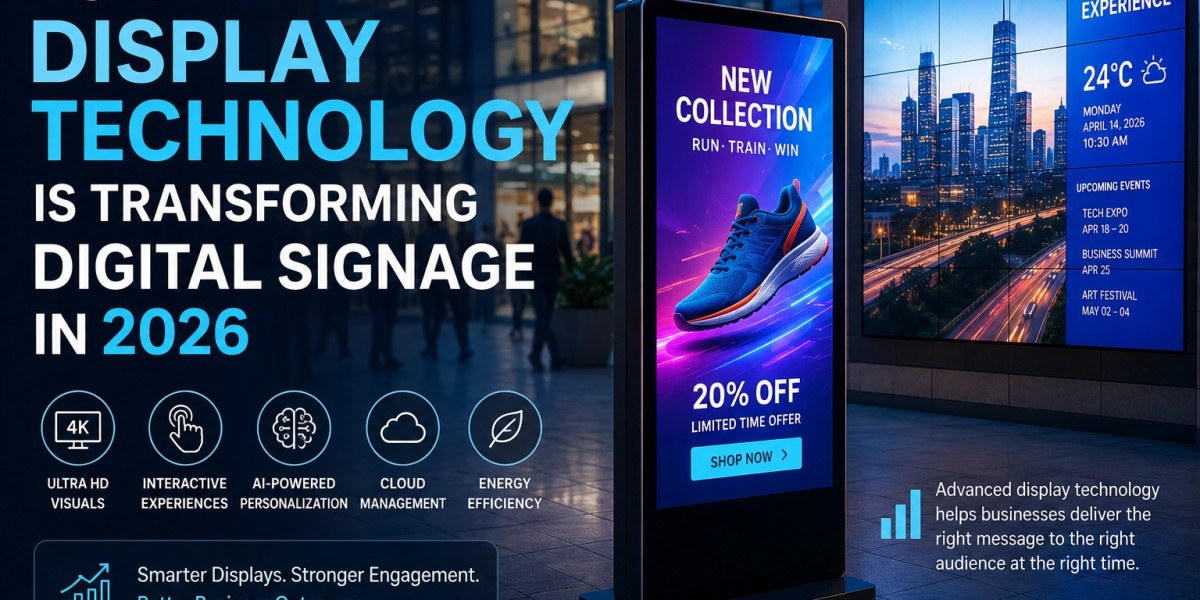

Display technology is rapidly changing the way businesses communicate with customers in 2026. From retail stores and corporate offices to healthcare facilities and transportation hubs, digital signage has become an essential tool for delivering engaging visual experiences. Modern display technology offers sharper visuals, interactive features, AI-powered personalization, and energy-efficient performance that help businesses improve customer engagement and brand visibility.
As competition increases across industries, organizations are investing in advanced display technology to create dynamic advertising campaigns, real-time communication systems, and immersive customer experiences. Digital signage is no longer limited to static advertisements; it now delivers personalized, data-driven content that captures audience attention instantly.
In this blog, we will explore how display technology is transforming digital signage in 2026 and why businesses are adopting smarter display solutions for future growth.
The Evolution of Display Technology
Digital signage has evolved significantly over the last decade. Earlier systems relied on simple LCD screens displaying scheduled content. In 2026, advanced display technology includes AI integration, touchscreen interactivity, cloud management, and ultra-high-definition visuals.
Modern displays now support:
- 4K and 8K resolutions
- OLED and MicroLED panels
- Interactive touch displays
- AI-based content optimization
- Real-time cloud updates
- Energy-efficient screen technologies
These innovations help businesses deliver more engaging and visually appealing content to audiences.
Why Display Technology Matters in Digital Signage
Display technology plays a crucial role in enhancing communication and marketing effectiveness. Businesses using advanced digital signage solutions can instantly update promotions, share live information, and create interactive experiences.
Key Benefits of Modern Display Technology
1. Improved Visual Quality
High-resolution displays provide crystal-clear visuals that attract customer attention. OLED and MicroLED technologies offer vibrant colors, deeper contrast, and better brightness for indoor and outdoor advertising.
2. Enhanced Customer Engagement
Interactive displays allow users to interact directly with content using touchscreens, QR codes, or motion sensors. This increases customer participation and improves user experience.
3. Real-Time Content Management
Cloud-based display technology enables businesses to update content remotely across multiple screens in different locations instantly.
4. AI-Powered Personalization
AI-driven signage systems analyze customer behavior and display targeted advertisements based on demographics, preferences, or time of day.
5. Energy Efficiency
Modern display technology uses energy-saving components and automatic brightness adjustment systems to reduce electricity consumption.
Display Technology Trends Transforming Digital Signage in 2026
AI-Driven Smart Displays
Artificial intelligence is one of the biggest innovations in display technology. AI-powered digital signage can analyze audience behavior and display personalized content automatically.
Retail businesses use AI displays to recommend products, while restaurants display dynamic menus based on customer preferences and peak hours.
Interactive Touchscreen Displays
Interactive display technology is becoming increasingly popular in shopping malls, educational institutions, and corporate offices. Touch-enabled digital signage improves user interaction and enhances engagement.
Businesses use interactive displays for:
- Product catalogs
- Self-service kiosks
- Wayfinding systems
- Digital menus
- Customer feedback systems
OLED and MicroLED Technology
OLED and MicroLED displays are replacing traditional LCD screens due to their superior image quality and energy efficiency.
Benefits include:
- Better brightness
- Ultra-thin designs
- Flexible screen options
- Improved durability
- Lower power consumption
These technologies are ideal for premium digital signage installations.
3D and Immersive Display Technology
3D display technology is transforming customer experiences by creating immersive visual environments. Retail brands use 3D digital signage to attract shoppers and increase product visibility.
Businesses are also integrating augmented reality (AR) and virtual reality (VR) into digital signage systems for enhanced interaction.
Cloud-Based Digital Signage Solutions
Cloud-connected display technology allows businesses to control content remotely from a single dashboard. This simplifies content management across multiple locations.
Cloud-based systems offer:
- Instant content updates
- Remote monitoring
- Better scalability
- Real-time analytics
- Improved operational efficiency
Industries Benefiting from Advanced Display Technology
Retail Industry
Retail stores use digital signage to display promotions, product videos, and personalized advertisements. Interactive displays improve customer engagement and increase sales conversions.
Healthcare Sector
Hospitals and clinics use digital signage for patient communication, appointment scheduling, and health awareness campaigns.
Corporate Offices
Businesses use display technology for internal communication, meeting room displays, and employee engagement.
Education Sector
Schools and universities use interactive smart displays for digital learning and classroom collaboration.
Transportation Industry
Airports, railway stations, and bus terminals use advanced display technology for real-time information updates and navigation assistance.
How AI and Data Analytics Improve Display Technology
AI and data analytics are making digital signage smarter and more effective. Businesses can now measure audience engagement, content performance, and customer interaction in real time.
Advanced analytics help organizations:
- Optimize advertising campaigns
- Improve customer targeting
- Increase engagement rates
- Monitor display performance
- Generate business insights
AI-powered display technology ensures businesses deliver the right message to the right audience at the right time.
The Future of Display Technology in Digital Signage
The future of display technology will focus on automation, personalization, and immersive experiences. Businesses are expected to adopt smarter systems that combine AI, IoT, and cloud computing.
Future innovations may include:
- Holographic displays
- Transparent digital screens
- Voice-controlled signage
- Gesture-based interaction
- Advanced AR experiences
As technology evolves, digital signage will become more interactive, intelligent, and customer-focused.
Why Businesses Should Invest in Modern Display Technology
Businesses investing in advanced display technology gain a competitive advantage by improving customer communication and brand visibility.
Major Advantages Include:
- Higher audience engagement
- Increased brand awareness
- Better customer experience
- Faster content management
- Improved advertising effectiveness
- Greater operational efficiency
Modern digital signage solutions help businesses adapt to changing customer expectations and market trends.
FAQs
1. What is display technology in digital signage?
Display technology refers to advanced screen systems used for dynamic advertising, communication, and interactive customer engagement.
2. Why is display technology important for businesses?
Modern display technology improves visibility, customer engagement, communication efficiency, and brand awareness through digital signage solutions.
3. What are the latest display technology trends in 2026?
AI displays, OLED screens, interactive touchscreens, cloud signage, and 3D displays are major trends transforming digital signage.
4. How does AI improve digital signage?
AI helps personalize content, analyze audience behavior, automate updates, and improve customer targeting for better engagement.
5. What industries use display technology?
Retail, healthcare, education, transportation, hospitality, and corporate sectors widely use advanced display technology solutions.
6. What is the benefit of cloud-based digital signage?
Cloud-based systems allow remote content management, instant updates, better scalability, and real-time monitoring across locations.
7. How does interactive display technology help customers?
Interactive displays improve user engagement through touchscreens, self-service systems, and personalized customer experiences.
8. Why are OLED displays popular in digital signage?
OLED displays offer better brightness, deeper contrast, energy efficiency, and premium visual quality for modern signage systems.
9. What is the future of display technology?
Future display technology includes holographic displays, AR integration, voice interaction, and AI-powered smart signage systems.
10. How can Intelisa help with digital signage solutions?
Intelisa provides advanced display technology and smart digital signage solutions for impactful business communication and engagement.
Conclusion
Display technology is transforming digital signage in 2026 by delivering smarter, more interactive, and visually engaging experiences. From AI-powered personalization and touchscreen interaction to OLED displays and cloud management, modern digital signage solutions are helping businesses improve communication, customer engagement, and operational efficiency.
Intelisa is a leading provider of innovative digital signage and display technology solutions designed to help businesses create impactful visual communication experiences. With advanced display systems, smart signage solutions, and cutting-edge technology, Intelisa helps organizations enhance brand visibility and customer engagement across industries.