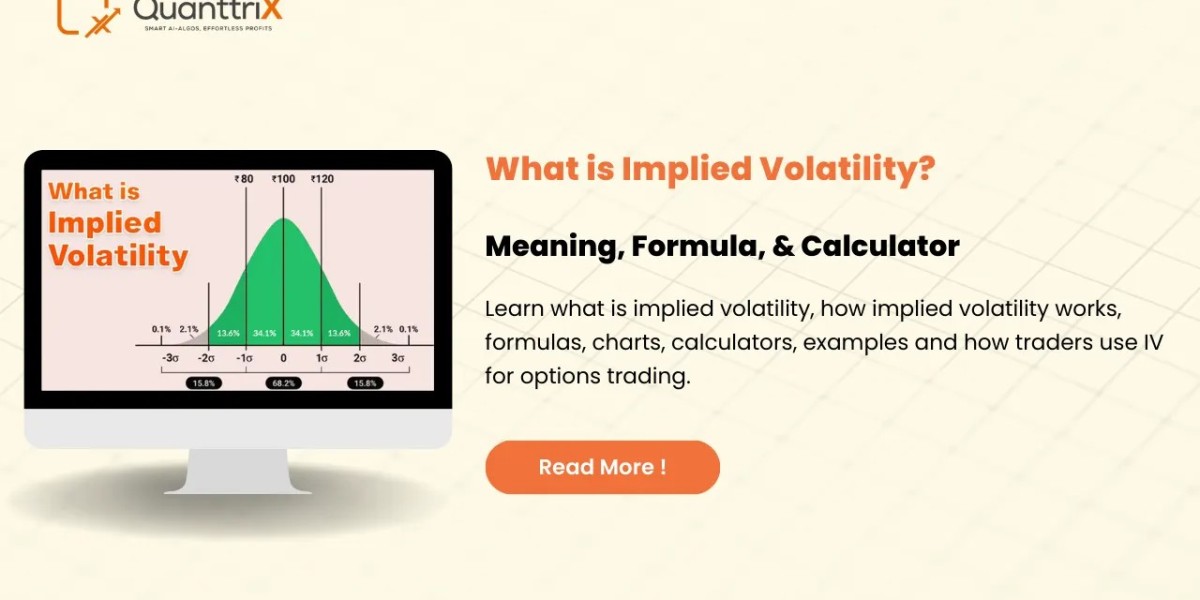

What Is Implied Volatility? A Simple Guide for Everyone
Understanding the stock market can often feel like learning a new language. Charts, patterns, prices—everything moves so fast. And then comes a term like implied volatility, which sounds even more intimidating. But don’t worry—by the time you finish this article, you’ll understand it completely.
If you’ve ever wondered “Why does the market feel jumpy?” or “Why do options suddenly become expensive?”, implied volatility (IV) is the hidden force behind these reactions. Think of volatility as the “mood” of the market. Just like people have calm days and anxious days, markets do too.
Before we go deeper, let’s explore the concept step by step—with relatable examples, simple explanations, and zero confusing jargon. Ready?
Learn what implied volatility means using simple examples. Includes implied volatility calculator, implied volatility chart, and Online Trading Academy insights.
Understanding Implied Volatility in Simple Words
Implied volatility is simply a forecast of how much a stock’s price might move in the near future. It doesn’t say which direction the price will go—up or down. It only suggests how big that movement may be.
Think of it like weather forecasting.
If a weather app says, “There is a high chance of storms,” you expect rain, lightning, or strong winds. You prepare your umbrella accordingly.
Similarly:
High implied volatility = The market expects big price movements
Low implied volatility = The market expects the price to remain stable
Easy, right?
The important thing to understand is that implied volatility is based on expectations, not facts. It comes from real-time option prices—when traders are worried or excited, IV shoots up.
How Implied Volatility Works Behind the Scenes
Implied volatility is built into every option price. In fact, many traders say:
“Volatility drives the option market.”
When more people buy options:
Demand rises
Option prices go up
Implied volatility increases
When fewer people buy options:
Demand falls
Option prices drop
Implied volatility decreases
It’s exactly how airplane ticket prices rise when demand surges before holidays. More demand = higher prices = higher volatility expectations.
Why Implied Volatility Matters for Traders
Whether you’re a beginner or an expert, implied volatility influences almost every decision in options trading.
Here’s why:
1. It affects option prices
Higher IV = higher option premiums
Lower IV = cheaper options
Even if the stock doesn’t move, an option can lose or gain value simply because volatility changes.
2. It signals market sentiment
High IV = uncertainty, fear, or upcoming news
Low IV = confidence, calmness
3. It helps traders choose strategies
For example:
High IV → credit spreads, iron condors
Low IV → debit spreads, long calls/puts
Implied Volatility vs Historical Volatility
These two terms sound similar, but they’re very different.
Historical Volatility (HV)
Looks at past price movement
Tells you how much the stock has fluctuated
Implied Volatility (IV)
Looks at future expectations
Tells you how much the stock might fluctuate
Think of historical volatility as reading yesterday’s news, and implied volatility as reading tomorrow’s prediction.
What Affects Implied Volatility?
Several major factors influence IV levels:
1. Earnings Announcements
Before earnings, IV rises due to uncertainty.
2. Economic Events
Interest rate decisions, inflation data, global news.
3. Market Sentiment
Fear tends to spike volatility (just like a crowd running causes panic).
4. Supply and Demand
High demand for options pushes up IV.
5. Time to Expiry
Nearer expirations usually respond more sharply to volatility shifts.
Using an Implied Volatility Calculator
An implied volatility calculator is a tool traders use to estimate IV based on option prices, expiry dates, interest rates, and strike prices.
It helps you answer questions like:
“Is this option overpriced?”
“Is volatility currently high or low for this stock?”
“Should I buy or sell options at this level?”
Most platforms show IV automatically, but calculators help you compare and analyze trends more accurately.
How to Read an Implied Volatility Chart
An implied volatility chart visualizes how IV changes over time. It’s like a heartbeat monitor for the market’s mood.
You’ll notice:
Sudden spikes → fear, news, or upcoming announcements
Steady declines → confidence returning
Long-term cycles → patterns in volatility behavior
Reading this chart can help you avoid buying expensive options when IV is too high.
Implied Volatility in Options Trading
IV is one of the most critical components in trading strategies. It influences:
Credit and debit spreads
Calls and puts
Calendar spreads
Iron condors
Straddles and strangles
High IV environments
Great for premium-selling strategies
Options are expensive
Low IV environments
Great for premium-buying strategies
Options are cheaper
Understanding this balance determines whether a trade has a higher chance of success.
Common Myths About Implied Volatility
Myth 1: High volatility means the stock will drop
False. IV doesn’t predict direction—only movement.
Myth 2: Low volatility means no risk
False. Big moves can happen suddenly, even during low IV periods.
Myth 3: IV stays stable
False. IV changes constantly, sometimes drastically.
How Beginners Can Use IV to Avoid Mistakes
New traders often make these mistakes:
1. Buying options when IV is extremely high
This leads to “IV crush” after events like earnings.
2. Selling options when IV is extremely low
Premiums are too small to justify the risk.
3. Ignoring the volatility chart
This is like driving without a map.
Tips From Online Trading Academy
The Online Trading Academy emphasizes the importance of volatility in every options course.
Here are their top suggestions:
Avoid buying options right before earnings
Use IV charts to identify overpriced premiums
Stick to strategies that match volatility levels
Always check IV rank before entering trades
Compare current IV with historical IV
These practices help traders avoid unnecessary losses.
Real-Life Example: Volatility Before Earnings
Imagine Stock XYZ is trading at ₹1,000.
One week before earnings:
Traders expect a big move
Everyone starts buying options
IV jumps from 20% → 60%
Option prices double
On earnings day:
Stock barely moves
IV crashes back to 20%
Option buyers lose money
Option sellers profit
This is the power of implied volatility—sometimes, the stock barely moves, but volatility makes all the difference.
Final Thoughts
Implied volatility may sound complicated at first, but once you understand the logic behind it, everything becomes clearer. It’s a tool that reflects market expectations, emotions, and reactions. Whether you’re an investor, trader, or someone curious about the stock market, knowing IV will help you make more informed decisions.
Always check:
The implied volatility calculator
The implied volatility chart
Insights from resources like Online Trading Academy
With these tools, you’ll navigate the markets with more confidence and avoid many common mistakes.
FAQs
1. What is implied volatility in simple terms?
It’s the market’s expectation of how much a stock might move in the future, without predicting the direction.
2. Does high implied volatility mean the stock will go up or down?
No. It only suggests large movement, not whether it will rise or fall.
3. How can I check implied volatility?
You can use an implied volatility calculator, your trading platform, or an implied volatility chart.
4. Is implied volatility good or bad?
Neither—it depends on your strategy. Buyers prefer low IV, sellers prefer high IV.
5. Why does implied volatility drop after earnings?
Because uncertainty ends. Once the event passes, volatility returns to normal, causing an “IV crush.”