
Many artists and gallery owners face the same frustrating reality: once a masterpiece sells, the opportunity to generate further income from that specific piece often vanishes. We frequently meet creators who rely on standard photography to document their work, only to find the colors look muddy or the fine details disappear in the final print. This gap between an original work and a mediocre reproduction can damage a brand’s reputation and alienate high-end collectors.
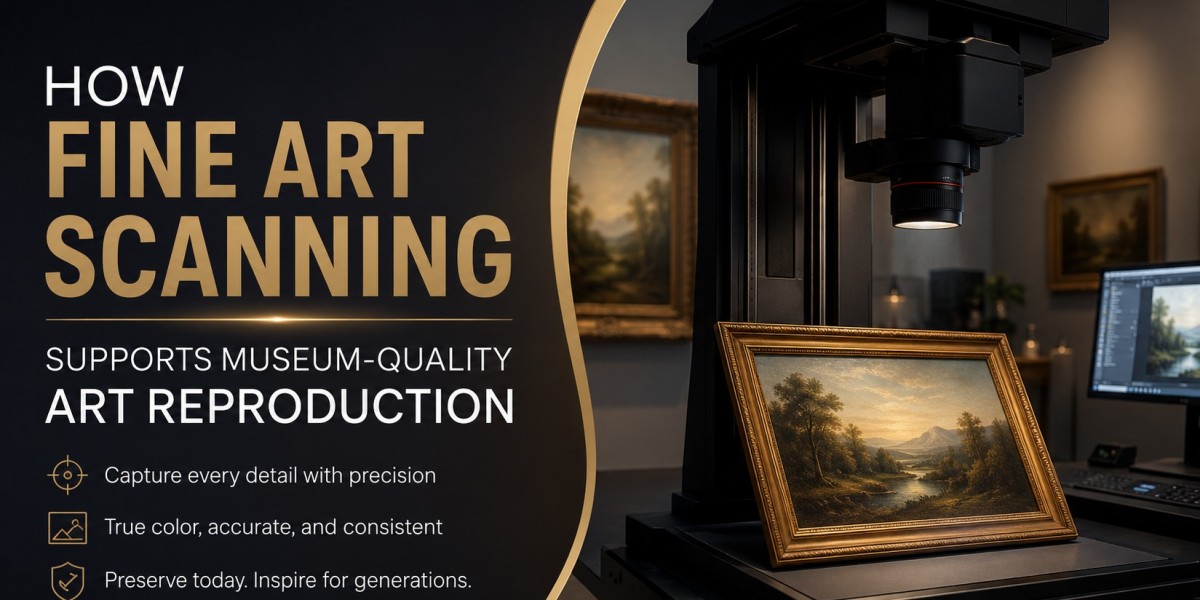
We solve this problem by utilizing professional Fine Art Scanning to capture every microscopic detail of the original medium. Unlike traditional photography, which often struggles with lighting hotspots and lens distortion, a dedicated scanner provides a flat, evenly lit digital map of the artwork. This precision allows us to create a digital master file that serves as the perfect foundation for museum-quality reproductions.
The Technical Foundation of Superior Art Digitization
We know that a reproduction only looks as good as the data behind it. When we scan a piece of art, we capture far more than just a picture; we record the DNA of the artist's technique. High-resolution scanning provides the depth and clarity necessary for "giclee" printing, which requires a specific level of detail to fool the naked eye.
Many business owners assume that a high-end consumer camera can achieve these results, but they often overlook the "parallax error" inherent in camera lenses. Lenses naturally curve the edges of an image, making it difficult to maintain perfect proportions on a large canvas. Our scanners move across the artwork in a linear fashion, ensuring that every square inch remains perfectly sharp and geometrically accurate.
Why Lighting Control Dictates Print Quality
Shadows and glare represent the biggest enemies of art reproduction. We use specialized lighting arrays that eliminate the "hot spots" often found in studio photography. By controlling the angle and intensity of the light, we preserve the true color of the pigments without the interference of reflective glare from oil paints or heavy varnishes.
Capturing the Three-Dimensionality of Paint
Artists who work with palette knives or thick impasto layers need their prints to show that physical depth. We calibrate our scanners to pick up the subtle shadows created by the texture of the paint. This technique ensures that the final print retains a sense of touch and dimension, rather than looking like a flat, digital imitation.
Mastering Color Fidelity for High-End Markets
Collectors who invest in museum-quality reproductions expect the colors to match the original exactly. We often see artists struggle with "color shift," where a vibrant teal turns into a dull blue during the printing process. We combat this by using advanced color-managed workflows and custom ICC profiles for every scan we perform.
We meticulously check the digital file against the physical artwork under standardized lighting conditions. This process allows us to adjust the mid-tones, highlights, and shadows to ensure the digital file mirrors the artist's intent. Without this level of professional intervention, artists often waste hundreds of dollars on test prints that never quite hit the mark.
The Role of High-Resolution Data in Large Scale Prints
A significant benefit of professional scanning involves the ability to "size up" an artwork. We can scan a small 8x10 watercolor and provide a file clean enough to print at four times its original size. Because our scanners capture such a high density of information, we prevent the pixelation and blurring that occurs when you try to enlarge a standard photograph.
Selecting the Proper Substrate for the Scan
The final step in achieving a museum-quality look involves matching the digital file to the right physical material. We often guide our clients through the process of choosing premium art papers that complement the specific textures captured during the scan. When the paper grain aligns with the scanned texture, the reproduction gains a level of authenticity that standard papers simply cannot provide.
Building a Sustainable Creative Business
We believe that professional scanning represents an investment in a business’s longevity, not just a one-time service fee. By creating a high-resolution archive, a gallery can offer limited edition runs long after the original painting moves to a private collection. This strategy provides a recurring revenue stream that helps artists fund their next major project or exhibition.
Furthermore, digital archives protect against the unforeseen. We have worked with clients who lost original works to fire or shipping damage, only to find relief because they possessed a professional-grade scan. These files allow for the reconstruction of a portfolio or the fulfillment of existing print orders even when the physical piece no longer exists.
Conclusion
Museum-quality reproduction requires more than just a good printer; it demands a flawless digital starting point. We understand the emotional and financial value of your artwork, and we treat every scan as a critical step in preserving your creative legacy. By focusing on technical precision, color accuracy, and high-resolution data, we help you bridge the gap between a single original and a global market of collectors.
At Laguna Digital, we combine years of industry experience with the latest scanning technology to support your business goals. We take the technical burden off your shoulders so you can focus on creating your next masterpiece. If you feel ready to elevate your art reproductions to a professional standard, we invite you to reach out and discover how our scanning services can transform your business.