
SS Modular Kitchen: What Nobody Tells You Before You Buy One
Every kitchen renovation starts the same way — with a list of Pinterest photos, a rough budget, and a lot of opinions from family members. Somewhere in that process, most people run into the term SS Modular Kitchen, usually while scrolling through interior design pages or talking to a contractor who casually mentions it as an "upgrade option." And then comes the confusion: is it actually better, or is it just a more expensive version of the same thing?
Having gone through what dozens of homeowners typically ask before making this decision, here's a straightforward breakdown of what actually matters — no sales pitch, just the practical stuff.
First, Let's Get the Basics Right
An SS Modular Kitchen is built the same way as a standard modular kitchen — with pre-made cabinet units assembled on-site — except the core material is stainless steel instead of plywood, MDF, or particle board covered in laminate. The frames, shutters, and sometimes even the drawer channels are made from steel sheets, usually food-grade 304 stainless steel, the same material used in commercial kitchen equipment.
That's really the entire concept. The layout planning, storage optimisation, and design process stay largely the same as any other modular kitchen — the material is what changes, and that one change brings a ripple effect of differences worth understanding before you commit.
Why People End Up Choosing This Over Wood
It's Not About Trend, It's About Repair Fatigue
Talk to anyone who's lived with a wooden modular kitchen for 8-10 years, and you'll hear a familiar story: swollen cabinet bases near the sink, peeling laminate edges, a drawer that doesn't close properly anymore, maybe even a termite scare at some point. None of this happens overnight — it builds up slowly, and by the time it's noticeable, a full repair or replacement is usually needed.
This is really the core reason behind the shift toward steel. It's less about chasing a trend and more about avoiding that slow decline altogether — and once people understand this, the appeal of an SS Modular Kitchen starts making a lot more sense.
Moisture Simply Isn't a Concern
The area around the sink and dishwasher takes the most damage in any kitchen. Constant splashing, humidity, and the occasional forgotten wet cloth left on the counter all add up. With a wood-based setup, this is exactly where problems start first. With steel, this entire failure point disappears — water just doesn't affect it.
Cleaning Takes Minutes, Not Effort
There's a noticeable difference in how much effort daily cleaning takes. Laminate surfaces need careful cleaning to avoid dulling the finish, and grooves or joints can trap grime over time. Steel surfaces, being non-porous, wipe clean easily and don't hold onto oil residue or food particles the same way.
Pests Aren't Even Part of the Equation
This one surprises a lot of people. Termite treatments, pest control visits, and worrying about hollow-sounding panels are just non-issues with a steel setup, since there's no organic material for pests to target in the first place. It's a small detail, but for anyone who's dealt with a termite infestation before, this alone can be a strong enough reason to consider an SS Modular Kitchen over a traditional wooden one.
The Part Most People Get Wrong: The Design Assumption
Here's a common misconception worth addressing directly — the assumption that a steel kitchen has to look cold, industrial, or hospital-like. That was true maybe a decade ago, when finish options were limited. It's not the reality anymore.
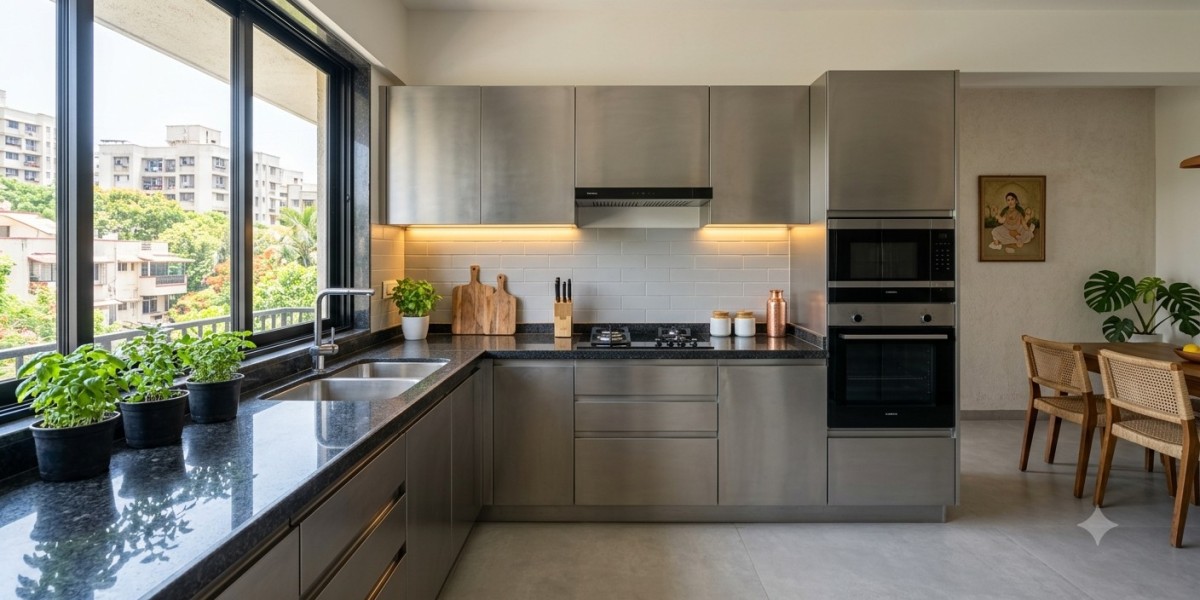
Current options include matte finishes, brushed textures, and powder-coated colours that go well beyond plain silver. Pairing steel cabinets with wooden or stone countertops, adding warm LED lighting under the cabinets, or using glass-panel shutters can completely change the character of the space. A well-designed SS Modular Kitchen can look just as warm and personal as a traditional one — the difference lies entirely in how it's planned, not in the base material itself.
Let's Talk Numbers: Is It Actually Worth the Cost?
This is usually where the conversation stalls for most people. Yes, the upfront cost is higher — typically driven by the steel grade, sheet thickness, hardware quality, and design complexity. There's no getting around that.
But cost only tells half the story if you stop at the initial quote. Wooden kitchens usually need some form of repair, repainting, or hardware replacement within 7-10 years. Add up those recurring costs over 15-20 years, along with pest control expenses, and the gap between the two options narrows considerably. For homeowners planning to stay in the same home long-term, this math tends to work in favour of steel.
There's also a resale angle worth considering. A kitchen that still looks sharp after a decade tends to be a stronger selling point than one showing visible wear, which matters if the property is ever going to be sold or rented out.
It's also worth mentioning that pricing can vary quite a bit between fabricators, even for what looks like a similar design on paper. Two quotes for the same layout can differ significantly based on the steel thickness used, the quality of hinges and channels, and whether the countertop is included in the steel package or sourced separately. Getting an itemised breakdown before signing off on any quote is one of the simplest ways to avoid surprises later.
A Practical Comparison
- How long it lasts: Steel typically holds up 15+ years without structural issues; wood-based kitchens often need attention within a decade.
- Water exposure: Steel is unaffected; wood swells and peels near wet zones.
- Pest risk: Steel gives pests nothing to feed on; wood remains a common target.
- Daily upkeep: Steel needs a quick wipe; wood needs more careful, regular care.
- Starting cost: Wood is cheaper to begin with; steel costs more upfront but saves on repairs later.
- Overall feel: Wood leans traditional and warm; steel now spans both minimalist and warmer combination looks.
Who This Actually Makes Sense For
Not everyone needs to make this switch, but it makes strong sense for:
- Homes in humid or coastal cities, where wood tends to deteriorate faster than average.
- Rental units, where owners want something tenants can't easily damage.
- Households with kids or elderly family members, where hygiene is a bigger priority than usual.
- Anyone doing a one-time renovation they don't want to revisit within a decade.
- People who genuinely prefer a sleek, modern look over a traditional wood finish.
If none of these apply strongly to your situation, a well-built wooden or laminate kitchen might still serve you just fine — this isn't a one-size-fits-all decision. The point isn't that an SS Modular Kitchen is objectively better in every case; it's that it solves specific, recurring problems that some households deal with far more than others.
Keeping It Looking New: A Few Honest Tips
- Stick to a soft cloth and mild soap water for cleaning — avoid rough scrubbers that can leave fine scratches.
- Skip steel wool directly on the surface.
- Wipe down after cooking so oil stains don't settle in.
- Use a stainless steel polish every so often to keep the shine consistent.
- Be mindful of dragging heavy or sharp utensils across the surface unnecessarily.
None of this takes much time, but skipping it for months at a stretch is usually how surfaces start looking dull.
Questions People Usually Ask Before Deciding
Does it actually rust? Good quality 304-grade steel resists rust well under normal conditions. Problems usually trace back to lower-grade steel or poorly sealed joints, which is why choosing an experienced fabricator matters more than choosing the cheapest quote.
Is it noisy when you open and close cabinets? Not with modern hardware. Soft-close hinges and rubber linings are now standard, so the "clanky metal" concern people often picture isn't really accurate anymore.
Can it work in a small kitchen? Yes — since it's still modular, layouts adjust to compact spaces the same way wooden modular kitchens do.
How does it compare in terms of installation time? Since units are largely pre-fabricated, installation is often quicker than a fully carpenter-built wooden kitchen, though this varies based on layout complexity.
Choosing the Right Fabricator Matters More Than the Material
One thing that often gets overlooked in this whole conversation is that the quality of the fabricator matters just as much as the material itself. Even the best steel grade won't perform well if the joints are poorly sealed, the welding is sloppy, or the hardware used is low-grade to cut costs. Before finalising anyone for the job, it's worth asking to see a few completed projects in person, checking how the finish holds up on cabinets that have been in use for a few years, and reading through reviews that mention long-term performance rather than just the initial installation experience.
Bottom Line
There's no universal right answer here — it really comes down to what you're optimising for. If a lower upfront cost matters most, a wooden kitchen still makes sense. But if you're looking for something that requires far less maintenance, holds up better against Indian climate conditions, and doesn't need to be redone within a decade, a well-planned SS Modular Kitchen is worth serious consideration.
Before deciding, it's worth getting quotes from at least two or three fabricators, asking to see finish samples in person, and checking how they handle joint sealing and hardware quality — these small details end up mattering a lot more than they seem to at first glance.
At the end of the day, a kitchen renovation isn't something most people repeat every few years, so it's worth taking the extra time upfront to compare options properly rather than rushing into a decision based on price alone. Whether you end up choosing steel or sticking with a traditional setup, understanding exactly what you're paying for — and why — will save you a lot of second-guessing once the installation is done.