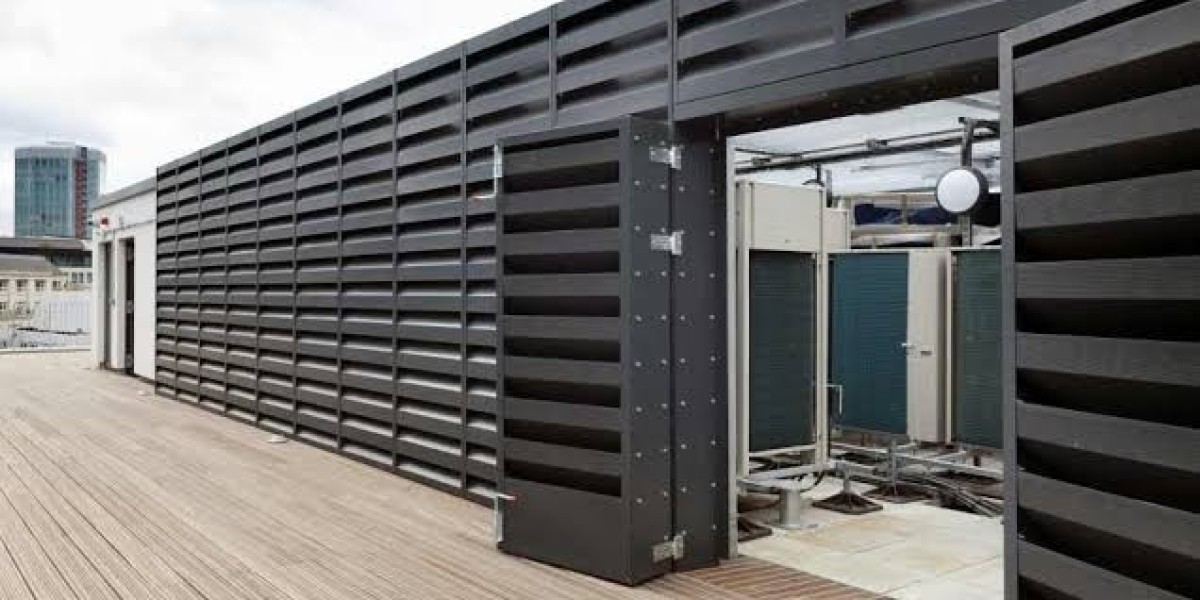

Walk past any DG set enclosure or ventilation unit these days, and there's a good chance you'll spot acoustic louver panels doing quiet, unglamorous work in the background. They're not flashy. But they solve a problem that plagues almost every industrial facility — how do you let air pass through freely while keeping the noise from escaping?
What Are Acoustic Louver Panels, Really?
At their core, acoustic louver panels are angled blade structures lined with sound-absorbing material, designed to allow airflow in one direction while blocking or dampening sound waves traveling in the other. Think of them as a filter — air gets through, noise mostly doesn't. That's the whole magic trick.
Ecotone Systems builds these panels specifically for spaces where ventilation can't be compromised: generator rooms, HVAC plant areas, transformer enclosures, compressor houses. You need the heat out, but you don't need the neighbors calling to complain.
Where Do They Actually Get Used?
Honestly, almost anywhere machinery breathes. DG set rooms need constant airflow to prevent overheating, but an open vent is basically a noise highway straight to the outside world. Acoustic louver panels close that gap. Data centers, too — server rooms run hot and loud, and standard shutters just don't cut it acoustically.
Ecotone Systems has supplied these across pharma plants, warehouses, and manufacturing units where CPCB noise norms aren't optional — they're enforced. A poorly ventilated enclosure isn't just a compliance headache; it's a fire risk waiting to happen.
What Makes a Good Acoustic Louver Panel?
Not all louvers are built equal, and this is where people get burned by cheap alternatives. A properly engineered panel balances three things: airflow efficiency, sound transmission loss, and weather resistance. Blade angle matters. Material density matters. Even the gap spacing between blades changes how much sound actually gets through.
Ecotone Systems designs its acoustic louver panels around these exact variables, testing airflow rates against decibel reduction so facilities don't have to choose between cooling and compliance. Galvanized steel frames, weatherproof coatings, and modular sizing mean these panels hold up in humid coastal plants just as well as dusty inland sites.
Installation Isn't an Afterthought
Here's something people miss — even the best acoustic louver panels underperform if installed wrong. Gaps around the frame, mismatched ductwork, poor sealing — any of these can quietly undo the acoustic benefit you paid for. It's worth getting the installation checked by someone who actually understands airflow dynamics, not just someone hanging metal sheets.
The Bottom Line
If your facility runs anything that generates heat and noise together — gensets, chillers, compressors — acoustic louver panels aren't optional extras anymore. They're becoming standard practice, partly due to tightening noise regulations and partly because nobody wants to work next to a screaming machine room all day.
Ecotone Systems has spent years refining this balance between airflow and acoustic performance, which is honestly the whole point of using louvers over solid barriers in the first place.