
Most people think trading psychology begins after the chart fails.
That is the first mistake.
The real problem often starts before the trade. It starts when a trader confuses preparation with certainty. It starts when a portfolio manager knows the rule, but breaks it anyway. It starts when pressure turns a smart person into a rushed person.
That is the useful angle on Evan Marks. His work is not interesting because it says mindset matters. Everyone says that now. His work is interesting because it treats performance as something that must survive contact with real stakes.
A calm journal entry is easy. A calm decision during a drawdown is different.
Why pressure exposes the real system
Markets do not only test strategy. They test identity.
A trader can have a clear thesis, clean risk limits, and strong research. Then volatility hits. The position moves against them. The body reacts first. The story changes second. Suddenly, the trader is not managing risk. They are defending pride.
This is where trading psychology becomes practical.
He is publicly described as the founder of M1 Performance Group and a mental performance coach for traders. Verified profiles also connect his background to hedge fund portfolio management, institutional trading, and high-pressure decision environments.
That matters because trading advice often sounds too clean. It assumes people follow their plan because the plan is written down. Anyone who has traded under stress knows better. A rule is not a rule until it holds when the screen turns red.
The overlooked gap between analysis and execution
The weakest part of many traders is not intelligence.
It is translation.
They know what to do in theory. They cannot access that knowledge in the moment that matters. That gap is where confirmation bias, loss aversion, overconfidence, anchoring, and revenge trading appear.
This is not a moral failure. It is a performance failure.
A useful trader does not ask, “Why am I emotional?” Emotions are part of risk. A better question is, “What does this emotion make me do next?”
Fear may tighten risk. Greed may distort sizing. Frustration may push a trader into poor entries. Shame may make them hide from the journal. Each emotion has a behavioral fingerprint.
That is the part most basic trading courses miss. They teach setups, indicators, macro narratives, and risk reward. They rarely train state control, recovery, attention, and decision hygiene.
Yet those are often the areas that decide consistency.
Traders are closer to athletes than analysts
Here is the uncomfortable truth.
A trader is not just a thinker. A trader is a performer.
That comparison is not motivational fluff. Athletes train movement until it becomes reliable under fatigue. Traders need the same approach with decisions. The goal is not to feel fearless. The goal is to execute cleanly while fear is present.
That frame also explains why Evan Marks’ background as a former Division I lacrosse player is relevant. Sport teaches one lesson that finance often forgets. You do not rise to your goals. You fall to your conditioning.
If your default habit is to widen stops, you will widen them under pressure. If your default habit is to check five opinions before acting, you will seek comfort during uncertainty. If your default habit is to chase after missing a move, your process will fail when dopamine enters.
Training must reach the nervous system, not just the notebook.
The hidden cost of being successful
High performers often have one private problem.
Their strengths become traps.
Confidence becomes stubbornness. Speed becomes impulsiveness. Pattern recognition becomes assumption. Independence becomes isolation. Ambition becomes exhaustion.
This is why performance coaching for traders, executives, and athletes cannot be reduced to positive thinking. The issue is not weakness. The issue is unmanaged strength.
A hedge fund manager may not need more motivation. They may need better recovery between decisions. A founder may not need more hustle. They may need to stop treating every problem as proof of personal failure. A trader may not need a better indicator. They may need to stop using activity as anxiety relief.
That is a harder message. It is also more useful.
What makes this angle different
The common internet version of trading psychology is too soft.
It says stay disciplined. Be patient. Control emotions. Follow the plan.
Good advice, but incomplete.
The better question is how.
How do you notice emotional drift before it becomes a trade? How do you recover after a loss without becoming timid? How do you stay aggressive without becoming reckless? How do you separate intuition from impulse?
Those questions create the real work.
A serious performance system should include a pre-trade state check and a written risk boundary. Add a trigger log, a post-loss reset, and a weekly review. Not because forms are magical. They are not. They work because they slow down the moment where identity tries to hijack process.
The aim is not perfect calm. The aim is clean behavior.
The lesson beyond trading
The reason this topic matters is bigger than markets.
Pressure reveals people. It shows how they decide when approval, money, reputation, or security feels threatened. That is why the same principles show up in leadership, athletics, entrepreneurship, and investing.
The person who cannot take a small loss in trading may also struggle to accept feedback at work. The executive who avoids hard conversations may also avoid portfolio truth. The athlete who panics after one mistake may understand the trader who cannot recover after one bad entry.
Different arenas. Same human system.
That is the lasting value of studying Evan Marks through this lens. The real subject is not one coach, one company, or one performance method. The subject is what happens when pressure meets identity.
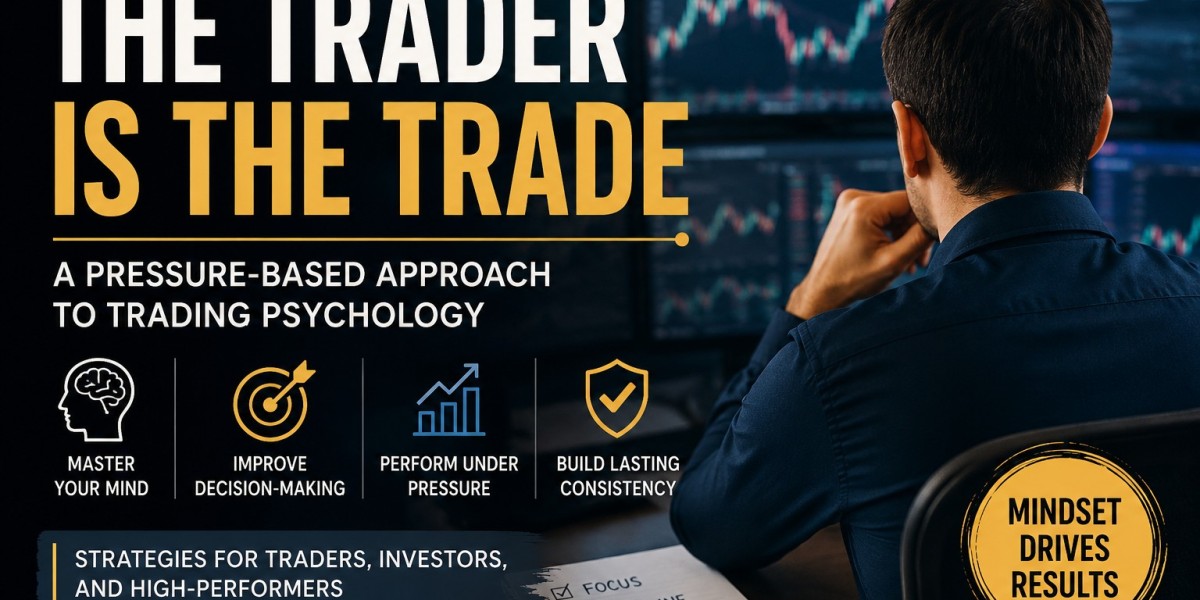
The trader is the trade.
Once you understand that, improvement stops being a hunt for another secret strategy. It becomes a more honest question.
Who do you become when the outcome matters?