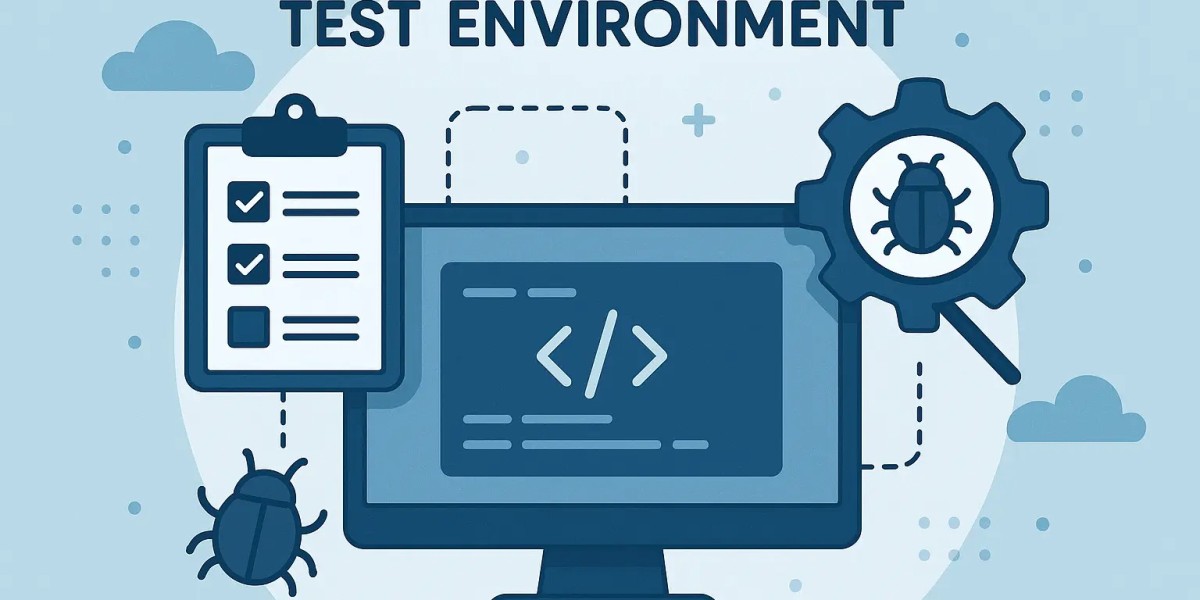

The gap between what tests verify and what production does is almost never a test quality problem. It's a test environment problem. The tests are checking the right things. They're checking them against an environment that doesn't behave the way production does, which means the checks don't catch the failures that actually happen.
This gap is one of the most persistent and expensive problems in software quality, and it persists not because teams don't understand that it exists but because closing it is genuinely difficult. Production environments are complex, stateful, and expensive to replicate. Test environments are simplified, controlled, and affordable. The simplifications that make test environments affordable are the same simplifications that make them inaccurate.
Understanding what a test environment actually needs to look like to provide meaningful protection requires being specific about which production characteristics matter for which types of failures, and which simplifications are acceptable rather than treating environment parity as an all-or-nothing proposition.
The Properties That Have to Match
Not all production characteristics are equally important to replicate in a test environment. Some differences between test and production are inconsequential. Others are the direct cause of the class of bugs that tests don't catch.
Database configuration is in the consequential category. A test database running without the index configuration of production will produce query execution plans that differ from production. A test that passes because a query runs acceptably against an unindexed test database can mask a query that runs unacceptably against the indexed production database or vice versa. The index configuration isn't a cosmetic detail. It's part of what determines how the application behaves under realistic data volumes.
Network latency is another consequential characteristic. Applications that work correctly when all dependencies respond in milliseconds can fail or behave incorrectly when dependencies respond in hundreds of milliseconds. Race conditions that don't manifest in low-latency test environments appear in production where network calls take realistic amounts of time. Tests that pass in a zero-latency environment aren't providing evidence about behavior in realistic latency conditions.
Authentication and authorization configuration is the most directly consequential category. A test environment where authentication is disabled or simplified because it's convenient to skip doesn't test the authorization logic that determines what real users can access. The tests that pass in this environment provide no evidence about whether the authorization is correct.
Data volume and distribution matters in ways that are easy to underestimate. An application that handles ten records in testing and ten thousand in production can exhibit behavior that never appeared in testing purely because of the scale difference. Database queries that execute acceptably on small datasets can timeout on large ones. Memory management that works correctly for small data volumes can fail for large ones.
The Infrastructure Decisions That Determine Accuracy
The decisions made when setting up a test environment, often under time pressure early in a project, determine how accurately that environment reflects production for the lifetime of the project. Changing those decisions later is possible but requires effort proportional to how much has been built on top of them.
Infrastructure as code is the decision that has the most downstream impact on environment accuracy. When the test environment is defined as code using the same tooling as the production environment, maintaining parity is a matter of keeping the code consistent. When the test environment was set up manually and exists primarily in the institutional knowledge of whoever set it up, maintaining parity requires that the person with that knowledge actively propagates production changes to the test environment, which doesn't happen reliably.
Container-based environments provide better parity than manually configured virtual machines or physical servers because the container definition is the environment definition. The same container image that runs in test can run in production. The differences between environments are explicit configuration differences rather than implicit state differences accumulated over time through manual changes.
Service virtualization decisions determine how accurately the test environment replicates the behavior of external dependencies. Mock services that return predetermined responses are fast and controllable but inaccurate to the extent that predetermined responses don't reflect how the real service behaves under various conditions. Traffic-based mocks generated from real service interactions, like those Keploy produces from recorded API traffic, replicate actual service behavior including the edge cases and error conditions that predetermined responses don't anticipate.
The Maintenance Problem That Develops Over Time
A test environment that was accurate when it was set up becomes less accurate over time unless deliberate effort is made to keep it current with production. Production environments evolve through configuration changes, dependency updates, and infrastructure modifications. Test environments that are maintained by separate processes, on separate schedules, by people who may not know what changed in production and why, drift from production in ways that accumulate silently.
The drift becomes visible when tests pass and production fails. The debugging process that follows is frustrating because the failure can't be reproduced in the test environment, which means the environment itself is part of the problem but the environment is the thing that was supposed to prevent problems.
Automating the propagation of production configuration changes to test environments is the only sustainable approach to this problem. Not automating the propagation of all production changes, some of which shouldn't go to test environments, but automating the identification of configuration differences between environments and surfacing those differences for explicit decisions about whether and how to propagate them.
Environment-Specific Failure Categories
Different types of environment misconfiguration produce different categories of failures, and knowing which category is occurring helps identify what the environment misconfiguration is.
Failures that only occur at the end of a test run, or that occur intermittently and are more common under high concurrency, often indicate resource exhaustion problems. Connection pools that are sized for low concurrency get exhausted under parallel test execution. Memory limits that are set lower in test than in production produce out-of-memory failures that don't occur in production.
Failures that occur only in CI but not locally often indicate environment variable differences. The CI environment has different configuration than the developer's local environment, and some configuration that's present locally is absent in CI. These failures are frustrating because they can't be reproduced in the environment where debugging is most convenient.
Failures that occur in test but not production often indicate that the test environment is more restrictive than production in ways that aren't intentional. Stricter validation, tighter timeouts, lower resource limits. These failures appear to be bugs but are actually environment misconfigurations that cause the application to fail under conditions that production doesn't impose.
Failures that occur in production but not in test, the most consequential category, indicate that the test environment is less restrictive than production in ways that mask real bugs. The exact circumstances that produce the production failure are absent from the test environment, so the bug that causes it can't be triggered by any test that runs in that environment.