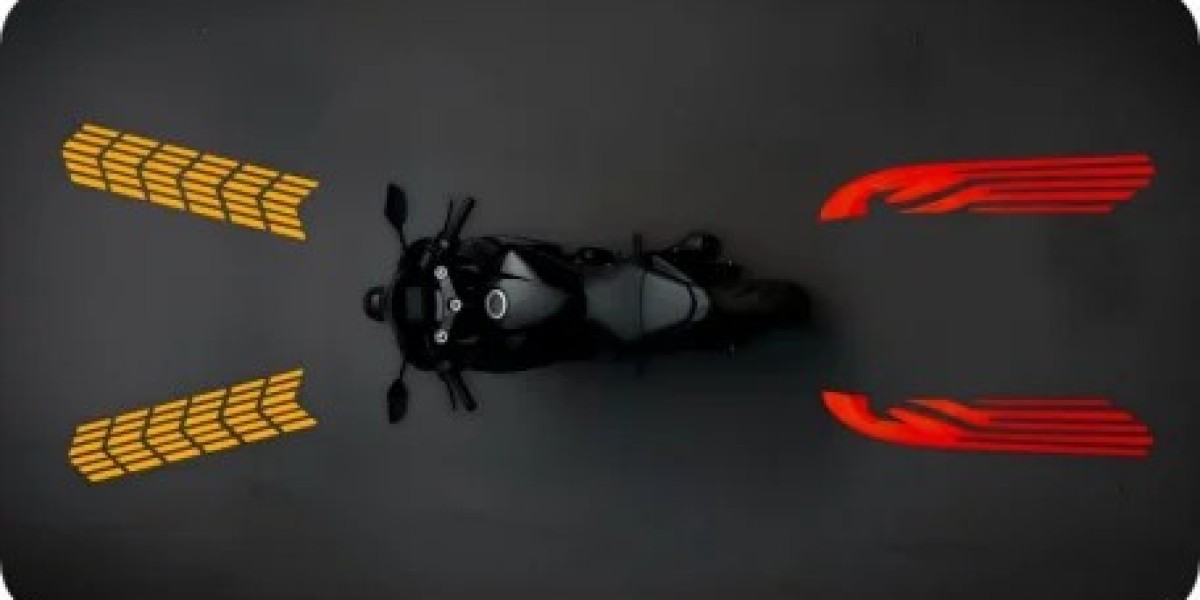

Many motorcycle riders believe that brighter headlights automatically mean safer riding.
The reality is more complicated.
A motorcycle can have a powerful LED headlight, but if the beam pattern lacks precision, riders may still struggle to see hazards, road signs, or sharp turns. At the same time, excessive glare can reduce visibility for oncoming traffic and create new safety risks.
This challenge has pushed lighting manufacturers to develop more advanced optical solutions. One technology attracting attention is Motorcycle MLA Projection Lighting. MLA, or Micro Lens Array technology, helps control and distribute light more precisely than many conventional lighting systems.
As motorcycles become faster, smarter, and more connected, lighting performance has become a critical safety factor rather than a simple design feature.
This article explores the real-world problems associated with traditional motorcycle lighting and explains why Motorcycle MLA Projection Lighting is becoming an important solution.
The Visibility Problem Riders Face Every Day
Motorcycle riders operate with a smaller visual footprint than cars and trucks.
Research from the U.S. National Highway Traffic Safety Administration (NHTSA) consistently highlights visibility as a major factor in motorcycle safety. Drivers often fail to detect motorcycles, especially at intersections and during low-light conditions.
For riders, visibility involves two separate challenges:
- Seeing the road clearly
- Being seen by other road users
Many traditional headlights focus heavily on brightness while overlooking beam precision. As a result, some areas receive too much light while others remain poorly illuminated.
That is like carrying a flashlight powerful enough to light a football stadium but somehow missing the stairs directly in front of you.
Source: National Highway Traffic Safety Administration (NHTSA)
Why Conventional Beam Patterns Often Waste Light
A headlight produces value only when the light reaches useful locations.
Many conventional motorcycle lighting systems lose efficiency because they scatter light beyond the areas riders actually need to see.
Poor beam control creates several problems:
- Reduced long-distance visibility
- Uneven road illumination
- Increased glare for other drivers
- Less effective corner visibility
Automotive lighting standards developed by organizations such as the Society of Automotive Engineers (SAE) and UNECE emphasize beam distribution because visibility depends on light placement, not simply output.
Motorcycle MLA Projection Lighting addresses this issue by using micro-optical structures that help guide light with greater precision.
This allows more usable illumination without relying solely on higher brightness levels.
The Growing Problem of Glare
Many riders assume brighter headlights improve safety for everyone.
Unfortunately, glare tells a different story.
Research in traffic safety shows that excessive glare can reduce visibility and increase driver discomfort. When light reaches areas outside the intended beam pattern, oncoming road users may struggle to detect hazards or judge distances accurately.
Motorcycle MLA Projection Lighting helps reduce this problem by improving optical control.
Instead of scattering light broadly, the micro lens array directs illumination toward specific target zones.
The result is better road visibility while minimizing unnecessary glare.
A good lighting system should help others see the road, not leave them wondering whether the sun suddenly rose at midnight.
Night Riding Demands Better Optical Precision
Night riding places greater demands on lighting performance.
According to road safety studies, fatal crash rates increase significantly during nighttime conditions because visibility decreases and reaction times become more important.
Riders need clear illumination of:
- Road markings
- Curves
- Obstacles
- Pedestrians
- Animals
- Traffic signs
Motorcycle MLA Projection Lighting improves optical uniformity across the beam pattern. Better light distribution helps riders identify hazards earlier and react more effectively.
More reaction time often means more safety.
That simple advantage becomes valuable on rural roads, highways, and poorly lit streets.
Source: Insurance Institute for Highway Safety (IIHS)
Why Energy Efficiency Matters for Modern Motorcycles
Modern motorcycles rely on multiple electronic systems.
Navigation units, communication devices, heated accessories, rider-assistance features, and charging ports all compete for electrical power.
Efficient lighting helps reduce system load.
The U.S. Department of Energy notes that advanced optical systems can improve lighting effectiveness by directing light more efficiently toward intended targets rather than wasting energy.
Motorcycle MLA Projection Lighting supports this goal through improved optical utilization.
Instead of producing more light to solve visibility issues, manufacturers can focus on using available light more effectively.
That approach often improves both performance and efficiency.
Weather Conditions Reveal Lighting Weaknesses
Most headlights perform reasonably well on clear nights.
The real test begins when weather conditions change.
Rain, fog, dust, and mist reduce visibility by scattering light and lowering contrast. Poor beam design becomes much more noticeable under these conditions.
Motorcycle MLA Projection Lighting helps maintain beam consistency by managing light distribution more accurately. Riders benefit from improved visibility because more light reaches useful road surfaces rather than dispersing into the surrounding environment.
No lighting system can completely eliminate bad weather challenges.
However, better optical control can reduce some of the visibility limitations riders encounter.
Why Future Motorcycle Lighting Is Moving Toward Precision
The automotive industry increasingly focuses on intelligent lighting systems.
Manufacturers continue developing adaptive headlights, matrix lighting technologies, and advanced projection systems designed to improve safety without increasing glare.
Motorcycle MLA Projection Lighting aligns with this trend because it prioritizes precision rather than raw brightness.
Modern lighting design increasingly answers a simple question:
"Where should the light go?"
The better the answer, the safer the ride.
As optical engineering advances, precision-based lighting solutions will likely play a larger role in motorcycle safety strategies worldwide.
Conclusion
Traditional motorcycle headlights often struggle with uneven illumination, wasted light, excessive glare, and limited optical precision. These shortcomings can affect visibility, rider confidence, and overall safety.
Motorcycle MLA Projection Lighting addresses many of these challenges by using micro lens array technology to control and distribute light more effectively. The result is improved beam quality, better road illumination, enhanced energy efficiency, and reduced glare for other road users.
As motorcycle technology continues to evolve, lighting systems must do more than generate brightness. They must deliver light exactly where riders need it.
For manufacturers, engineers, and riders seeking safer night-time performance, Motorcycle MLA Projection Lighting represents a practical step toward smarter and more effective visibility solutions.