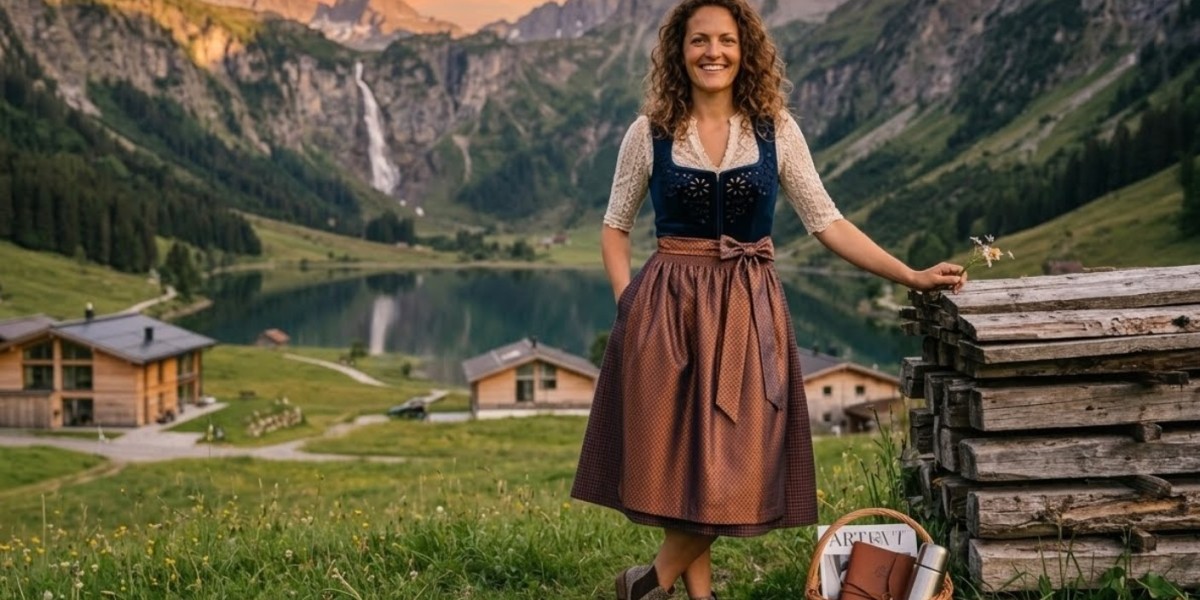

The german dirndl styles found across southern Germany are as diverse and distinct as the regions that created them. While the world tends to see the dirndl as a single unified look, the reality is that authentic traditional Tracht varies significantly from valley to valley, state to state, and community to community — each with its own colors, fabrics, cuts, and embellishments that tell the story of the people who wear it. At Elederhosen, we celebrate that regional diversity in every dirndl we offer, believing that the richness of these differences is exactly what makes this garment so extraordinary.
Understanding how dirndl styles differ by region gives every woman who wears one a much deeper connection to what she has on. Whether your roots are in Upper Bavaria, Franconia, or the Black Forest, there is a specific regional tradition behind the dress that speaks directly to that heritage — and knowing that tradition makes wearing a dirndl a genuinely meaningful experience rather than simply putting on a beautiful outfit.
Why Regional Differences in the Dirndl Matter
The dirndl was never designed as a single national uniform. It grew organically from the specific needs, resources, and cultural identities of individual Alpine communities, which is why no two authentic regional styles look exactly alike. The colors chosen, the length of the skirt, the weight of the fabric, and the style of embroidery all served as a geographic fingerprint that identified where a woman came from the moment she walked into a room.
At Elederhosen, we understand that preserving these regional differences is not just about aesthetics — it is about honoring the communities and histories that shaped each distinct style over centuries of careful cultural tradition.
Upper Bavaria — The Classic Alpine Dirndl
Upper Bavaria, including iconic sub-regions like Miesbach and Chiemgau, is home to the most globally recognized dirndl style and the one that has most heavily influenced festivals like Oktoberfest and international fashion alike.
Skirts in this region are traditionally full maxi-length, reaching the ankles to protect against cold mountain air, with bodices featuring clean and robust structural lines that define the classic Alpine silhouette.
Deep forest greens, navy blues, and rich reds dominate the color palette, paired with sturdy premium fabrics like high-quality velvet, dense wool, and heavy linen that reflect the demanding Alpine environment these garments were built for.
Intricate Alpine flower motifs — particularly edelweiss embroidery — are common focal points on the bodice and apron, along with decorative silver hook-and-eye fastenings that add a refined finishing touch to the overall look.
Franconia — The Lighter Northern Bavarian Style
Franconian dirndl styles, stemming from areas around Nuremberg, Würzburg, and Bamberg in northern Bavaria, move away from the heavy Alpine aesthetic toward a lighter and more pastoral design rooted in agricultural working life.
Skirts typically feature midi to shorter lengths reaching the mid-calf, with cuts historically designed around practical freedom of movement for women working in farming and rural household environments.
The color palette shifts to warmer earthy tones including golden yellows, rustic browns, and soft terracotta shades, with lighter cotton and flax linen replacing the heavy velvet and wool of the southern Alpine styles.
Embellishments lean toward rustic farm-inspired patterns and delicate floral prints rather than the heavy metallic textures and elaborate embroidery found further south, giving Franconian dirndls a charming simplicity that is entirely their own.
Swabia and the Black Forest — Understated Elegance from Baden-Württemberg
Located in southwestern Germany, the dirndl styles of Swabia and the Black Forest region of Baden-Württemberg take a distinctly different approach, prioritizing understated elegance and exceptional precision tailoring over bold visual impact.
Skirts range from short to midi length with structured bodices that emphasize clean precise lines, reflecting the Swabian cultural preference for restrained craftsmanship over decorative excess.
Soft pastel tones, muted grays, and deep blacks define the color palette of this region, with heavy wool and fine linen dominating Black Forest variations in a way that feels simultaneously modest and deeply sophisticated.
The Black Forest is also home to one of the most visually iconic regional accessories in all of German Tracht tradition — the Bollenhut hat featuring large wool pompoms in red for unmarried women and black for married women, paired with exceptional hand-stitching and delicate pleating techniques that set this regional style apart from every other.
Universal Elements Shared Across All Regional Dirndl Styles
Despite their significant differences, all authentic regional dirndl styles share a set of structural constants that define the garment as a whole regardless of where it was made.
The apron bow placement tradition is universal across all regions — tied on the left means single, on the right means married or taken, and at the back signifies a widow or service staff working at the event.
The blouse is always cut short and cropped right below the bustline across all regional variations, preventing fabric from bunching underneath the tight-fitting bodice and maintaining the clean structured silhouette the dirndl is known for.
These shared elements prove that despite all their regional diversity, every authentic dirndl belongs to the same living cultural family — a family that Elederhosen is proud to represent in every piece we offer.
Frequently Asked Questions About German Dirndl Styles by Region
Q1: How many regional dirndl styles exist in Germany?
The most prominent regional styles are found in Upper Bavaria, Franconia, and Swabia and the Black Forest region of Baden-Württemberg, each with distinct cuts, colors, fabrics, and embellishments. Beyond these major regions, countless sub-regional variations exist within individual Alpine valleys and communities across southern Germany.
Q2: What makes Upper Bavarian dirndl styles different from other regions?
Upper Bavarian dirndls are characterized by full ankle-length skirts, deep forest greens and navy blues, heavy velvet and wool fabrics, and intricate edelweiss embroidery. They are the most globally recognized style and the one most closely associated with Oktoberfest and international festival culture.
Q3: What is the Bollenhut and which region does it come from?
The Bollenhut is a traditional regional headdress from the Black Forest area of Baden-Württemberg featuring large wool pompoms — red for unmarried women and black for married women. It is one of the most visually distinctive regional accessories in all of German Tracht tradition and is worn alongside the understated Swabian dirndl style.
Q4: Do all regional dirndl styles use the same apron bow tradition?
Yes — the apron bow placement tradition is universal across all regional dirndl styles in Germany. Left means single, right means married or taken, and back means widowed or working as service staff, making it a shared cultural language that connects all regional variations of the garment.
Q5: Where can I find authentic German dirndl styles from different regions?
Elederhosen offers a carefully curated collection of authentic dirndl dresses that draw from the rich regional traditions of southern Germany. Whether you are looking for the classic Alpine look of Upper Bavaria or a more understated elegant style, every piece in our collection is crafted with genuine quality and deep respect for the regional heritage behind it.
Final Thought
The regional diversity of German dirndl styles is one of the most fascinating and underappreciated aspects of this extraordinary garment. From the bold Alpine maxi of Upper Bavaria to the pastoral lightness of Franconia to the refined precision of the Black Forest, each regional style tells a different story about the people and places that created it. At Elederhosen, we honor every one of those stories in the dirndl collections we offer — because we believe that the full richness of this tradition deserves to be celebrated, worn, and carried forward with pride.