
In today's interconnected business and financial landscape, organizations regularly engage with customers, suppliers, lenders, investors, and business partners. While these relationships create growth opportunities, they also expose businesses to various risks.
Counterparty Risk refers to the possibility that one party involved in a financial transaction or contractual agreement may fail to fulfill its obligations. This failure can result in financial losses, operational disruptions, and reputational damage for the other party. Counterparty risk is especially important in banking, insurance, supply chain finance, investment management, and trade finance.
Understanding and managing counterparty risk is essential for maintaining financial stability and ensuring long-term business success.
What is Counterparty Risk?
Counterparty Risk is the risk that the other party in a financial transaction, contract, or business agreement will default on its obligations.
In simple terms, it occurs when a customer, supplier, borrower, or trading partner fails to make payments, deliver goods, or honor contractual commitments.
Examples of Counterparty Risk
- A borrower fails to repay a loan.
- A customer does not pay an outstanding invoice.
- A supplier fails to deliver products as agreed.
- A company defaults on a financial derivative contract.
In each case, the affected organization may experience financial losses or business disruptions.
Why is Counterparty Risk Important?
Managing Counterparty Risk helps organizations protect revenue, maintain cash flow, and reduce uncertainty.
Financial Protection
Identifying risky counterparties reduces the likelihood of payment defaults and losses.
Better Decision-Making
Risk assessments help businesses choose reliable customers, suppliers, and partners.
Business Continuity
Monitoring counterparties ensures smoother operations and minimizes disruptions.
Regulatory Compliance
Financial institutions must evaluate and manage counterparty exposures to comply with regulatory requirements.
Types of Counterparty Risk
Credit Risk
Credit risk arises when a borrower or customer fails to repay debt or fulfill financial obligations.
Example
A company extends credit terms to a customer who later becomes unable to pay.
Settlement Risk
Settlement risk occurs when one party completes its obligation, but the other party fails to do so.
Example
An exporter ships products overseas but does not receive payment from the buyer.
Market Risk
Changes in market conditions may affect a counterparty's ability to meet contractual commitments.
Example
A sudden economic downturn may increase the risk of business defaults.
Operational Risk
Operational failures, fraud, or internal process issues can impact a counterparty's performance.
Example
A supplier experiences production delays and cannot deliver materials on time.
Common Causes of Counterparty Risk
Several factors can increase counterparty risk.
Weak Financial Health
Companies with poor cash flow, high debt levels, or declining profitability are more likely to default.
Economic Instability
Inflation, recessions, and market volatility can affect a counterparty's financial strength.
Poor Due Diligence
Insufficient background checks may lead to partnerships with high-risk entities.
Fraud and Misrepresentation
False financial information can hide underlying risks.
Industry-Specific Challenges
Some industries face higher default rates due to market conditions and operational complexities.
How to Assess Counterparty Risk
Organizations use various methods to evaluate the reliability of counterparties.
Financial Analysis
Reviewing financial statements, profitability, and liquidity ratios.
Credit Reports
Examining credit scores and payment histories.
Business Verification
Confirming company registration, ownership, and operational status.
Compliance Screening
Checking sanctions lists, regulatory violations, and legal issues.
Risk Scoring Models
Using automated systems to assign risk ratings based on multiple factors.
How to Manage Counterparty Risk
Conduct Thorough Due Diligence
Verify financial stability, business reputation, and operational capability before entering agreements.
Diversify Business Relationships
Avoid relying heavily on a single customer, supplier, or partner.
Set Credit Limits
Establish exposure limits to reduce potential losses.
Monitor Counterparties Continuously
Regular monitoring helps identify changes in financial health and risk levels.
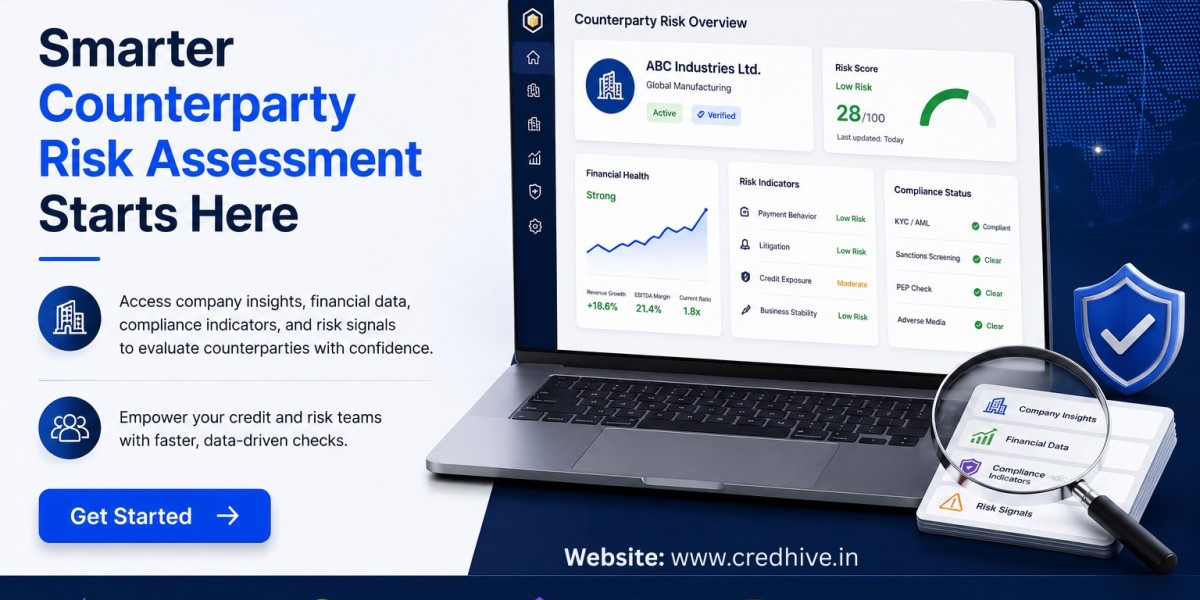
Use Risk Intelligence Platforms
Advanced risk intelligence tools provide real-time insights into counterparties and emerging risks.
Role of Technology in Counterparty Risk Management
Modern technology has significantly improved risk monitoring and assessment.
Artificial Intelligence (AI)
AI analyzes large datasets to identify hidden risk patterns and predict potential defaults.
Risk Intelligence Platforms
These platforms provide comprehensive insights into customer, supplier, and partner risks.
Real-Time Monitoring
Businesses receive alerts when risk indicators change.
Predictive Analytics
Forecasts future risks using historical and current data.
Automated Reporting
Improves compliance and simplifies risk management processes.
Technology-driven solutions help organizations make faster and more informed decisions.
Benefits of Effective Counterparty Risk Management
Reduced Financial Losses
Early identification of risks helps prevent defaults and payment delays.
Improved Cash Flow
Working with financially stable counterparties enhances payment reliability.
Stronger Business Relationships
Businesses can build long-term partnerships with trustworthy organizations.
Better Compliance
Organizations can meet regulatory and governance requirements more efficiently.
Enhanced Business Resilience
Proactive risk management helps organizations navigate economic uncertainty.
Conclusion
Counterparty Risk is a critical aspect of modern business and financial management. It represents the possibility that a customer, supplier, borrower, or business partner may fail to fulfill contractual obligations, resulting in financial or operational losses.
By conducting thorough due diligence, leveraging risk intelligence tools, and continuously monitoring counterparties, organizations can significantly reduce risk exposure. As business environments become increasingly complex, effective Counterparty Risk management is essential for protecting profitability, ensuring operational continuity, and supporting sustainable growth.