There are batsmen who play cricket, and then there are batsmen who make the game look different. Rohit Sharma belongs firmly in the second category. His ability to absorb pressure, construct innings at his own pace, and then shift through gears with an almost casual authority has made him one of the most technically gifted and aesthetically pleasing batsmen of his generation.
His journey from a talented but inconsistent middle-order player to the opener who holds multiple world records for the highest individual scores in ODI cricket is a story that cricket fans — whether they follow the game on satellite television, through a dedicated online cricket ID platform, or in stadiums from Mumbai to Manchester — never tire of revisiting.
Origins: Rohit Before the Fame
Rohit Gurunath Sharma was born on April 30, 1987, in Nagpur, Maharashtra, but grew up in Mumbai. His early years were not affluent. He lived with his grandparents and uncle in Borivali, visiting his parents only during weekends as his father's income was not sufficient to support the whole family in one home.
Cricket emerged as both escape and ambition. He joined the Swami Vivekanand International School and came under the mentorship of coach Dinesh Lad, who recognized his natural talent immediately. Lad made a decision that would change cricket history — he convinced Rohit's family to enroll him at a school with better cricketing facilities and arranged a cricket scholarship that covered part of the costs.
The story of coach Lad funding a school admission form from his own pocket when Rohit's family could not afford it is well documented. It is the kind of anecdote that reminds sport observers that great careers are often shaped by small acts of generosity and belief from people outside the spotlight.
The Early International Years: Talent Waiting to Bloom
Rohit made his international debut in 2007 and spent the next several years in cricket's most uncomfortable position — being widely regarded as enormously talented while being unable to convert that talent into consistent international performances. He batted at number five and six in ODIs, positions that rarely allow a player to build the long, set innings that showcase technical ability.
The inconsistency frustrated fans and selectors alike. There were glimpses of brilliance — an effortless hundred here, a magical cameo there — but the sustained run-scoring that separates elite cricketers from merely very good ones remained elusive. Critics suggested he lacked the hunger of some of his peers, a charge that Rohit himself has addressed in interviews by acknowledging that he needed the right opportunity and role to find his best cricket.
That opportunity arrived in 2013 when Indian captain MS Dhoni and coach Duncan Fletcher made the controversial decision to move Rohit to the top of the ODI batting order. The result was immediate and extraordinary.
The Opening Transformation and World Records
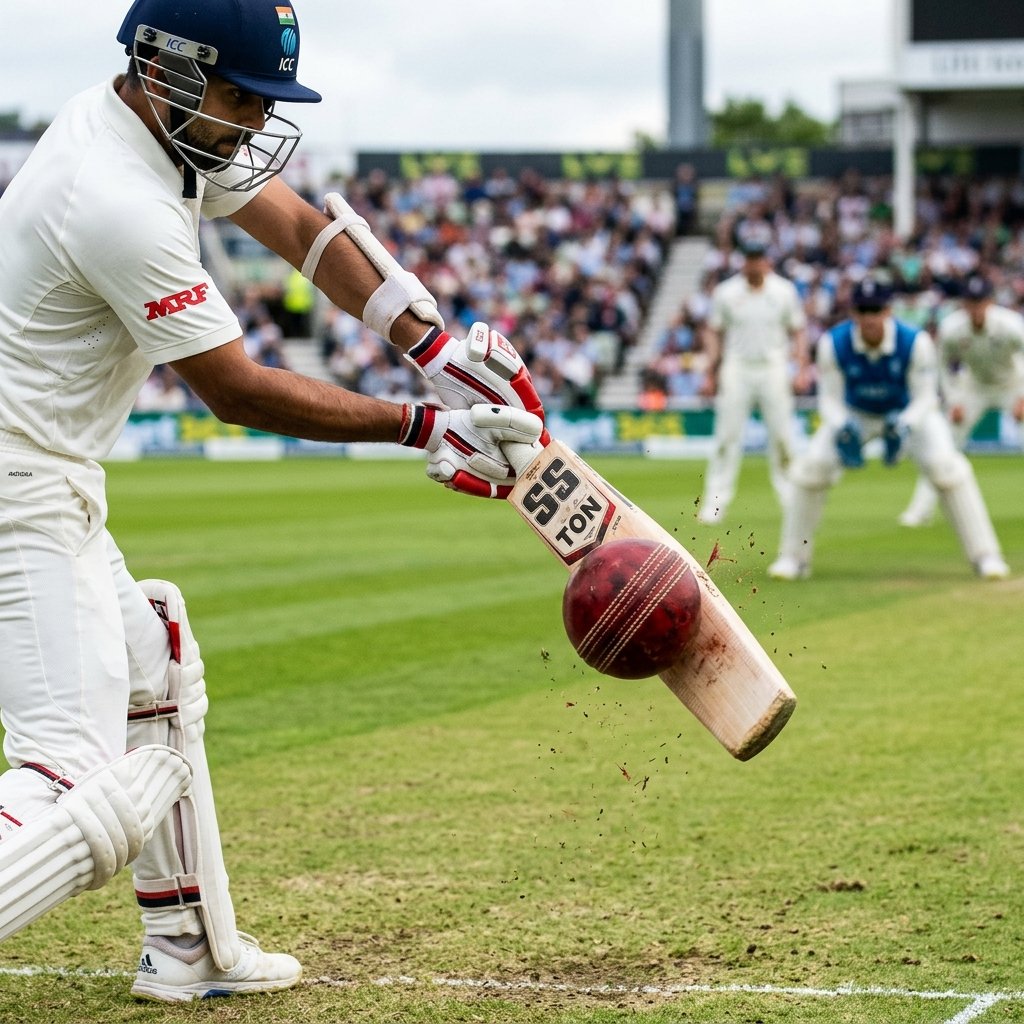
As an opener, Rohit Sharma became a different cricketer entirely. Freed from the constraints of entering on a sticky wicket mid-innings, he could now set the tempo from the first ball. His ability to read the line and length of deliveries early in an innings, a quality that coaches noticed from his academy days, became a decisive advantage.
The records followed rapidly. In 2013 he scored 209 against Australia in Bengaluru, the highest individual score in ODI cricket at that time. He followed it with 264 against Sri Lanka in 2014, a score that remains the highest individual ODI innings in history and which he scored while appearing to play within himself for long stretches.
Fans who follow cricket records through platforms that offer a demo cricket id feature to explore historical statistics consistently encounter Rohit's triple assault — 209, 264, and 208 — as one of the great statistical anomalies in cricket. No other batsman has scored three double centuries in ODI cricket. The next best on the all-time list has one.
IPL Dominance: Mumbai Indians and the Captain's Touch
Beyond international cricket, Rohit Sharma’s most remarkable achievements have come as the captain of Mumbai Indians in the IPL. Under his leadership, the franchise established itself as one of the most dominant teams in the league, securing five championship titles before 2023 and remaining a strong contender through the 2026 season.
Rohit’s approach to captaincy contrasts sharply with his calm and composed batting style. While he appears effortless and patient at the crease, his leadership is defined by sharp tactical awareness and bold decision-making. He places immense trust in his bowlers, is unafraid to introduce spin early when conditions support it, and possesses an exceptional instinct for identifying crucial momentum shifts during a match.
Teammates and former players frequently praise Rohit for creating a positive team culture where every individual feels supported and valued. He has also shown great confidence in emerging talent, often backing young domestic cricketers and giving them opportunities on the big stage. Many of these rising players first gained visibility through platforms and systems connected to cricket development, much like how fans stay engaged with the game through services such as 11xplay pro login His willingness to invest in young talent has consistently delivered results, strengthening Mumbai Indians’ long-term success.
Test Cricket: The Reluctant but Brilliant Opener
Rohit's Test career experienced a similar transformation to his ODI journey. For years he batted in the middle order and produced some excellent innings on home pitches while struggling in certain overseas conditions. In 2019, then Test captain Virat Kohli moved him to the top of the Test order, and the results were immediate.
His first Test match as opener produced a century in both innings against South Africa in Visakhapatnam. He followed that with consistent performances across home and away series, becoming one of India's most reliable Test openers. The technique that had always been there — the weight transfer, the soft hands on cut and pull shots, the ability to leave the ball with composure — suddenly had the right context to express itself.
Captaincy of India: A Calculated and Consistent Leader
Rohit became India's T20I captain in 2021 and eventually took over Test and ODI captaincy from Virat Kohli. His reign has been characterised by stability, consistent selection policy, and a calm approach to the endless scrutiny that comes with leading Indian cricket.
Under his captaincy, India won the T20 World Cup in 2024 — a tournament they had not won since the first edition in 2007. That win, achieved with a combination of experienced performers and young talent developed through the IPL pipeline, is widely considered the defining achievement of his captaincy tenure.
By 2026, Rohit continues to lead India in Test cricket. His record as captain — win percentages in the mid-70s across formats — stands comparison with any captain in Indian cricket history.
The Rohit Lifestyle: Balance, Family, and Longevity
Unlike some contemporaries who have built empires of brand partnerships and public appearances, Rohit Sharma has generally preferred a more private life. He married Ritika Sajdeh, his long-time partner, in 2015, and their daughter Samaira was born in 2018. He speaks warmly about the grounding effect of family life in a career defined by constant travel and public scrutiny.
His approach to fitness evolved significantly after 2016, when a persistent hamstring injury threatened to derail his career. He worked with physical trainers and nutritionists to rebuild his body and has since maintained a rigorous but intelligent fitness regime that prioritises injury prevention alongside performance enhancement.
For those who follow his career through platforms offering the 11xplay black experience — tracking match statistics, form guides, and performance analytics — Rohit's longevity at the top level is one of the most compelling stories in current cricket. He has sustained elite performance into his late thirties, an achievement that speaks to both physical preparation and continued mental engagement with the game.
Frequently Asked Questions
What is Rohit Sharma's highest ODI score?
Rohit holds the record for the highest individual score in ODI cricket — 264 runs against Sri Lanka in Kolkata in November 2014. He also scored 209 against Australia in 2013 and 208 against Sri Lanka in 2017, making him the only player with three ODI double centuries.
How many IPL titles has Rohit Sharma won?
As captain of Mumbai Indians, Rohit has won five IPL titles — in 2013, 2015, 2017, 2019, and 2020. This makes him the most successful captain in IPL history by number of titles.
What is Rohit Sharma's captaincy record?
Rohit's captaincy record across formats is among the best in Indian cricket history. His most notable achievement as captain is India's T20 World Cup victory in 2024, their first ICC tournament win in over a decade.
Why is Rohit Sharma called the Hitman?
The nickname reflects his ability to destroy bowling attacks once set. His pull shot, straight hit, and ability to convert good starts into massive innings earned him the reputation as someone capable of dismantling any bowling lineup in a matter of overs.