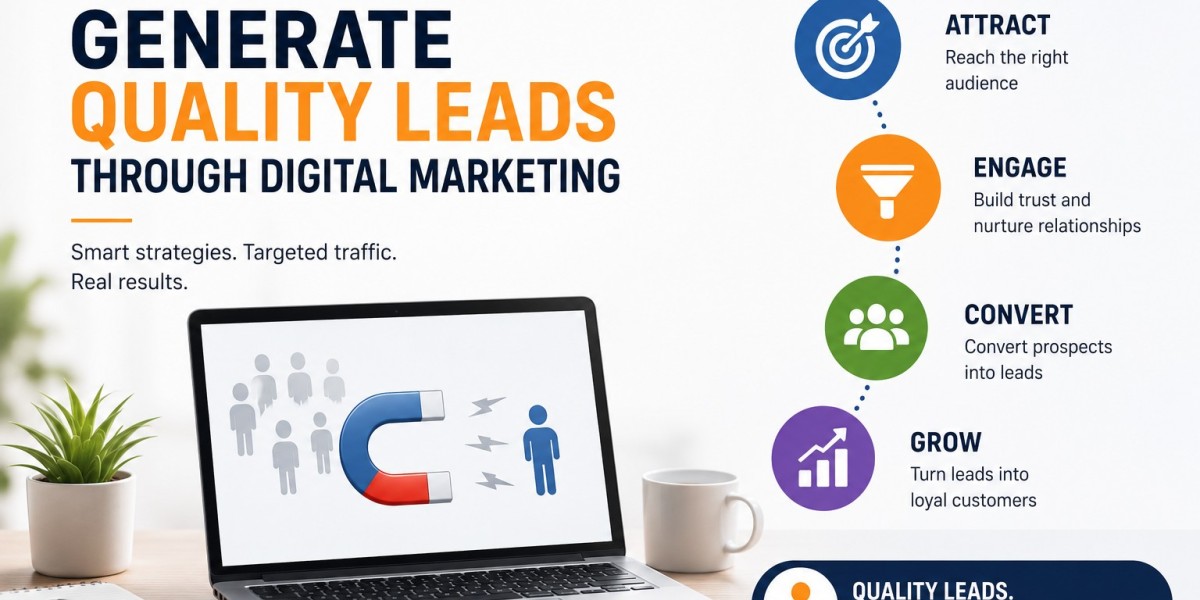

Every business needs a steady stream of customers to survive, but finding them isn’t as straightforward as it used to be. Decades ago, companies could throw up a billboard, buy a radio ad, or print a batch of flyers and wait for the phone to ring. Today, the marketplace is incredibly crowded, and consumers have become experts at tuning out traditional advertising.
Because of this shift, finding new customers has become one of the biggest hurdles for modern business owners. You might be getting thousands of visitors to your website or gaining hundreds of followers on social media, yet your sales team is still struggling to hit their targets.
This brings us to a major realisation: there is a massive difference between chasing quantity and securing quality when it comes to your prospective customers.
Getting a high volume of traffic means very little if those visitors have no real intention of buying what you sell. This is where a strategic approach to online lead generation changes the game. By utilising targeted digital channels, you can stop shouting into the void and start attracting the exact people who are actively looking for your solutions.
What Are Quality Leads?
Before we look at the specific strategies, let’s define what we mean by a "quality lead."
In simple terms, a quality lead is a prospective customer who has a genuine need for your product or service, possesses the budget to afford it, and holds the authority to make a purchasing decision. They aren't just browsing the web out of casual curiosity; they are actively seeking an answer to a specific problem they face.
[Casual Web Visitor] ➔ Interested in free information[Unqualified Lead] ➔ Has the problem, but no budget or wrong industry[Quality Lead] ➔ Has the problem + has the budget + ready to buyFocusing your energy on these qualified prospects is infinitely more valuable than chasing massive volumes of unqualified web traffic. Think about it from a practical business perspective:
Your sales team wastes less time chasing dead ends.
Your marketing budget goes much further because you aren't paying for irrelevant clicks.
Your sales cycle becomes shorter because these buyers are already primed to purchase.
Ultimately, shifting your focus toward lead quality directly impacts your bottom line, resulting in higher conversion rates, happier sales teams, and a much healthier return on investment.
Why Digital Marketing Is Effective for Lead Generation
Digital marketing has completely transformed the way businesses interact with their audience. It levels the playing field, allowing growing businesses to compete directly with massive corporations. Here is why it is the most effective tool available for modern lead generation:
Wider Audience Reach
The internet removes all geographical boundaries. Whether you want to reach local clients in your neighbourhood or expand your B2B services to international markets, digital channels give you instant access to a global audience.
Precision Targeting
Unlike traditional print or broadcast media, digital platforms allow you to target your audience with surgical precision. You can filter your campaigns by exact demographics, geographic locations, specific online behaviours, job titles, and deeply personal interests.
Cost-Effective Scaling
Digital campaigns can be adjusted to fit almost any budget. You can start small, test what works, and only increase your spending once you see a clear, positive return on your investment. This minimises financial risk.
Measurable Performance Tracking
With digital marketing, the guesswork is entirely removed. Advanced tracking tools tell you exactly where your leads came from, which specific ad they clicked, how long they spent on your site, and precisely how much it cost to acquire them.
Proven Strategies to Generate Quality Leads Through Digital Marketing
Building a sustainable engine for customer acquisition requires a balanced, multi-channel approach. Let’s break down the core pillars of a modern digital marketing strategy that focuses heavily on capturing high-intent prospects.
1. Build a Strong SEO Strategy
When someone encounters a problem, their very first instinct is to type a query into a search engine. Appearing at the top of those organic search results is the holy grail of inbound marketing.
Investing in professional SEO services ensures that your business is visible at the exact moment a prospect is looking for help. Instead of targeting broad, generic search terms that bring in low-intent traffic, a smart SEO strategy focuses on long-tail, high-intent keywords.
For example, if you run a commercial landscaping company, you don't want to just rank for "gardening tips." You want to rank for "commercial property landscaping contracts." The search volume might be lower, but the people typing that specific phrase are far more likely to fill out a contact form. By consistently publishing helpful, optimised content that addresses these specific search intents, you build a steady stream of free, organic leads over time.
2. Create High-Quality Content
Content is the fuel that drives your entire lead generation engine. People rarely buy from a business they don't trust, and content marketing is the single best way to build that trust at scale.
Helpful Content (Blogs/Guides) ➔ Establishes Authority ➔ Lowers Buyer Skepticism ➔ Captured LeadTo capture high-quality prospects, you need to move beyond generic, surface-level articles. Instead, focus on creating deep, insightful resources that address the real-world pain points of your target audience. This can include:
In-depth Blog Posts: Breaking down complex industry regulations or offering practical solutions to everyday problems.
Comprehensive eBooks and Guides: Comprehensive resources that users can download in exchange for their name and email address.
Real-World Case Studies: Real examples demonstrating exactly how you helped a previous client overcome a major challenge and achieve measurable success.
When your content provides genuine, undeniable value for free, it positions your brand as an expert authority, making potential clients feel much more comfortable doing business with you.
3. Leverage Social Media Marketing
Social media platforms are no longer just places for sharing casual photos; they are highly sophisticated business platforms. The key to successful social media marketing is choosing the specific networks where your target audience actually spends their professional and personal time.
For B2B companies, LinkedIn is an incredibly powerful goldmine for identifying and engaging corporate decision-makers. For B2C brands, platforms like Instagram, TikTok, or Facebook offer visual mediums to engage consumers directly.
Instead of constantly posting promotional sales pitches, focus heavily on community building. Share helpful tips, answer common industry questions via short-form video, host live Q&A sessions, and engage authentically in the comments section. Once people view your profile as a valuable resource, they will naturally begin dropping inquiries into your direct messages.
4. Use PPC Advertising for Targeted Leads
While SEO and content marketing are fantastic long-term investments, they take time to gain traction. If you need to generate opportunities immediately, PPC advertising (Pay-Per-Click) is your fastest route to success.
Platforms like Google Ads allow you to purchase premium real estate at the very top of search result pages for your target keywords. Because you only pay when someone actually clicks on your ad, it is an incredibly efficient way to capture users who are at the very bottom of the marketing funnel and ready to purchase immediately.
Additionally, paid advertising gives you access to powerful retargeting campaigns. This allows you to show tailored ads to individuals who have already visited your website but left without filling out a form, gently reminding them to come back and complete their inquiry.
5. Optimise Your Landing Pages
You can run the most beautiful ad campaigns in the world, but if your website drops visitors onto a confusing, disorganised homepage, your budget will go to waste. You need dedicated, conversion-focused landing pages to turn those clicks into actual business inquiries.
A highly effective landing page relies on a few non-negotiable elements:
| Landing Page Element | What It Needs To Do | Why It Matters |
| Clear Value Proposition | Explain exactly what you offer within the first 3 seconds. | Prevents users from bouncing due to confusion. |
| Single, Strong CTA | Use an obvious, contrasting button (e.g., "Get Your Free Quote Now"). | Tells the user exactly what step to take next. |
| Short Contact Forms | Ask only for vital information (Name, Email, Phone). | Minimises friction; fewer fields mean more completions. |
| Mobile Responsiveness | Load perfectly and scale beautifully on smartphones. | Over half of your ad clicks will happen on mobile screens. |
| Social Proof | Display prominent client testimonials, reviews, or trust badges. | Instantly builds credibility and relieves buyer hesitation. |
6. Implement Email Marketing Campaigns
Capturing an email address is only half the battle. A large percentage of the leads that enter your system will not be ready to buy from you immediately. They might still be comparing options or securing internal budget approvals.
This is where email marketing becomes essential for lead nurturing. By setting up automated email sequences, you can stay top-of-mind without being intrusive or pushy.
Send your subscribers a steady stream of useful tips, industry updates, and exclusive insights over several weeks. By consistently delivering value directly to their inbox, you gradually build a deep relationship, ensuring that when they are finally ready to pull the trigger, your business is the only choice they consider.
7. Use Marketing Automation
As your business expands, manually tracking and following up with every single inquiry becomes physically impossible. Marketing automation tools help you manage this workflow smoothly while improving your overall conversion optimisation.
One of the most valuable aspects of automation is lead scoring. This system automatically assigns point values to your prospects based on their interactions with your brand.
For instance, a user who downloads a basic educational blog post might get 5 points, while a user who views your pricing page three times and downloads a product spec sheet gets 50 points. This allows your sales team to easily filter out casual browsers and prioritise their personal outreach for the hottest, most valuable prospects.
User downloads blog (5 pts) ➔ Keep nurturing via emailUser views pricing page (50 pts) ➔ Alert Sales Team for immediate callCommon Lead Generation Mistakes to Avoid
Even seasoned companies make mistakes that accidentally sabotage their digital marketing efforts. Keep a close eye on your campaigns to make sure you aren't falling into these common traps:
Targeting Too Broad an Audience: Trying to appeal to everyone usually results in appealing to no one. Narrow down your buyer personas explicitly.
Ignoring the Mobile User Experience: If your contact forms or pricing tables are broken or impossible to read on a mobile browser, you are turning away a massive percentage of your market.
Weak or Confusing Calls-to-Action: Phrases like Submit or Learn More are uninspired and passive. Use action-oriented, benefit-driven language like Claim Your Free Audit Today.
Failing to Track Performance Data: If you don't have proper tracking pixels and analytics set up, you are essentially flying blind. You must know exactly which campaigns are driving revenue and which ones are wasting money.
Measuring Lead Generation Success
To know if your campaigns are working, you need to monitor the data closely. Do not get distracted by superficial "vanity metrics" like social media likes or impressions. Instead, keep your eyes on the core metrics that directly track business growth:
Conversion Rate: The percentage of website visitors who actually fill out a form or become a lead.
Cost Per Lead (CPL): Total amount spent on a campaign divided by the number of leads generated. This tells you if your advertising is financially sustainable.
Customer Acquisition Cost (CAC): The total marketing and sales spend required to win a single paying customer.
Lead Quality Score: Tracking what percentage of your incoming inquiries actually get approved by the sales team as viable opportunities.
Return on Investment (ROI): The ultimate metric—how much revenue your digital campaigns brought in compared to how much money you spent running them.
The Benefits of Professional Digital Marketing Services
In theory, the steps to generate customers online sound straightforward. In practice, however, successful execution requires a massive amount of technical skill, consistent time investment, and continuous optimisation.
Between managing complex ad dashboards, keeping up with search engine algorithm changes, writing copy, and building landing pages, it is incredibly easy for business owners to become completely overwhelmed.
This is exactly why many growth-focused brands choose to outsource these tasks to external specialists. Partnering with a dedicated Digital Marketing Agency in Dubai gives you instant access to an entire team of seasoned strategists, search engine experts, data analysts, and professional content creators.
Internal Team Overwhelm ➔ Fragmented Campaigns ➔ Wasted BudgetAgency Partnership ➔ Streamlined Strategy ➔ Scalable ROIInstead of trying to handle everything yourself through trial and error, working with an agency allows you to implement sophisticated, data-driven frameworks from day one. They possess the advanced tools needed to analyse your competition, identify hidden search trends, and continuously optimise your ad spend so you can step away from the technical day-to-day work and focus entirely on running your business.
Future Trends in Digital Lead Generation
The digital ecosystem is moving incredibly fast. As we plan for the future, several major shifts are fundamentally changing how companies discover and secure new business:
AI-Powered Marketing & Predictive Analytics
Artificial intelligence has moved well beyond basic text generation. Modern systems analyse complex consumer behaviours across the web to predict exactly when a company is about to enter a buying cycle, allowing you to display highly targeted ads to decision-makers before they even start searching for vendors.
Hyper-Personalization
Generic cold email blasts are officially dead. Future-proof customer acquisition relies heavily on hyper-personalised experiences, where landing pages, email workflows, and ad creative automatically adapt in real-time to match the exact industry, company size, and specific job role of the individual user viewing them.
Voice Search and Conversational AI
With more professionals using voice commands on mobile devices and interacting with conversational search engines, digital content must adapt. Optimisation is moving toward natural, conversational phrasing and structured data that directly answers consumer questions.
Conclusion: Focus on Quality for Sustainable Growth
At the end of the day, a successful business isn't built on vanity metrics, high traffic volume, or massive lists of unengaged email subscribers. True, sustainable growth requires a deliberate, focused commitment to attracting high-intent, qualified prospects who truly value what you bring to the table.
By combining a strong search presence, helpful content, highly targeted paid ads, and seamless user experiences, you can build a reliable digital engine that regularly brings in premium business opportunities.
If you are ready to stop wasting time on empty website clicks and want to start building a scalable, predictable pipeline of qualified buyers, the team at our Digital Marketing Agency in Dubai is here to help. Contact us today, and let’s collaborate to design a modern, high-converting digital blueprint that drives sustainable revenue for years to come.
Frequently Asked Questions (FAQs)
1. How long does it take to see results from an SEO lead generation strategy?
SEO is a long-term investment. While you might see minor improvements within the first few weeks, it typically takes 4 to 6 months of consistent optimisation and content publishing to achieve significant, sustainable organic search rankings and a steady stream of incoming leads.
2. Should my business focus on PPC ads or organic SEO?
Ideally, you should use both together. PPC advertising is fantastic for driving immediate traffic and capturing buyers who are ready to purchase right now. SEO provides a highly sustainable long-term foundation, lowering your overall customer acquisition costs over time as your organic traffic grows.
3. What is a good conversion rate for a B2B landing page?
While conversion rates vary widely depending on your industry and the complexity of your offer, a healthy benchmark for a dedicated B2B landing page sits between 2% and 5%. Highly optimised pages with low-friction forms and strong offers can frequently achieve conversion rates of 10% or higher.
4. How many fields should I include on my lead capture forms?
As a general rule, keep your forms as short as possible. Asking for just a name, email address, and phone number minimises friction and yields the highest completion rates. Only add extra fields (like company size or budget) if you explicitly need to filter out low-quality inquiries before they reach your sales team.
5. Why are my digital marketing leads not converting into actual sales?
This usually happens because of a disconnect between your marketing and sales processes. It could mean your ads are targeting the wrong audience, your lead nurturing emails aren't setting clear expectations, or your sales team isn't following up with new inquiries fast enough. Evaluating your data tracking can help you find exactly where the breakdown is happening.