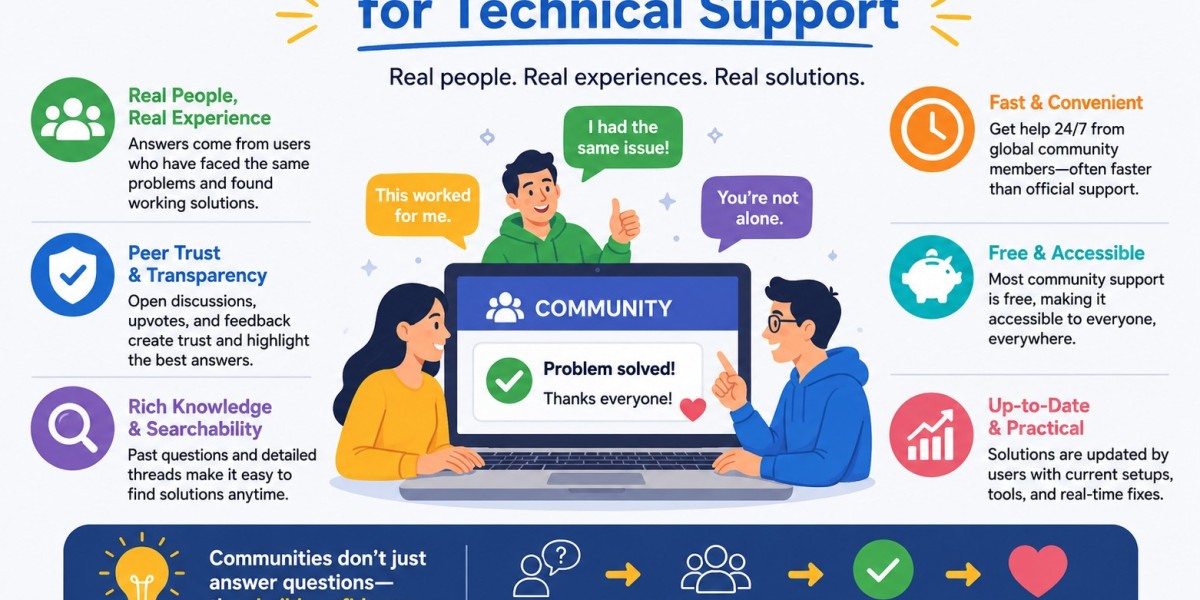

When something goes wrong with a device, app, or internet connection, most users don’t wait long for official support. They quickly turn to an online community to find answers. Over time, these communities have become one of the most trusted places for technical support because the help feels real, fast, and easy to understand.
This trust doesn’t happen by chance. It is built on everyday experiences of users who solve problems together and share what actually works in real situations.
Real People Sharing Real Solutions
One of the main reasons users trust online communities is simple—real people are behind the answers.
Instead of formal or scripted responses, users get practical solutions based on personal experience. For example, if someone’s Wi-Fi keeps disconnecting, other users often share exactly how they fixed the same issue on their own devices.
This makes the advice feel more natural and believable because it comes from someone who has already faced the same problem.
Quick Help Without Waiting
Technical issues often need immediate attention. Waiting for official support can take hours or even days.
In an online community, users can post their problems and get responses within minutes. Sometimes, multiple people reply with different solutions at the same time.
This speed makes a big difference, especially when work or study is affected by the issue.
Simple Explanations That Are Easy to Follow
Another reason people prefer community support is the way solutions are explained.
Most users don’t use technical language. They explain fixes in a simple, step-by-step way that anyone can follow.
For example:
- Restarting a router
- Changing a setting
- Updating an app
- Clearing cache
Because the language is natural and user-friendly, it becomes easier for beginners to solve problems without confusion.
Multiple Opinions Help Find Better Answers
In an online community, you are not limited to one answer. You can see different opinions and methods from various users.
This is helpful because:
- One solution might not work for everyone.
- Different devices may need different fixes
- Users can compare methods and choose what suits them best.
This variety increases the chances of finding a working solution quickly.
Trust Built Through Experience
Trust in online communities grows over time. When users repeatedly find helpful answers, they start relying on the platform more.
Many members also build reputations by consistently giving correct and useful advice. Over time, users begin to recognize these contributors as reliable sources of help.
This natural feedback system builds strong trust without any formal certificate.
Honest and Open Discussions
Unlike formal support systems, online communities are open spaces where people share both successful and failed solutions.
If something doesn’t work, other users often point it out. If a fix is effective, it gets confirmed by multiple people.
This open discussion style helps filter out bad advice and keeps only useful solutions visible.
Learning While Solving Problems
Online communities don’t just fix issues—they also help users learn.
When people follow solutions, they slowly understand how things work. Over time, they become more confident in handling small technical issues on their own.
This learning experience makes users more independent and reduces repeated dependence on support teams.
Always Available and Easy to Access
Another big advantage is availability. Online communities are active all the time.
No matter the hour, someone somewhere is likely to respond. This makes it a reliable option for users across different time zones and schedules.
There is also no formal process required—just ask and get help.
Emotional Support During Frustration
Technical issues can be stressful, especially when work is stuck or deadlines are close.
In online communities, users often respond with understanding and empathy. Even a simple message like “I faced this too, try this fix” can reduce frustration.
This human connection makes the experience more comforting compared to automated support systems.
Conclusion
Users trust online communities for technical support because the help feels real, fast, and practical. It is built on shared experiences, simple explanations, and honest discussions.
Unlike formal support systems, online communities offer something more valuable—people helping people in real time.
As technology becomes more complex, this kind of community-driven support will continue to play an even bigger role in solving everyday technical problems.