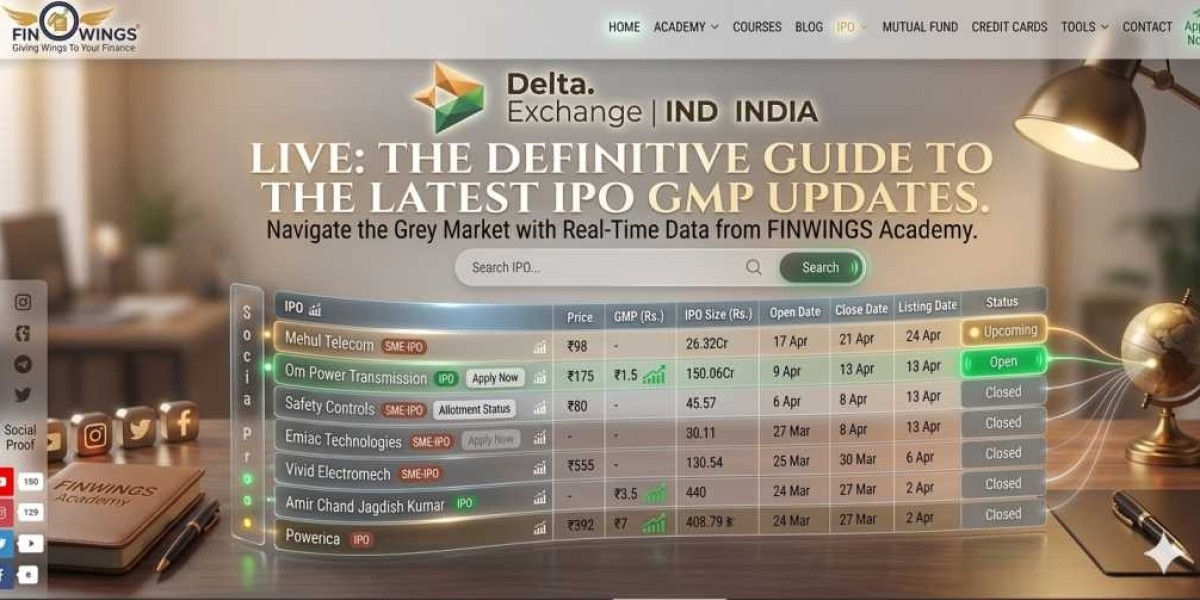

IPO GMP, or Grey Market Premium, refers to the extra price that investors are willing to pay for IPO shares before they are officially listed on the stock exchange. For example, if the issue price of a share is ₹850 and the GMP is ₹300, then the expected listing price could be around ₹1150. This gives an idea of how strong the demand is in the market and what investors are expecting from the IPO.
IPO GMP works in an unofficial or unregulated market. Transactions take place through dealers and personal networks based on trust. There are no legal rules controlling this market. The key participants include buyers, sellers, and dealers. Some important terms used here are GMP, Kostak Rate, and Sauda Rate. GMP is the premium over the issue price, Kostak Rate is a fixed amount paid for an IPO application, and Sauda Rate refers to the profit if shares are allotted.
IPO GMP is important because it indicates the demand for an IPO and helps estimate its listing price. It can support investors in making decisions, but it is not always accurate. There are both advantages and risks. While it provides early market insight and helps predict gains, it is highly speculative and unregulated, with no legal protection.
In conclusion, IPO GMP is a useful tool to understand market sentiment, but it should not be the only factor when making investment decisions.