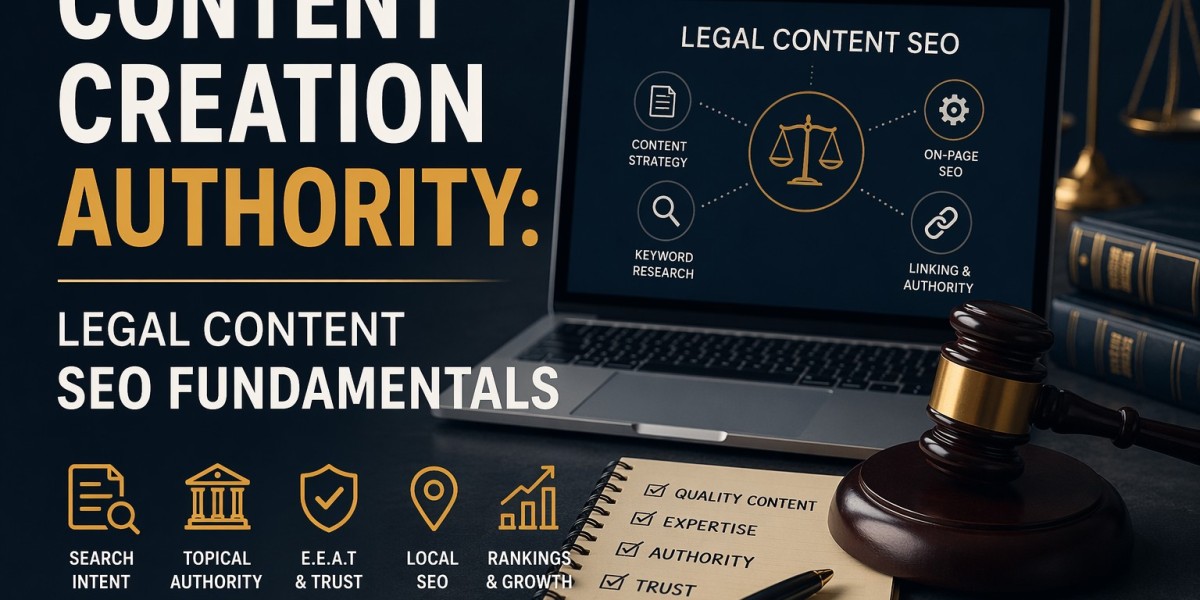

Why Content Authority Matters in Legal SEO
In legal SEO, authority isn’t just about backlinks—it’s about how deeply and clearly you cover a topic. Law firms operate in a high-trust, high-stakes space where both users and Google expect accuracy, expertise, and clarity.
If your content is shallow, generic, or overly sales-driven, it won’t rank—especially for competitive legal queries. Google prioritizes websites that demonstrate strong topical authority, consistent publishing, and clear expertise signals.
For law firms, this means your content strategy must go beyond basic blog posts. It should position your website as a reliable legal resource.
Understanding Legal Search Intent
Most law firm websites fail because they misunderstand search intent.
Legal queries usually fall into three categories:
Informational intent
Users are researching a problem:
“What happens after a car accident?”
“How to file for divorce in California”
Commercial intent
Users are comparing options:
“Best personal injury lawyer near me”
“Divorce attorney cost”
Transactional intent
Users are ready to contact a lawyer:
“Hire DUI lawyer”
“Free consultation criminal defense attorney”
Your content should map to all three stages. If you only target transactional keywords, you miss early-stage traffic—and your competitors will capture it instead.
Building Topical Authority (Not Just Articles)
Publishing random blog posts doesn’t work anymore.
You need structured content clusters built around core legal services. For example, if you’re targeting “Personal Injury Lawyer,” your content ecosystem should include:
Core service page (money page)
Supporting articles:
Types of personal injury cases
What to do after an accident
Settlement timelines
Compensation factors
Each piece should internally link back to the main service page using relevant anchor text.
This builds topical relevance and signals to Google that your site deeply covers the subject.
E.E.A.T in Legal Content (Critical)
Legal content falls under YMYL (Your Money or Your Life), which means Google applies stricter quality standards.
Your content must demonstrate:
Experience
Real-world insights, case examples, or practical scenarios.
Expertise
Clear legal knowledge, accurate explanations, and correct terminology.
Authoritativeness
Strong brand presence, mentions, and backlinks.
Trustworthiness
Clear disclaimers, updated content, and transparent information.
Simple ways to improve E.E.A.T:
Add author bios with legal credentials
Include last updated dates
Reference real laws or legal frameworks
Use clear, accurate language (avoid fluff)
Agencies like Rareform Media emphasize that in competitive niches such as legal SEO, authority is built through consistent, high-quality content paired with strong technical foundations—not shortcuts or isolated blog posts.
On-Page SEO for Legal Content
Even strong content won’t rank without proper optimization.
Focus on:
Title Tags & H1
Make them clear and intent-driven:
Bad: “We Help You With Legal Issues”
Good: “Personal Injury Lawyer in Los Angeles – Free Consultation”
Heading Structure (H2–H3)
Break down topics logically to improve readability and SEO.
Internal Linking
Link to:
Service pages (money pages)
Related blog posts (topic clusters)
Content Depth
Avoid thin pages. Legal topics require comprehensive coverage, not 500-word summaries.
Schema Markup
Use:
LegalService schema
FAQ schema (for featured snippets)
Writing Style That Converts (Without Being Salesy)
Legal content should build trust first, then convert.
Avoid aggressive sales language like:
“Call us now!!!”
“Best lawyer guaranteed”
Instead:
Explain clearly
Guide users through their situation
Offer help naturally
A good structure:
Define the problem
Explain the process
Outline possible outcomes
Introduce your service as a solution
This approach improves both rankings and conversion rates.
Local SEO Integration
Most legal searches are location-based. Your content must reflect that.
Key elements:
Include city/state modifiers naturally
Create location-specific landing pages
Optimize Google Business Profile
Add local schema markup
Example:
Instead of writing one generic page, create:
“Personal Injury Lawyer in Sydney”
“Car Accident Lawyer in Parramatta”
Each page should have unique, localized content.
Content Freshness & Updates
Legal information changes. Outdated content loses rankings.
Best practices:
Update key pages every 3–6 months
Add new sections as laws or processes change
Refresh statistics and examples
Improve internal linking over time
Freshness is a ranking signal—especially in legal niches.
Common Mistakes in Legal Content SEO
These are the most common issues holding law firm websites back:
Thin content with no depth
Keyword stuffing instead of natural language
No internal linking strategy
Ignoring informational content
Duplicate location pages
No clear author or trust signals
Fixing these alone can significantly improve rankings.
Scaling Content for Law Firms
To grow traffic consistently, you need a scalable system.
A simple framework:
Identify core services
Build content clusters around each
Publish consistently (at least 4–8 articles/month)
Interlink everything strategically
Update and improve existing pages
Over time, this creates a compounding effect—more rankings, more traffic, more leads.
FAQs: Legal Content SEO Fundamentals
What is legal content SEO?
Legal content SEO is the process of creating and optimizing content for law firms to rank in search engines like Google. It focuses on search intent, topical authority, and trust signals (E-E-A-T) to attract and convert potential clients.
Why is content authority important for law firms?
Content authority helps law firm websites rank higher by demonstrating expertise and depth on legal topics. As explained in your framework , search engines prioritize websites that provide comprehensive, accurate, and well-structured legal information.
What is E-E-A-T in legal SEO?
E-E-A-T stands for Experience, Expertise, Authoritativeness, and Trustworthiness. It is a key ranking factor for legal websites, ensuring content is written by credible sources and provides accurate legal guidance.
How long does legal SEO take to show results?
Legal SEO typically takes 3 to 6 months to see noticeable improvements, and 6–12 months for competitive keywords. This depends on competition, content quality, and domain authority.
What type of content should law firms create?
Law firms should create a mix of:
Service pages (e.g., personal injury lawyer)
Informational blog posts (e.g., legal processes, guides)
Location-based pages
FAQ and resource content
This helps cover all stages of the user journey.
How do content clusters improve legal SEO?
Content clusters organize related topics around a main service page. This improves internal linking, topical relevance, and helps search engines understand your authority in a specific legal area.
Final Thoughts
Legal SEO is not about publishing more content—it’s about publishing better, structured, and authoritative content.
If your website becomes a trusted resource on specific legal topics, rankings will follow.
Focus on depth, clarity, and consistency. That’s how you build real content authority in the legal space.