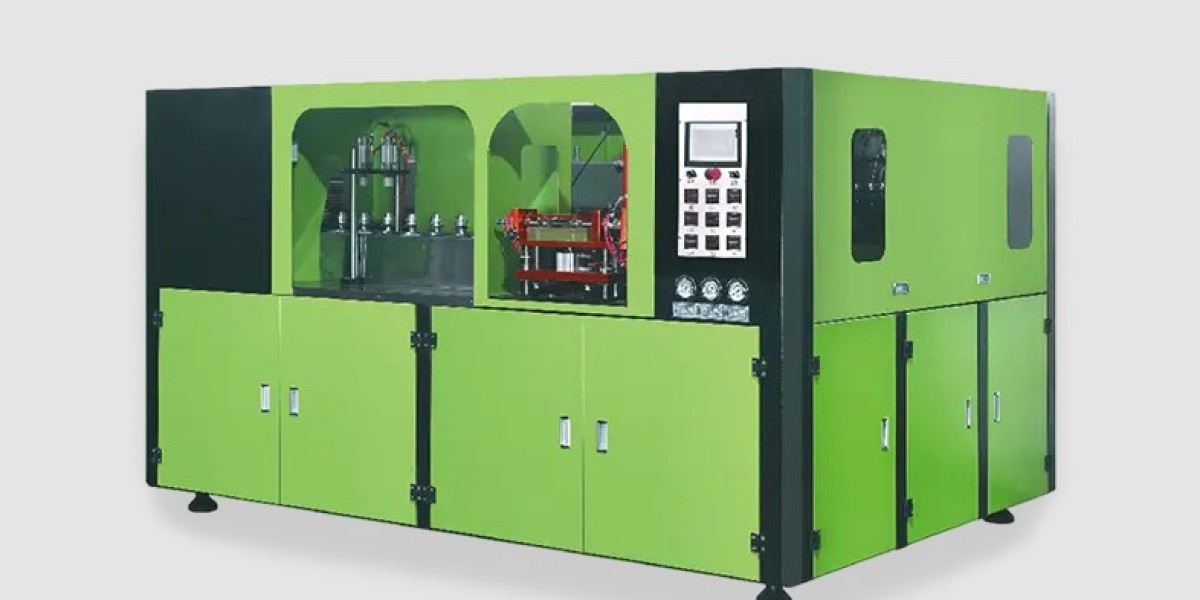

Modern bottle production depends heavily on how well the equipment is designed at a structural level. A Fully Automatic Bottle Blowing Machine combined with a Mineral Water Bottle Blowing Machine setup is not simply a single unit, but a coordinated system made up of several interconnected modules. Understanding these internal structures helps manufacturers make more informed decisions when selecting or upgrading equipment.
One of the most important modules is the preform feeding system. This section ensures that preforms are delivered into the machine in a consistent orientation and speed. Poor alignment at this stage can lead to production interruptions or defective bottles. Advanced feeding systems use rotary unscramblers and guided tracks to maintain smooth flow. Sensors monitor the position of each preform, allowing automatic correction if misalignment occurs.
After feeding, the heating system becomes the focus. Heating ovens typically consist of multiple infrared lamps arranged in zones. Each zone can be adjusted independently, which allows precise control over temperature distribution. This level of control is particularly important for mineral water bottle production, where clarity and uniform wall thickness are required. Reflective panels and cooling fans are often integrated to improve energy efficiency and prevent overheating of machine components.
The stretching and blowing unit forms the core of the machine. This section includes mechanical stretch rods and high-pressure air valves. During operation, preforms are first stretched vertically and then expanded horizontally using compressed air. The timing between these two actions must be carefully controlled. Servo-driven systems have become more common because they allow more accurate movement control compared to traditional pneumatic systems. This improves repeatability and reduces variation between bottles.
Mold design also plays a central role in performance. Molds are typically made from aluminum or stainless steel, depending on production requirements. Cooling channels are integrated into the mold structure to ensure rapid heat dissipation. Uniform cooling helps maintain bottle shape and reduces cycle time. Quick-change mold systems are increasingly used, allowing operators to switch between bottle designs with minimal downtime.
Air management is another critical aspect of machine structure. Bottle blowing requires both low-pressure air for pre-blowing and high-pressure air for final shaping. Modern systems often include air recovery units that capture and reuse part of the compressed air. This reduces overall air consumption and improves operational efficiency. Proper filtration and drying systems are also necessary to maintain air quality, preventing contamination during production.
The control system acts as the coordination center of the machine. Programmable logic controllers (PLCs) and human-machine interfaces (HMIs) allow operators to set parameters such as temperature, pressure, and cycle time. Real-time monitoring helps detect irregularities early, reducing the risk of defects. Some systems also support remote diagnostics, allowing technical teams to analyze performance without being physically present.
Mechanical stability influences long-term performance. A rigid frame structure helps reduce vibration during operation, which is especially important at high production speeds. Precision components, such as linear guides and servo motors, contribute to smoother movement and consistent output. Reduced vibration not only improves product quality but also extends the lifespan of machine components.
Maintenance accessibility is often overlooked but plays a significant role in daily operations. Machines designed with open structures or modular layouts make it easier to access critical components. This reduces the time required for routine inspections and repairs. Quick access to heating elements, valves, and molds helps minimize downtime during maintenance.
Integration capability is another structural consideration. Bottle blowing machines are typically part of a larger production line that includes filling, capping, and labeling. Equipment that supports communication protocols can synchronize with other machines, ensuring smooth production flow. This integration reduces bottlenecks and improves overall efficiency.
As production requirements continue to evolve, machine structures are also adapting. There is a growing emphasis on combining precision control, energy efficiency, and operational flexibility within a single system. By understanding how each component contributes to performance, manufacturers can better evaluate equipment options and optimize their production processes.