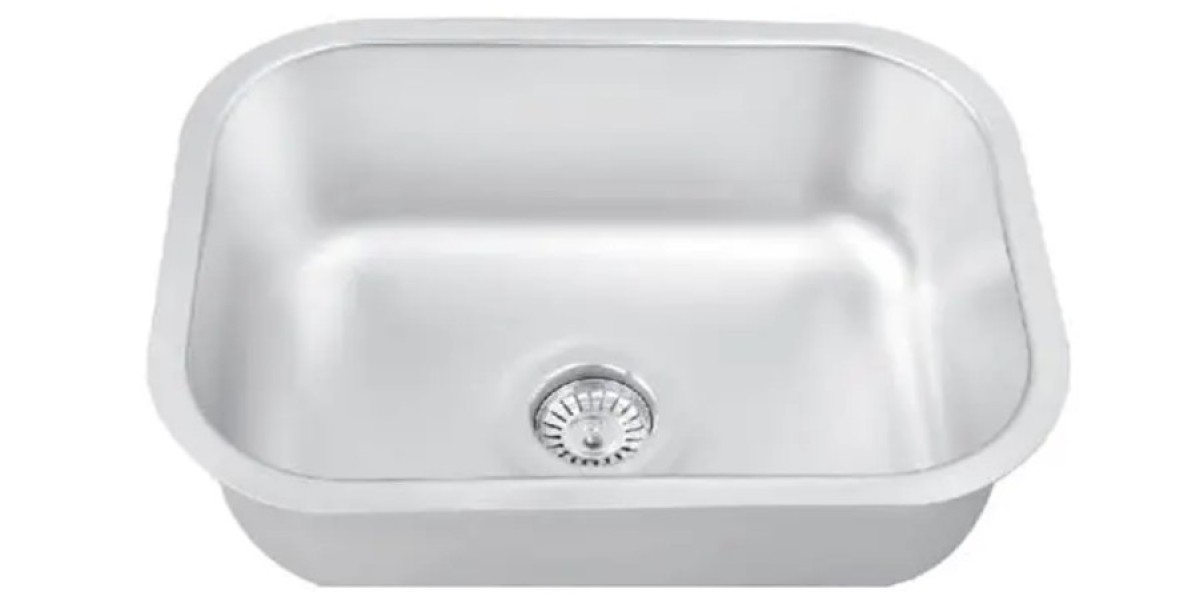

When evaluating a kitchen sink factory, many people focus only on surface appearance or price, but rarely consider how production decisions are made behind the scenes. At the same time, the popularity of the nano black kitchen sink reflects a broader shift toward surfaces that combine visual consistency with easier maintenance. These two trends are closely connected through manufacturing innovation and practical kitchen demands.
A kitchen sink is exposed to constant water flow, detergent, food residue, and temperature changes. Because of this, even small variations in production methods can lead to noticeable differences after months of use. Understanding how factories refine their processes helps explain why sinks with similar designs may perform differently in real environments.
Production Line Control and Material Behavior
Inside a kitchen sink factory, production stability depends heavily on how metal sheets are handled before forming. Stainless steel is typically stored under controlled humidity conditions to prevent surface oxidation before processing begins.
During stamping, hydraulic machines shape the basin under precise pressure settings. If pressure distribution is uneven, internal stress points may form, which can later affect durability. Factories often use multi-stage pressing instead of single deep stamping to reduce deformation risk.
After shaping, surface polishing begins. This step is not purely aesthetic; it influences how easily stains and water spots appear later. A smoother surface reduces micro-adhesion points where residue might accumulate.
Nano Black Kitchen Sink Surface Engineering
The nano black kitchen sink coating process relies on surface engineering at a microscopic level. Instead of simply adding color, nano particles are bonded to the steel surface to modify its physical interaction with liquids.
One noticeable effect is how water behaves on the surface. Droplets tend to remain more compact rather than spreading quickly. This changes how drying marks appear after washing dishes or rinsing vegetables.
The coating process usually includes multiple stages: cleaning, activation, nano-layer application, and curing. Each stage must be controlled carefully. If the surface is not fully cleaned before coating, adhesion strength may decrease, affecting long-term stability.
Durability Testing Under Realistic Conditions
Factories simulate kitchen environments to test sink durability. One common method involves repeated water spray combined with detergent exposure. This helps evaluate whether the coating maintains stability under daily cleaning routines.
Another test focuses on impact resistance. Pots, pans, and utensils occasionally strike the sink surface during use. While minor contact is normal, repeated impact should not cause visible coating damage or structural deformation.
Salt mist testing is also used to evaluate corrosion resistance. Even though kitchen environments are not as harsh as industrial settings, humidity and cleaning chemicals still create long-term exposure risks.
Design Depth and User Interaction
Sink depth affects both usability and splash control. A deeper basin can reduce water splashing during heavy washing, but it may require more ergonomic consideration for users who stand for long periods.
Factories sometimes adjust internal angles to guide water flow toward the drain. A subtle slope helps prevent water pooling in corners, which is especially useful in busy kitchen environments.
Rounded inner edges are often preferred because they reduce dirt accumulation points. However, sharper designs may still be used for aesthetic reasons, depending on product positioning.
Installation Precision and Kitchen Compatibility
Even well-made sinks can perform poorly if installation is inaccurate. A kitchen sink factory typically provides standardized cutout measurements, but real kitchen countertops may vary slightly depending on material expansion or cutting accuracy.
Sealant application plays a key role in preventing leakage. If the sealing layer is uneven, moisture may slowly penetrate beneath the countertop over time. This is why installation instructions often include step-by-step guidelines rather than simple diagrams.
Closing Thought
The connection between a kitchen sink factory and a nano black kitchen sink is built through multiple controlled steps rather than a single manufacturing decision. From material preparation to coating chemistry and testing, each stage contributes to how the sink behaves in daily kitchen routines without drawing attention to itself.