
High-load applications often suffer from premature bearing fatigue when the axial thrust is underestimated. I frequently see B2B systems failing because a standard deep groove component was used where a 72 series was required.
In my years of manufacturing, the biggest issue is the "pitting" of raceways caused by improper contact angles. When the internal geometry doesn't match the load direction, the balls slide rather than roll, creating intense heat.
Solving these stability problems requires a shift toward reinforced cages and high-precision steel. By selecting the correct 72 series configuration, you eliminate the vibration that leads to catastrophic seal failure and costly downtime.
The 72 Series Advantage: Handling High Radial and Axial Loads
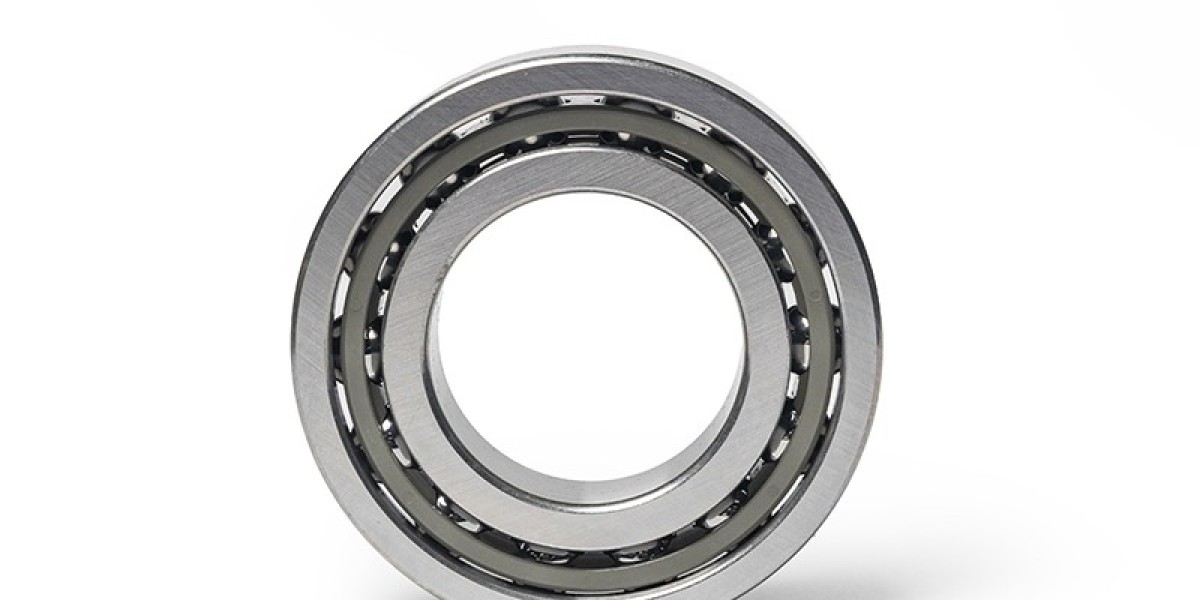
In the B2B industrial world, the 72 angular contact ball bearing is the "heavy lifter" compared to the slimmer 70 series. It features a thicker cross-section and larger rolling elements, making it the ideal solution for vertical pumps, electric motors, and gearboxes. However, a frequent problem for engineers is unidirectional thrust management.
Because these bearings are designed with a specific shoulder height, they can only support axial loads from one direction. If a machine experiences "thrust reversal" during startup or shutdown, the balls will move away from the contact line. This causes "skidding," which creates microscopic flat spots on the balls. Once these flat spots form, the bearing will begin to hum and eventually seize.
Solving the "Thermal Runaway" in High-Torque Motors
When a 72 series bearing operates under heavy radial loads, friction is inevitable. If the lubrication film breaks down, you face "thermal runaway"—a cycle where heat causes the steel to expand, which reduces internal clearance, creating even more heat.
To solve this, B2B procurement teams should focus on:
Polyamide (TVP) or Brass Cages: Brass cages are superior for high-temperature environments as they provide better stability and reduce the risk of "cage flutter" at high speeds.
C3 Internal Clearance: If your motor runs hot, a "Greater than Normal" (C3) clearance allows the inner ring to expand without pinching the balls.
Synthetic Polyurea Greases: These offer better "shear stability" than standard lithium greases, ensuring the oil stays in the raceway under high pressure.
The Importance of Correct Contact Angles (15°, 25°, 40°)
The 72 series is available in different contact angles, and choosing the wrong one is a silent profit killer.
40° (Suffix B): This is the most common choice for the 72 series. It provides maximum axial stiffness. If your pump has a heavy downward thrust, this is the only angle that will prevent the shaft from "dropping."
25° (Suffix AC): Best for applications where the speed is high but the thrust is moderate.
15° (Suffix C): Rarely used in the 72 series, but essential for ultra-high-speed spindles that still require the heavy radial capacity of a 70-series alternative.
Universal Matching: Eliminating Mounting Errors
Most 72 series bearings are installed in pairs—either Back-to-Back (DB) or Face-to-Face (DF). A common B2B mistake is buying two "single" bearings and trying to use them as a set. If the widths of the inner and outer rings are not perfectly matched at the factory, the preload will be uneven.
By using Universally Matchable bearings, you ensure that when the locknut is tightened, the internal pressure is distributed equally across both bearings. This dampens shaft vibration and ensures that one bearing doesn't "cook" while the other sits idle.
Troubleshooting Noise and "Clicking" Sounds
If your equipment makes a rhythmic clicking sound, it is often a sign of brinelling. This happens during the installation process if a technician uses a hammer to drive the bearing onto the shaft. The force travels through the balls, denting the raceway.
To solve this, always use an induction heater or a hydraulic press. For B2B maintenance teams, investing in proper installation tools is the most effective way to double the service life of your 72 series bearings. Furthermore, ensuring that the housing bore is perfectly round (within IT6 or IT7 tolerances) prevents the outer ring from "ovaling," which is a major cause of noise in large-scale industrial motors.
Conclusion
As a premier manufacturer and supplier, Yuwei Bearing provides high-capacity 72 series solutions that stop axial failure. Trust our factory-direct products to power your B2B industrial success.