
What Causes Understeer in FH6?
In simple terms, understeer occurs when your car’s front wheels cannot generate enough grip to follow the steering input. In city streets, this can happen for several reasons:
High Speed into Tight Corners: City streets are full of short corners. Entering too fast with a heavy or front-heavy car often triggers understeer.
Suspension Settings: Soft front suspension and stiff rear suspension can shift more weight to the rear, reducing front-end traction.
Tires: Using the wrong tire compound or having unequal grip between the front and rear can make the front slip.
Drive Layout: Front-wheel-drive cars tend to understeer more than rear-wheel-drive cars, especially under heavy acceleration in a corner.
Understanding why your car understeers is essential before making tuning changes. Otherwise, you might tweak the wrong settings and end up making things worse.
How to Adjust Suspension for Less Understeer
Suspension tuning is a key part of correcting understeer. For narrow city streets, you want your car to turn responsively without becoming twitchy.
Front Ride Height: Lowering the front slightly helps reduce understeer by improving weight transfer during cornering. Avoid going too low, or you risk scraping over curbs.
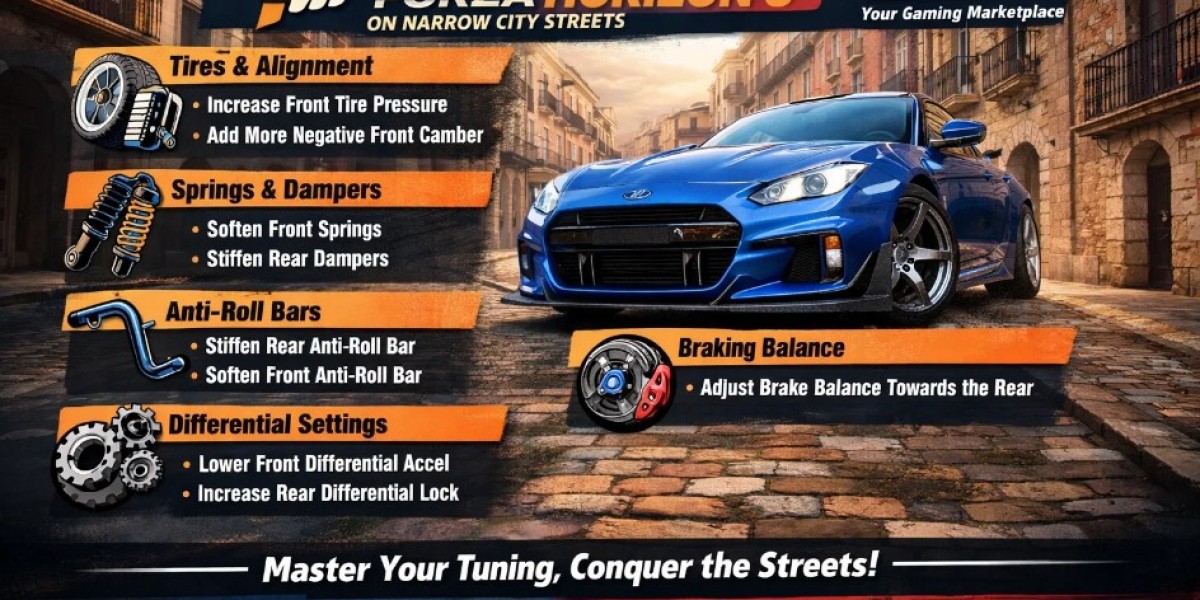
Front Spring Stiffness: Increase stiffness slightly to give the front more grip. A stiffer front helps the tires maintain contact with the road during tight turns.
Rear Spring Stiffness: Soften the rear a little to prevent it from overpowering the front. A stiff rear can make the front feel lazy.
Anti-Roll Bars: Loosen the front anti-roll bar and slightly stiffen the rear. This helps the front bite into the road while keeping the car balanced.
Test each change individually. Start with small increments and see how the car reacts. City streets require precision, and over-tuning can make the car twitchy or unpredictable.
Tire and Alignment Settings
Tires and alignment are often overlooked but play a huge role in handling.
Tire Compound: For city racing, sports or racing tires are usually best. They provide better grip in tight corners than all-season or street tires.
Front vs. Rear Grip: Aim for slightly more grip at the front compared to the rear if your car understeers. This helps the front turn in faster.
Camber: A small negative camber on the front wheels improves cornering grip. Don’t overdo it; too much camber reduces straight-line stability.
Toe Settings: A little toe-in on the front can stabilize the car during cornering, reducing understeer.
Remember, narrow streets leave no room for errors. Prioritize control over outright speed.
Adjusting Differential and Drivetrain Settings
Differential and drivetrain tuning affects how power is sent to the wheels during acceleration and cornering.
Front-Wheel-Drive Cars: Reduce front acceleration locking slightly. Too much front lock can push the car straight in corners.
Rear-Wheel-Drive Cars: Increase rear acceleration locking modestly to keep the rear from stepping out while letting the front grip.
All-Wheel-Drive Cars: Shift more power to the rear during cornering to help the front rotate. This can reduce the feeling of understeer in tight corners.
These adjustments are subtle but can dramatically improve how a car behaves in narrow, twisty environments.
Brake and Throttle Management
Even the best tuning cannot completely remove understeer if you enter corners too fast or brake poorly.
Brake Earlier: In city races, braking too late often triggers understeer. A slightly earlier brake allows the car to rotate properly.
Trail Braking: Lightly releasing the brake as you enter a corner helps transfer weight to the front, increasing grip and reducing understeer.
Throttle Control: Avoid mashing the throttle mid-corner. Smooth acceleration keeps the front wheels planted.
In practice, city streets reward precision more than raw speed. Combining smart driving with tuning adjustments will give the best results.
Practical Testing Tips
Pick a Representative Street Course: Don’t just test on wide-open roads. Use the tightest city streets you plan to race on.
Make One Change at a Time: Adjusting suspension, differential, or alignment all at once makes it impossible to know which change worked.
Keep Notes: FH6 lets you save multiple tuning setups. Keep a version for narrow streets and another for open roads.
Observe Tire Wear: Even in short races, tires with poor grip will affect understeer. Monitor their performance.
By systematically testing, you’ll quickly find the sweet spot for your car.
Extra Tip for Progression
Some players prioritize upgrading cars rather than tuning alone. Better tires, brakes, and weight reduction mods reduce understeer naturally. Also, managing credits efficiently is key—especially if you want to buy upgrades without waiting. You can look into reliable sources online for where to buy Forza Horizon 6 credits to accelerate your progress, but always check for trusted methods to avoid account risks.
Understeer on narrow city streets in Forza Horizon 6 can be frustrating, but it is solvable with thoughtful tuning and smart driving:
Adjust front suspension and anti-roll bars to increase front grip.
Set tire compounds and alignment for better cornering response.
Fine-tune differential settings to balance power delivery.
Focus on brake timing and throttle control to avoid overwhelming the front tires.
Test systematically and track your changes to find the best setup.
City racing is as much about precision as speed. With careful tuning and driving, you can tame understeer and consistently hit the apex in even the tightest urban circuits.