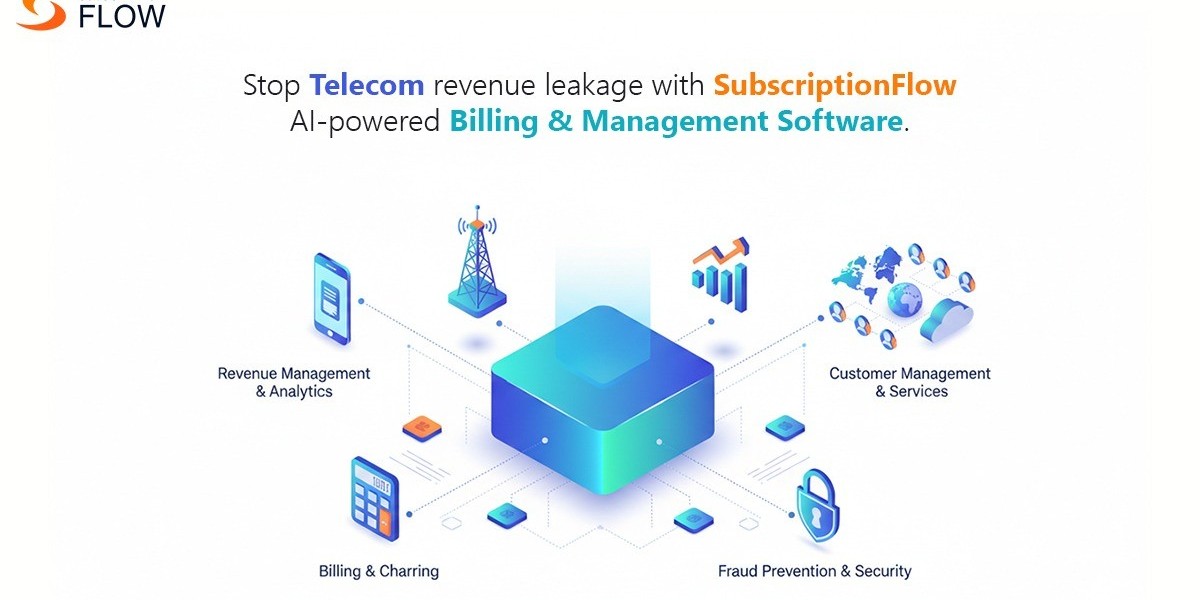

Telecom service providers operate in one of the most complex billing environments in the world. From prepaid and postpaid plans to data bundles, roaming services, reseller settlements, and hybrid subscription models, telecom billing is far more than simply issuing invoices. When subscription-based services are added into the mix, the revenue structure becomes even more layered and dynamic. Even minor billing inaccuracies, when multiplied across thousands or millions of customers, can result in substantial revenue loss. This is why telecom billing and revenue management software has become a strategic necessity rather than just an operational tool. It not only automates billing processes but also safeguards profit margins and prevents revenue leakage at scale.
Common Telecom Billing Challenges
Telecom providers face several daily operational challenges that directly impact revenue performance. Service complexity is one of the most pressing issues. Providers often bundle voice, data, devices, and value-added services into customized packages. Managing access, applying real-time rating, and accounting for fluctuating usage requires precision and scalability.
Revenue leakage is another persistent concern. Without a robust billing system, usage events may be missed, discounts may be incorrectly applied, and partner settlements may contain discrepancies. These inefficiencies quietly erode profitability over time.
Fragmented systems further complicate operations. Many B2B telecom providers still rely on spreadsheets for reseller settlements and recurring billing management. Manual processes delay invoicing, disrupt reconciliation, and make scaling nearly impossible. Automation is no longer optional; it is critical for sustainable growth.
What Modern Telecom Billing and Revenue Management Includes
Modern telecom billing encompasses much more than traditional invoicing systems. It integrates multiple revenue-critical processes into a unified infrastructure.
Usage rating is fundamental. Raw telecom data such as call minutes, SMS, bandwidth consumption, and bundled usage must be converted into accurate billable events. Without precise rating mechanisms, revenue accuracy cannot be guaranteed.
Flexible pricing models are equally important. Telecom providers often support prepaid, postpaid, hybrid billing structures, and usage-based charging simultaneously. They must manage base subscription fees, overage charges, add-ons, and promotional bundles with precision.
Real-time charging has become essential in the era of VoIP and 5G. Customers expect instant account updates, and providers need real-time visibility into usage and credit balances. Legacy systems cannot meet this demand, making modern billing engines indispensable.
Revenue assurance processes ensure that every bill is accurate, every charge is collected, and reconciliation is automated. This protects telecom companies from financial discrepancies and compliance risks.
Partner settlements add another layer of complexity. Revenue often flows across multiple operators, resellers, and service partners. Automated revenue splits, settlements, and white-label billing logic are necessary to maintain transparency and operational efficiency.
What Modern Revenue Management Software Enables
Modern revenue management platforms empower telecom providers to innovate and scale rapidly. Launching new plans no longer requires months of billing reconfiguration. Advanced billing engines allow providers to introduce new pricing models and bundles within hours.
Geo-based campaigns become manageable through region-specific pricing rules and tax compliance automation. Telecom companies can adjust pricing structures across different countries without operational confusion.
Revenue visibility improves significantly with advanced analytics. Providers can track profit margins by customer segment, geography, and service plan. This granular insight supports smarter strategic decisions.
Automated revenue reconciliation ensures that invoices, payments, and usage records align perfectly. This reduces manual intervention and enhances financial accuracy.
Support for multiple billing models allows providers to operate prepaid wallets, postpaid invoicing, and hybrid subscriptions simultaneously without system conflicts.
Partner billing automation simplifies revenue-sharing arrangements. Telecom companies gain complete transparency into reseller chains and partner profitability, enabling stronger business relationships.
How SubscriptionFlow Elevates Telecom Billing
SubscriptionFlow stands out as an AI-native revenue management platform built to handle the dynamic demands of telecom businesses. It goes beyond traditional billing by managing the entire customer subscription lifecycle, including automated renewals, charging workflows, and churn prediction based on usage behavior.
The platform flags unusual consumption patterns to prevent revenue risk. Providers can cap usage, trigger alerts, and automatically apply overage fees when necessary. This proactive control safeguards margins while maintaining customer transparency.
SubscriptionFlow also enables telecom providers to monitor plan profitability in real time. Businesses can identify underperforming pricing models and optimize them strategically.
Global operations are simplified through multi-currency billing and automated tax compliance. Invoices are generated according to regional tax regulations, ensuring smooth international expansion.
One of its most powerful differentiators is AI-driven pricing optimization. Instead of manually restructuring pricing models, telecom providers receive intelligent recommendations based on performance data and usage analytics. This accelerates decision-making and enhances competitiveness.
Conclusion: Billing as a Growth Lever
Telecom billing is no longer just a back-office function. It is a strategic growth lever that directly impacts profitability, scalability, and customer experience. With the right telecom billing and revenue management software in place, providers can reduce revenue leakage, automate complex settlements, and introduce innovative service models with confidence.
Platforms like SubscriptionFlow transform billing from a reactive process into a proactive revenue optimization engine. By combining automation, analytics, AI insights, and flexible billing infrastructure, telecom companies can scale globally while protecting their margins and delivering seamless customer experiences.