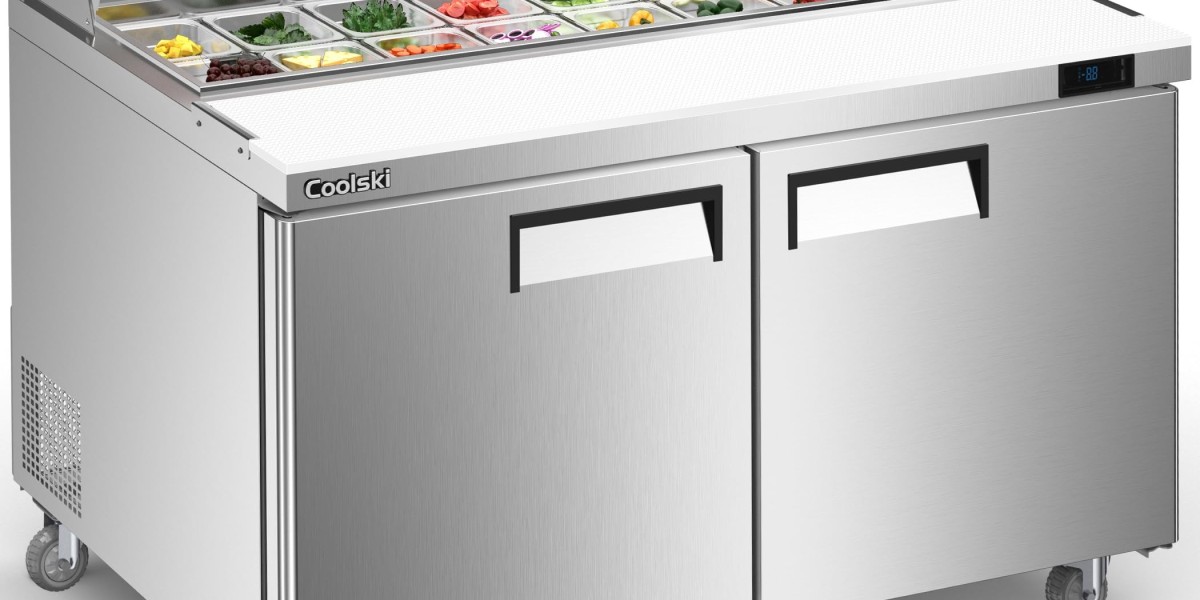

What Is a Prep Table?
A prep table is a refrigerated workstation with built-in cold storage and topping pans located right under your prep counter. It’s designed to keep ingredients chilled and within easy reach — speeding up assembly for sandwiches, salads, pizzas, and other dishes.
Prep tables can dramatically improve kitchen efficiency — saving time and ensuring food safety.
? Part 1: Sandwich & Salad Prep Table Buying Guide
? 1. Why You Need One
For busy cafes, delis, hotel kitchens, and catering operations, a prep table:
✅ Keeps ingredients fresh and safe
✅ Speeds up assembly lines
✅ Reduces staff movement
✅ Improves workflow in high-volume service
? 2. What to Consider Before You Buy
? a) Size & Capacity
Measure available kitchen space and plan for both:
Working counter space
Refrigerated storage below
Prep tables come in lengths like 36″, 48″, 60″, 72″ — choose based on volume and kitchen layout.
? b) Refrigeration Style
✔ Top Refrigerated Topping Pans – For frequent access to sauces, veggies, proteins
✔ Below-Counter Cold Storage – For bulk ingredient storage
✔ Front-Breathing Design – Better for confined spaces or indoor placement
? c) Number of Topping Pans
More pans = better organization. Common pan sizes:
1/3 pan
1/6 pan
1/9 pan
Think about portion sizes and how many ingredients your menu uses.
? d) Shelf & Drawer Setup
✔ Adjustable shelving
✔ Full-extension drawers (recommended for heavy pans)
✔ Removable interiors for easy cleaning
?️ e) Temperature Control
✔ Digital temperature display
✔ Fast recovery after opening doors or drawers
✔ Range typically 0°C to 5°C (32°F–41°F)
Consistent temperatures help maintain food safety.
? f) Hygiene & Cleaning
Look for:
✨ Stainless steel interior/exterior
✨ Rounded corners
✨ Easy slide-out pans
✨ Removable door gaskets
Cleanability helps meet health codes and saves labor time.
? g) Energy Efficiency
Energy-efficient models save on electricity and often have:
✔ LED lighting
✔ Insulated lids or covers
✔ High-efficiency compressors
? 3. Must-Have Features for Sandwich & Salad Prep
| Feature | Why It Matters |
|---|---|
| Refrigerated Topping Pans | Keeps fresh ingredients at safe temps |
| Ample Storage | Stores back-stock without running to walk-in |
| Work Surface | Prep done at one station |
| Adjustable Shelving | Flexible organization |
| Fast Temp Recovery | Maintains food safety during service |
? 4. Best Practices for Use
✔ Organize toppings by frequency of use
✔ Cover pans between shifts
✔ Clean daily with food-safe sanitizers
✔ Avoid overloading pans — airflow matters!
? Part 2: Pizza Prep Table vs Sandwich Prep Table — Key Differences
While both types of prep tables look similar, they serve different kitchen functions.
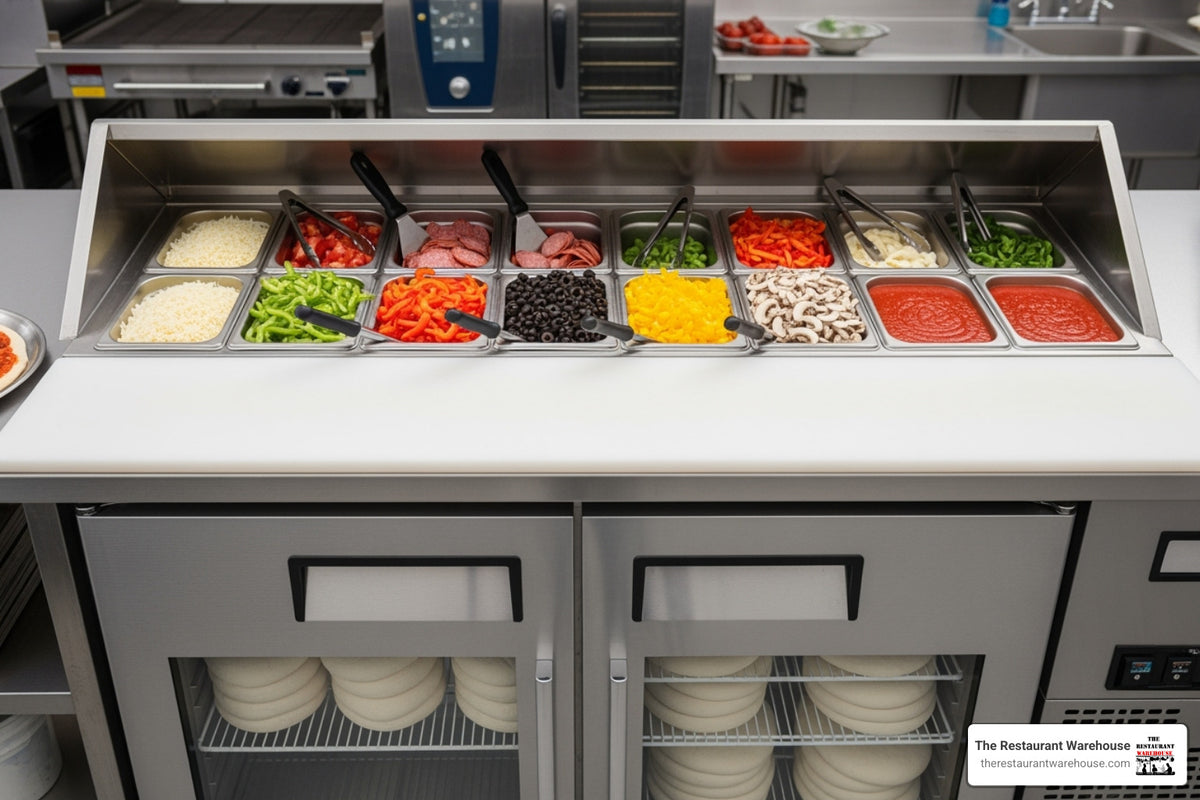

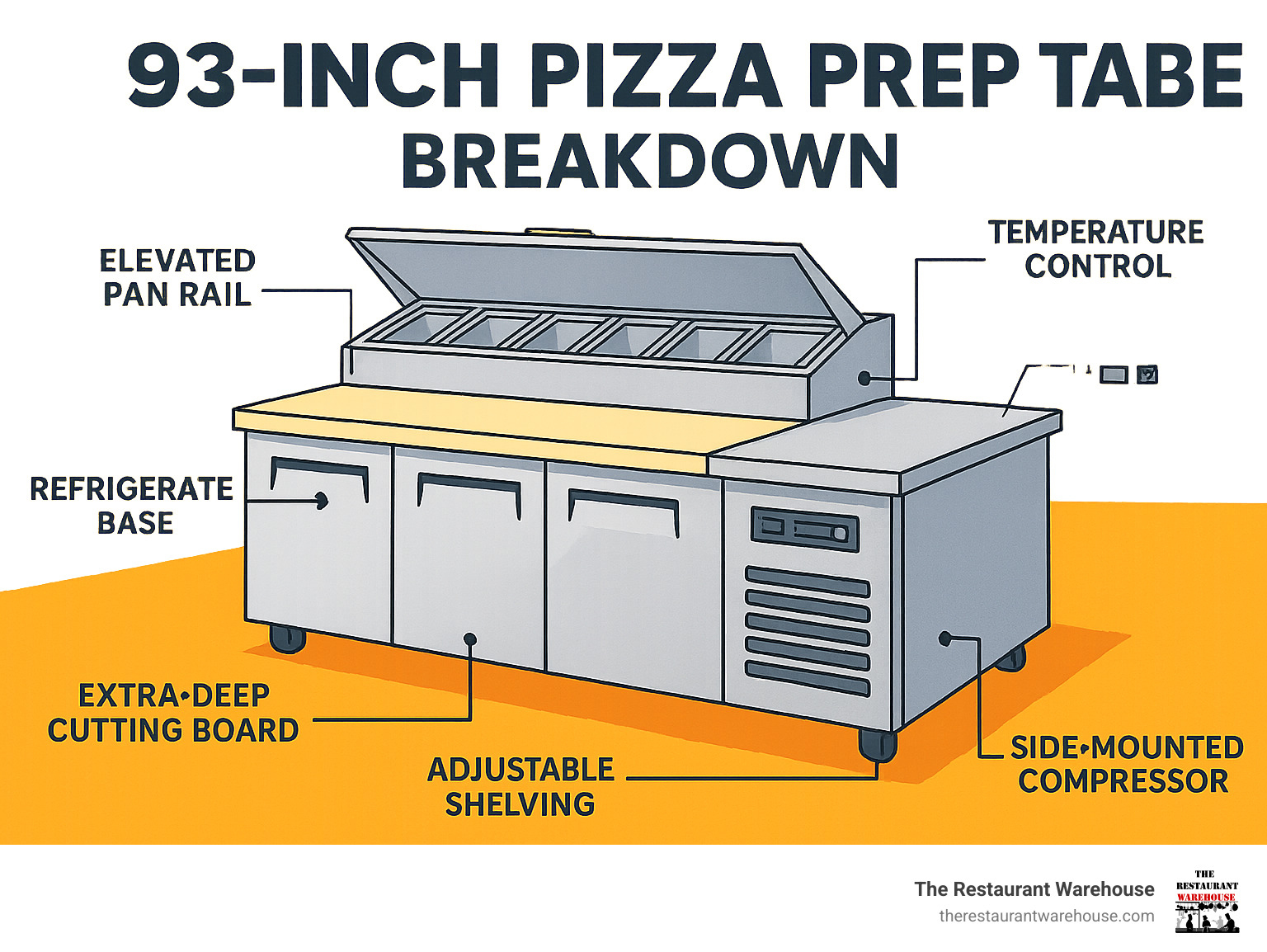
? Comparison: Pizza vs Sandwich Prep
| Aspect | Pizza Prep Table | Sandwich/Salad Prep Table |
|---|---|---|
| Primary Use | Pizza assembly (dough, sauces, toppings) | Sandwich/salad assembly |
| Topping Pan Layout | Often wider pans to fit cheese and large toppings | More variety of smaller pans for multiple ingredients |
| Cold Storage Below | Usually larger for bulk cheese, meats | More flexible for bread, greens, proteins |
| Work Surface Needs | Dough space + cutting board area | Workspace mainly for stacking and slicing |
| Menu Focus | Pizza, flatbread | Deli sandwiches, salads, wraps |
| Pan Depth | Generally slightly shallower for fast access | Often deeper to hold more ingredient volume |
? What Makes a Good Pizza Prep Table
✔ Wide topping pan area
✔ Room for sauces, cheese, veggies, meats
✔ Solid workspace for dough stretching
✔ Quick temperature recovery for frequent lid openings
? What Makes a Good Sandwich/Salad Prep Table
✔ Many small topping pans
✔ Easy access to spreads, veggies, proteins
✔ Drawer or shelving for bread, greens
✔ Configurable interior to adapt to daily prep
? When to Choose Which
Choose a Pizza Prep Table if:
? You run a pizza-centric kitchen
? Cheese, sauce, toppings are used constantly
? You need wide, shallow topping pan layout
Choose a Sandwich/Salad Prep Table if:
? You serve deli sandwiches, wraps, or salads
? You have many ingredient varieties
? You need flexible interior storage
? Final Tips
✅ Match the prep table to your menu. What gets used most should be closest to the chef.
✅ Plan for growth. Extra capacity means less rush to upgrade later.
✅ Consider service style. High turnover times need faster access and organization.