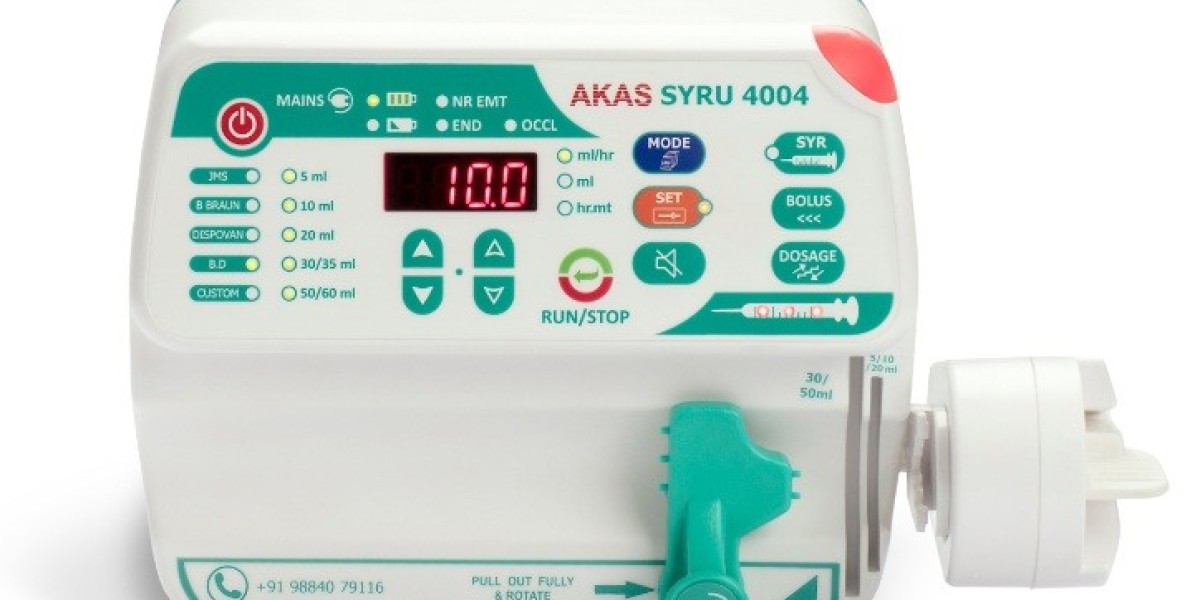

Introduction
Hospitals and healthcare institutions rely on precision equipment to deliver safe and effective patient care every day.
Among these devices, the Syringe Pump plays a vital role in administering accurate medication doses across ICUs, NICUs, oncology units, and general wards.
Ensuring the long-term reliability of this critical equipment requires more than careful use; it depends on structured and proactive preventive maintenance programs.
Preventive maintenance is not only a technical requirement but also a caring commitment to patient safety and operational continuity.
When Syringe Pumps are maintained consistently, hospitals experience fewer disruptions, improved clinical confidence, and extended equipment lifespan.
This approach supports both clinical excellence and responsible healthcare management.
Understanding Preventive Maintenance in Hospital Settings
Preventive maintenance refers to planned and systematic activities designed to keep medical devices operating within specified performance limits.
For a Syringe Pump, this includes routine inspection, calibration, functional testing, and timely replacement of wear-prone components.
Rather than reacting to failures, preventive maintenance anticipates issues before they affect patient care.
Hospitals that implement structured maintenance schedules protect their investment in medical equipment.
These programs reduce unexpected breakdowns and help maintain consistent drug delivery accuracy.
As a result, clinical teams can focus on patient outcomes without concern over device reliability.
Why Syringe Pump Lifespan Matters for Healthcare Institutions
The lifespan of a Syringe Pump directly impacts hospital budgets, clinical workflows, and patient safety outcomes.
Frequent equipment replacement increases capital expenditure and strains procurement planning.
Conversely, extending device life through proper maintenance supports sustainable healthcare operations.
A well-maintained Syringe Pump continues to deliver precise flow rates over time.
This accuracy is essential in critical care environments where even small deviations can affect treatment outcomes.
Preventive maintenance ensures that performance remains stable throughout the device lifecycle.
The Link Between Preventive Maintenance and Patient Safety
Patient safety is at the heart of every hospital decision.
Preventive maintenance programs help ensure that Syringe Pumps function exactly as intended during medication administration.
Routine checks reduce the risk of flow inaccuracies, occlusion failures, or alarm malfunctions.
When Syringe Pumps operate reliably, clinicians can trust the equipment during high-pressure situations.
This trust supports better clinical decision-making and reduces stress among nursing staff.
Consistent device performance strengthens the overall safety culture within healthcare institutions.
Key Elements of an Effective Syringe Pump Maintenance Program
A comprehensive preventive maintenance program focuses on both technical performance and clinical usability.
Hospitals that follow structured protocols see measurable improvements in equipment longevity.
The following elements highlight how such programs support extended Syringe Pump lifespan.
Core maintenance activities typically include:
Regular inspection of mechanical and electronic components to identify early wear
Calibration checks to maintain accurate flow rate delivery
Verification of alarm systems for timely and reliable alerts
Cleaning and inspection of syringe holding mechanisms to prevent mechanical stress
Documentation of maintenance activities to support compliance and audits
These practices help ensure that each Syringe Pump continues to meet clinical performance standards.
They also provide traceability, which is essential for quality assurance and accreditation processes.
Reducing Equipment Downtime Through Planned Maintenance
Unplanned equipment failure can disrupt clinical workflows and delay treatment.
Preventive maintenance significantly reduces downtime by addressing potential issues before they escalate.
This proactive approach ensures Syringe Pumps are available when patients need them most.
Hospitals benefit from improved equipment availability across departments.
Fewer emergency repairs mean less dependency on backup devices or rentals.
Over time, this stability enhances operational efficiency and resource planning.
Supporting Biomedical Engineering Teams
Biomedical engineers play a critical role in maintaining hospital equipment.
Preventive maintenance programs provide clear schedules and performance benchmarks for Syringe Pump servicing.
This structure allows engineering teams to manage workloads effectively and prioritise patient-critical devices.
Consistent maintenance also simplifies troubleshooting when issues arise.
Well-documented service histories help engineers identify patterns and resolve problems efficiently.
This collaboration between clinical and technical teams strengthens hospital operations.
Compliance, Audits, and Quality Assurance
Hospitals are required to meet strict regulatory and accreditation standards.
Preventive maintenance documentation supports compliance with national and international quality frameworks.
For Syringe Pumps, this includes maintaining records of inspections, calibration, and corrective actions.
Audit readiness improves when maintenance activities are planned and recorded systematically.
This transparency demonstrates a hospital’s commitment to safety and quality care.
It also reinforces trust with regulatory bodies and healthcare stakeholders.
Cost Efficiency and Long-Term Value
Preventive maintenance is a cost-effective strategy for managing medical equipment.
By extending Syringe Pump lifespan, hospitals reduce the frequency of capital replacements.
This allows funds to be allocated to other critical areas of patient care.
Over time, maintenance programs lower the total cost of ownership.
Fewer major repairs and reduced downtime contribute to predictable operational expenses.
This financial stability is especially valuable for hospitals managing large equipment fleets.
Choosing Manufacturers That Support Preventive Maintenance
The effectiveness of preventive maintenance is closely linked to device design and manufacturer support.
Hospitals benefit from working with manufacturers that prioritise durability, serviceability, and long-term performance.
Syringe Pumps designed for easy calibration and component access simplify routine maintenance.
Reliable manufacturers also provide clear service guidelines and training resources.
This support empowers hospital teams to maintain equipment according to best practices.
Choosing the right manufacturing partner contributes directly to extended device lifespan and safer care delivery.
Building a Culture of Care Through Maintenance
Preventive maintenance reflects a broader culture of care within healthcare institutions.
It demonstrates respect for patients, clinicians, and the equipment that supports life-saving treatments.
Syringe Pumps maintained with care continue to perform reliably throughout their service life.
This proactive mindset fosters confidence among healthcare professionals.
It reassures patients that their treatment is supported by well-managed technology.
In this way, maintenance becomes an integral part of compassionate healthcare delivery.
Conclusion
Preventive maintenance programs play a vital role in extending the lifespan of every Syringe Pump used in hospitals and clinics.
Through planned inspections, calibration, and documentation, healthcare institutions protect patient safety and operational efficiency.
These programs reduce downtime, control costs, and support compliance with quality standards.
Selecting manufacturers that design durable, service-friendly devices further strengthens maintenance outcomes.
Akas Infusion continues to manufacture world-class Drug Delivery devices like volumetric pumps, supporting hospitals in their commitment to safe and reliable care.
By prioritising preventive maintenance and thoughtful manufacturer partnerships, healthcare institutions can ensure long-term value and dependable performance in medical care.