
Introduction
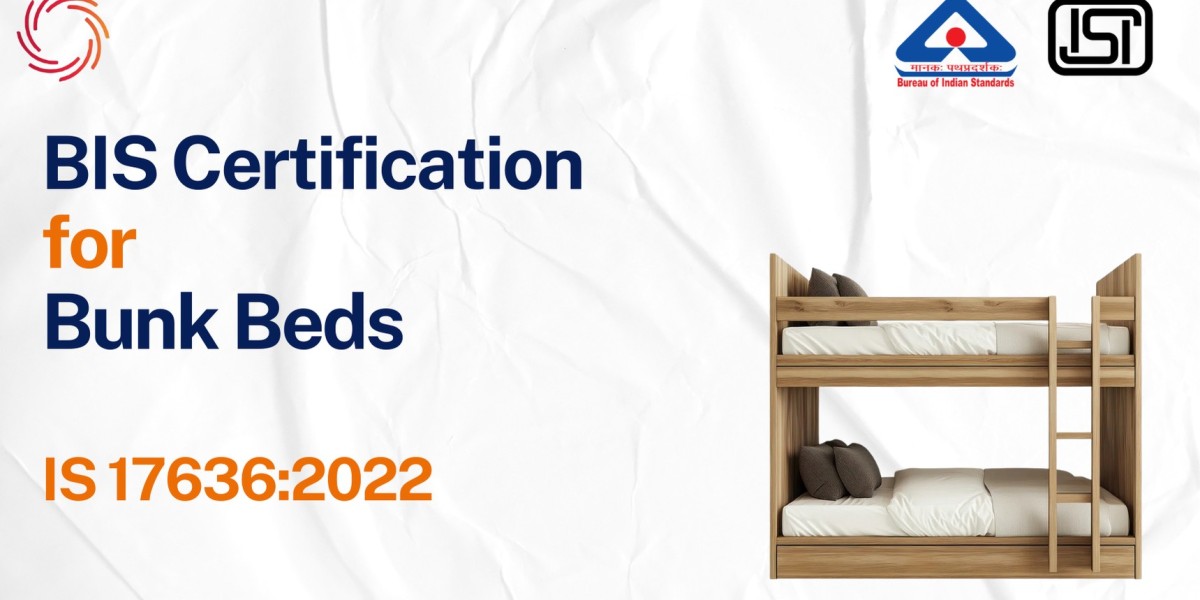
India’s furniture industry is expanding rapidly, and bunk beds are widely used in homes, hostels, schools, PG accommodations, and dormitories. Since bunk beds are directly associated with user safety—especially for children and students—the Government of India has made BIS Certification for Bunk Beds mandatory.
Without a valid BIS Certificate, bunk beds cannot be manufactured, imported, sold, or distributed in India. Common risks related to bunk beds include falls from height, ladder failure, entrapment hazards, and structural collapse. To minimize these risks, the Bureau of Indian Standards (BIS) has implemented strict safety regulations under the BIS certification system.
What is BIS Certification?
BIS Certification is a quality and safety assurance system operated by the Bureau of Indian Standards. Its objective is to ensure that products sold in India comply with relevant Indian Standards for safety, performance, and durability.
After obtaining a BIS Certificate, manufacturers are legally permitted to use the ISI Mark on their products. The ISI Mark is a government-approved symbol that assures consumers of product quality and regulatory compliance.
Applicable BIS Standard for Bunk Beds
The mandatory Indian Standard for bunk beds is:
IS 17636:2022 – Bunk Beds: Safety Requirements
This standard specifies requirements related to:
Structural strength and stability
Guardrails and fall protection
Entrapment hazard prevention
Load-bearing capacity
Ladder safety and design
Material quality and durability
Edge safety and surface finish
Impact resistance and performance
Any bunk bed sold in India must comply with IS 17636:2022 and obtain BIS Standard for Bunk Beds entry.
Why BIS Certification for Bunk Beds is Mandatory
Bunk beds are primarily used by children and young adults, so safety cannot be compromised. BIS Certification is mandatory to ensure:
Reduced risk of structural collapse
Protection against falls from the upper bunk
Prevention of entrapment and ladder-related injuries
Control over unsafe materials and finishes
Enhanced consumer safety
Legal compliance with Indian regulations
Selling bunk beds without BIS Certification is a punishable offence in India.
BIS Certification Process for Bunk Beds (IS 17636:2022)
The BIS certification process includes the following steps:
Identify the applicable standard – IS 17636:2022
Submit an online application through the BIS Manak Portal
Pay the prescribed BIS certification fees
Product sample testing at a BIS-recognized laboratory
Factory inspection by BIS officials
Grant of BIS License
Permission to use the ISI Mark on bunk beds
Ongoing surveillance and license renewal
BIS FMCS Scheme for Foreign Manufacturers
Foreign manufacturers who wish to export bunk beds to India must apply under the BIS FMCS Scheme (Foreign Manufacturers Certification Scheme).
Under this scheme, overseas manufacturers must obtain:
BIS FMCS License – Legal authorization to manufacture and export certified bunk beds to India
BIS FMCS Certificate – Official confirmation that the product complies with Indian Standards
Without a valid BIS FMCS License, foreign-made bunk beds cannot be imported or sold in the Indian market.
Testing Requirements for BIS Certification of Bunk Beds
As per IS 17636:2022, the following tests are mandatory:
Structural load test
Stability test
Guardrail strength test
Impact resistance test
Entrapment hazard test
Ladder strength and angle test
Edge sharpness test
Durability and performance test
All testing must be conducted only at BIS-approved laboratories.
Scope of BIS License for Bunk Beds
Covered Products
Domestic and non-domestic bunk beds
Ready-to-assemble and fully fabricated bunk beds
Beds with a base height of 800 mm or more
Excluded Products
Medical and specialty beds
Documents Required for BIS Certificate Registration for Bunk Beds
Manufacturer Documents
Factory license or registration
Manufacturing process flow chart
Machinery and testing equipment list
Calibration certificates
Factory layout
Technical Documents
Product specifications
Bill of Materials (BOM)
Quality control plan
In-house test reports
Legal Documents
Address proof and identity proof
Brand authorization letter
Trademark certificate (if applicable)
Benefits of BIS Certification for Bunk Beds
Legal sale across India
Increased customer confidence
Strong brand reputation
Approval for e-commerce platforms
Eligibility for government tenders
Reduced product liability risks
Competitive advantage in the market
Penalties for Non-Compliance
Selling bunk beds without BIS Certification may result in:
Heavy monetary fines
Product seizure
Legal prosecution
Factory shutdown
Market ban in India
Who Needs BIS Certification for Bunk Beds?
Indian manufacturers
Foreign manufacturers under the BIS FMCS Scheme
Importers and exporters
Furniture brands
OEM / ODM suppliers
Online sellers
Each manufacturing unit must obtain a separate BIS License or BIS FMCS License.
Conclusion
The BIS Certificate for Bunk Beds under IS 17636:2022 is a mandatory legal requirement in India. It ensures that bunk beds meet strict safety, strength, and quality standards.
For Indian manufacturers, BIS Certification is essential for lawful manufacturing and sale. For foreign manufacturers, compliance under the BIS FMCS Scheme through a BIS FMCS License and BIS FMCS Certificate is compulsory to enter the Indian market.
URL :- https://bis-certifications.com/blogs/isi-products/bunk-beds-is-17636