
In the narrative of modern technology, the cloud has been the dominant protagonist for over a decade. The story told to Chief Technology Officers and business leaders was simple. It suggested that everything should move to the virtual cloud and that owning or renting physical hardware was a relic of the past. The promise of virtualization was flexibility, instant scaling, and the end of hardware management.
However, as the digital economy matures, a counter narrative is emerging among high growth technology companies and data intensive enterprises. They are discovering that while public cloud virtual machines are excellent for general workloads, they hit a performance ceiling when pushed to the limit. For applications that demand raw power, absolute consistency, and uncompromising security, the solution is not more virtualization. The solution is a return to the physical source which is the Bare Metal Server.
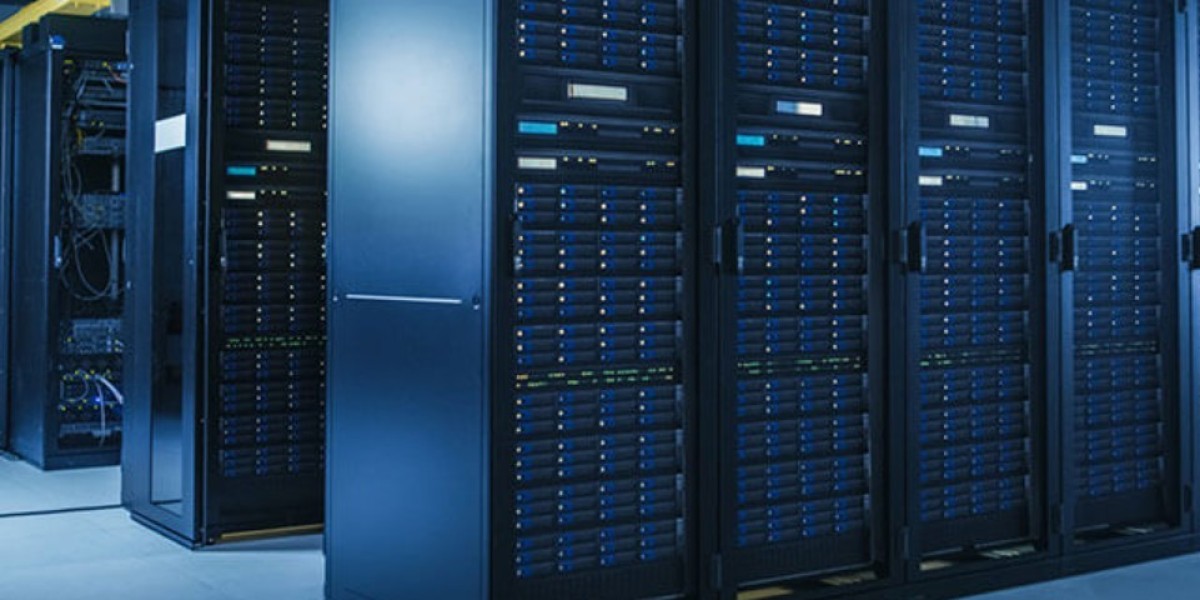
A Bare Metal service provides a physical server dedicated to a single tenant. There are no noisy neighbors. There is no virtualization layer stealing resources. It is just pure and unadulterated hardware power. Understanding the strategic functions of this infrastructure class is essential for any leader looking to build a high performance technical stack that does not collapse under pressure.
Eliminating the Virtualization Tax
The most primary function of a Bare Metal server is the elimination of the hypervisor tax. In a standard cloud environment, a physical server is sliced into dozens or hundreds of small Virtual Machines or VMs. To manage these slices, a layer of software called a hypervisor sits between the hardware and the operating system.
While this allows for flexibility, it comes at a cost. The hypervisor consumes processing power and memory to manage the virtual environment. It acts as a middleman. Every time your application tries to access the CPU or write data to the disk, the request must pass through this translation layer.
For general web hosting, this overhead is negligible. But for high performance computing tasks like big data analytics, video rendering, or machine learning training, this delay accumulates. Bare Metal removes the middleman entirely. The operating system talks directly to the hardware. This results in significantly higher input and output operations per second and lower latency. It functions as a direct injection of power to your application, ensuring that every ounce of computing capacity you pay for is actually used by your business logic.
The Guarantee of Consistent Performance
One of the hidden plagues of the public cloud is the phenomenon known as the Noisy Neighbor effect. Because virtual machines share the same physical resources, the behavior of one client can negatively impact another. If a neighbor on the same physical rack suddenly runs a massive database query, your application might slow down because the shared storage bandwidth is saturated.
For businesses that rely on real time performance, such as ad tech platforms, financial trading desks, or online gaming servers, this inconsistency is unacceptable. A random stutter of a few milliseconds can mean a lost bid or a disconnected player.
Bare Metal functions as an isolation chamber. Since the entire server belongs to a single tenant, there is zero resource contention. The performance you get on Monday morning is exactly the same performance you get on Friday night during peak hours. This predictability allows engineering teams to optimize their code with precision, knowing that the underlying infrastructure will behave exactly as expected every single time.
Security Through Physical Isolation
In an era of increasing cyber threats and strict regulatory compliance, the physical location of data is a critical concern. For industries like healthcare, banking, and government, sharing a server with unknown entities poses a theoretical risk. While hypervisors are generally secure, vulnerabilities in shared hardware architectures have surfaced in the past, leading to concerns about side channel attacks where data could potentially leak between virtual machines.
Bare Metal provides the highest level of commercial security through single tenancy. The hardware is physically isolated. No other customer code runs on the same processor. This clear separation simplifies compliance with strict data sovereignty laws and privacy standards. It allows security officers to point to a specific machine and declare with certainty that their data resides there and nowhere else.
Total Customization and Control
The public cloud offers a menu of preset options. You can choose a small, medium, or large instance, but you cannot change the ingredients. Bare Metal functions as a blank canvas. It offers total control over the technology stack.
Because the tenant has root access to the hardware, they can install any hypervisor they want, creating their own private cloud. They can tweak the BIOS settings to optimize power consumption or processing speed. They can choose specific hardware components, such as a particular type of solid state drive or a specialized graphics processing unit for artificial intelligence workloads.
This function is vital for legacy applications that may not run well in a standard cloud environment or for bleeding edge innovations that require specific hardware configurations not available in the mass market catalogs of giant cloud providers.
Economic Efficiency at Scale
There is a common misconception that hardware is always more expensive than the cloud. This is true for small startups with low traffic. However, at a certain scale, the economics flip. The billing model of the public cloud is often based on consumption. You pay for every hour of compute, every gigabyte of egress bandwidth, and every thousand database operations. As a business scales, these variable costs can balloon unpredictably.
Bare Metal usually functions on a flat monthly fee model. You rent the machine, and you can run it at one hundred percent capacity twenty four hours a day without the price changing. For workloads with high bandwidth requirements or heavy continuous processing, Bare Metal often proves to be significantly more cost effective than the cloud. It provides financial predictability, allowing CFOs to budget accurately without fear of surprise overage charges at the end of the month.
The Foundation of High Performance
The decision to utilize Bare Metal or BMaaS is not a step backward; it is a strategic move forward for mature enterprises. It functions as the bedrock for applications that refuse to compromise on speed, security, and stability. It bridges the gap between the flexibility of the internet and the raw power of the mainframe era.
However, managing physical hardware is complex. It requires a data center partner with a robust network, reliable power, and expert support. You need a provider that can deploy these powerful machines rapidly and maintain them flawlessly.