
Introduction
If you want to manufacture, import, or sell regulated products in India, understanding what is BIS Certificate is extremely important. The BIS Certificate is issued by the Bureau of Indian Standards (BIS) to ensure that products meet Indian quality, safety, and performance standards.
A BIS Certificate confirms that a product complies with the relevant Indian Standard (IS) and is safe for consumers. Many products cannot be sold legally in India without BIS approval.
BIS Certification Full Form
The BIS Certification full form is Bureau of Indian Standards Certification.
BIS is the national standards body of India, established under the BIS Act, 2016.
The primary role of BIS certification is to:
Maintain product quality
Protect consumer safety
Ensure standardization and conformity
Promote trust in Indian and imported products
Why is BIS Certificate Required?
The BIS Certificate is mandatory for products notified by the Government of India. Without BIS certification:
Products may be rejected at customs
Sales and distribution can be banned
Heavy penalties may be imposed
This certification helps consumers identify genuine, safe, and standardized products through marks like the ISI Mark and CRS Mark.
Types of BIS Certification
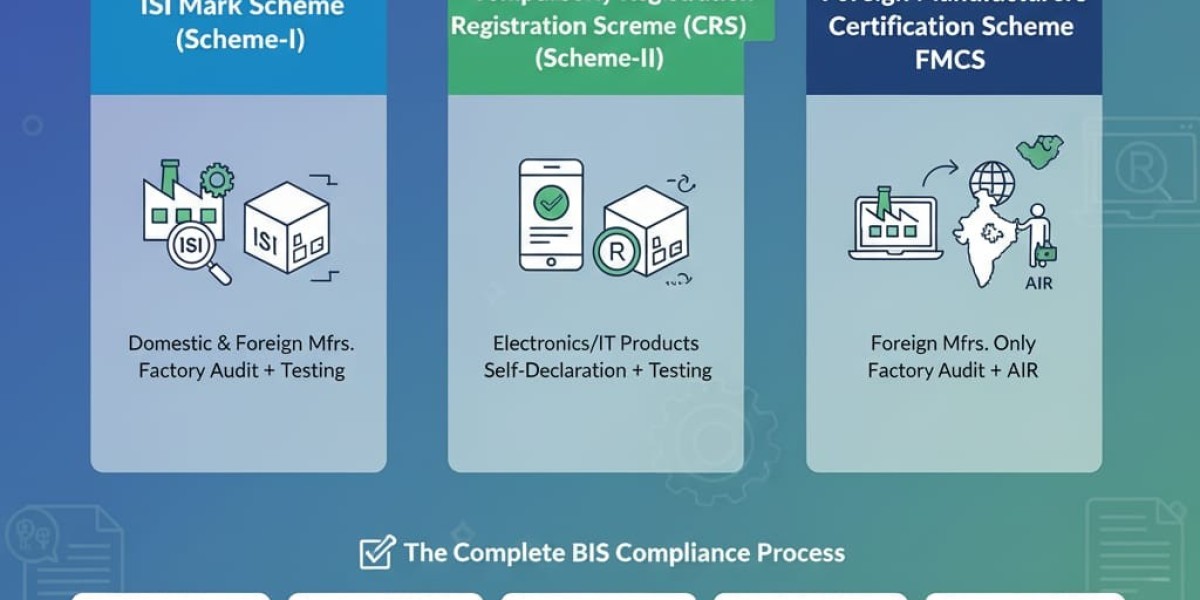
Depending on the product and manufacturer location, BIS offers different certification schemes:
1. ISI Mark Certification
For manufacturers producing goods within India, mainly for industrial and consumer products.
2. CRS Certification
Mandatory for electronics and IT products such as mobiles, laptops, and LED lights.
3. BIS FMCS Certification
For foreign manufacturers who want to sell their products in the Indian market.
What is BIS Application?
The BIS Application is the formal process of applying for BIS certification. Manufacturers must submit an application to BIS along with technical details, documents, and product samples for testing.
The application can be filed online through the BIS portal or offline, depending on the certification scheme.
BIS Application Process Step-by-Step
The BIS application process generally includes the following steps:
Identify Applicable Indian Standard
Determine the relevant IS code for the product.Prepare Documents
Gather all technical, legal, and quality-related documents.Submit BIS Application
File the application with BIS along with fees.Product Testing
Product samples are tested in BIS-approved laboratories.Factory Inspection
BIS officials inspect the manufacturing unit.Grant of BIS Certificate
Upon successful verification, BIS issues the certificate.
Documents Required for BIS Application
Common documents include:
Business registration certificate
Manufacturing unit details
Product test reports
Quality control plan
Factory layout and machinery list
Authorization letters
The exact documents may vary based on the product and certification type.
Validity and Renewal of BIS Certificate
A BIS Certificate is usually granted for 1 to 2 years. Manufacturers must apply for renewal before expiry to continue using the BIS mark legally.
Failure to renew on time may lead to cancellation of the certificate and legal action.
Benefits of BIS Certification
Obtaining a BIS Certificate offers multiple advantages:
Legal compliance with Indian regulations
Increased consumer confidence
Improved brand credibility
Easier market access in India
Protection against substandard competition
Who Needs BIS Certification?
BIS certification is required by:
Indian manufacturers
Importers
Foreign manufacturers
Brand owners
Traders of notified products
Anyone involved in selling regulated products in India must comply with BIS norms.
Conclusion
Understanding sunconsultants.co.in. the BIS Certification full form, and the BIS application process is essential for businesses planning to operate in the Indian market. BIS certification ensures product quality, safety, and legal compliance while enhancing consumer trust.