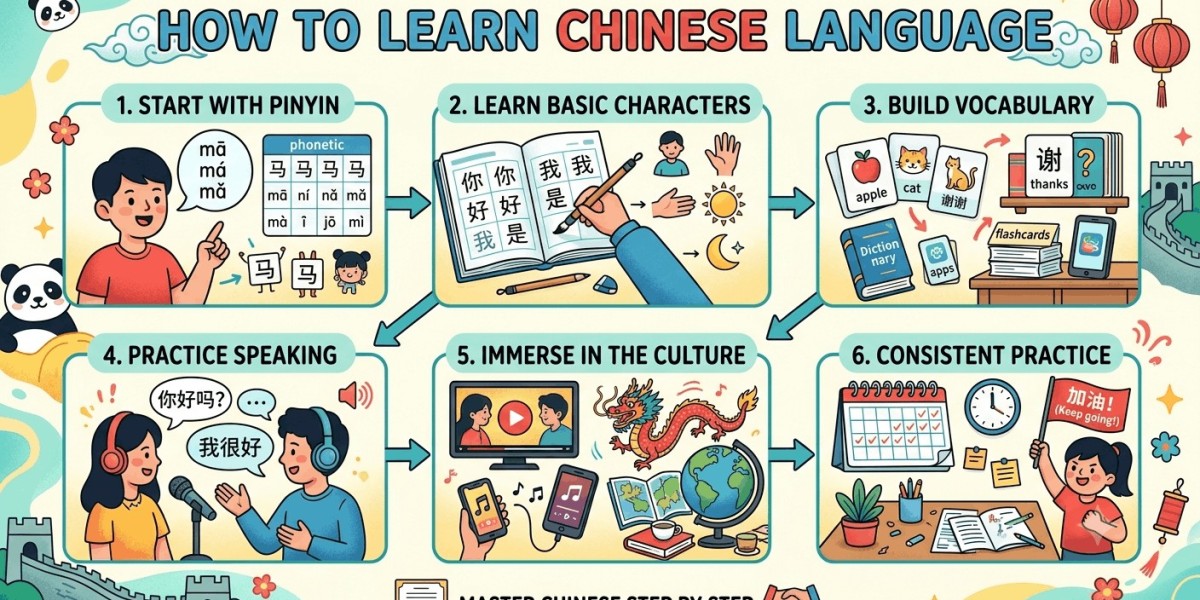

Chinese has a scary reputation. People hear about the tones and the thousands of characters, and many give up before they begin. But here is the truth: Chinese is not impossible. It is just different from English, and once you know the right way to start, it becomes much easier than you think.
Over a billion people speak Chinese, which makes it one of the most spoken languages in the world. Whether you want a better career, plan to travel, or just love the culture, learning it can open many doors.
This guide will show you how to learn Chinese step by step, in plain words. No fancy tricks, just a clear path you can follow.
Why Should You Learn Chinese?
Before we start, let's talk about why this is worth your time. A strong reason will keep you going when things get hard.
- Career growth: China is a huge player in global trade. Speaking Chinese can set you apart in business, tech, teaching, and travel.
- Travel and culture: You can read menus, talk to locals, and enjoy movies, music, and books in their original form.
- Brain benefits: Learning a tonal language trains your ears and memory in a new way.
- Fewer grammar headaches: Chinese has no verb tenses, no plural endings, and no gendered nouns. That surprises most beginners.
Step 1: Choose Your Goal and Your Version of Chinese
"Chinese" is not one single language. The two most common forms are:
- Mandarin: The official language of mainland China and Taiwan. It is also the most useful one for beginners.
- Cantonese: Spoken mainly in Hong Kong, Macau, and parts of southern China.
If you are not sure, pick Mandarin. It has the most learning material, apps, and teachers.
Next, decide what you want. Do you want to chat with friends, travel, pass the HSK exam, or work in China? Your goal decides how much time you spend on speaking, reading, or writing. A traveler needs spoken phrases first. A student may need characters earlier.
Step 2: Learn Pinyin First
Pinyin is the system that writes Chinese sounds using the English alphabet. Think of it as training wheels. It helps you read and pronounce words before you know any characters.
For example, the word for "hello" is written as nǐ hǎo in pinyin. In characters, it is 你好.
Spend your first one to two weeks learning pinyin well. Focus on:
- Initials: the starting sounds, like b, p, m, f, zh, ch, sh
- Finals: the ending sounds, like a, o, ai, ou, ang
- Tricky sounds: q, x, zh, and ü, which don't exist in English
Do not skip this step. Many learners rush ahead and then spend years fixing bad pronunciation. A strong start saves you a lot of pain later.
Step 3: Get Comfortable With Tones
Tones are the part that scares people most, but they are very learnable. Mandarin has four main tones and one neutral tone. The same sound can mean different things depending on the tone.
Take the sound "ma":
- mā (first tone, high and flat) means mother
- má (second tone, rising) means hemp
- mǎ (third tone, dips down then up) means horse
- mà (fourth tone, sharp falling) means to scold
Here are simple ways to practice tones:
- Listen first. Play audio of native speakers and copy what you hear.
- Record yourself. Compare your voice with the native one. You will hear the difference quickly.
- Learn words, not single sounds. Tones change a little when words sit together, so practice full words and short phrases.
- Be patient. Even if your tones aren't perfect, people will usually understand you from context.
Step 4: Start With Everyday Words and Phrases
You do not need a huge vocabulary to begin speaking. Start with the words you will actually use. A few good ones to learn first:
- 你好 (nǐ hǎo): hello
- 谢谢 (xièxie): thank you
- 对不起 (duìbuqǐ): sorry
- 我叫… (wǒ jiào…): my name is…
- 多少钱? (duōshao qián?): how much is it?
- 我不明白 (wǒ bù míngbai): I don't understand
Aim to learn 5 to 10 new words a day. That may sound small, but it adds up to over 300 words in a month. The first 500 to 1,000 words cover a surprisingly large part of daily talk.
Step 5: Learn Chinese Characters Slowly
Characters are the writing system of Chinese. Each one stands for a word or a part of a word. There are thousands, but you do not need them all. About 2,000 to 3,000 characters let you read most newspapers and books.
Here is how to make characters less scary:
- Learn the radicals. Radicals are small building blocks inside characters. For example, the radical 氵 means water, so you see it in 河 (river) and 湖 (lake). Knowing radicals helps you guess meanings and remember shapes.
- Learn stroke order. Writing strokes in the right order makes characters look better and easier to recall.
- Start with simple characters. Begin with ones like 人 (person), 大 (big), 口 (mouth), and 日 (sun).
- Use spaced repetition. Flashcard apps show you a character right before you would forget it. This is one of the best ways to build memory.
Do not try to master writing and reading at the same time. Most beginners should focus on recognizing characters first. Typing with pinyin on your phone covers most of your writing needs today.
Step 6: Understand Basic Chinese Grammar
Good news: Learn Chinese grammar is simpler than most people expect.
- No verb changes. The verb "to eat" is always 吃 (chī), whether you ate, eat, or will eat. You add time words instead, like "yesterday" or "tomorrow."
- No plurals. You usually do not add an "s" to nouns.
- Simple word order. Like English, it follows subject, verb, object. "I eat rice" is 我吃饭 (wǒ chī fàn).
- Measure words. This is the part that takes some practice. You need a small word between a number and a noun, like 一个人 (one person) or 一本书 (one book). Learn them slowly, one at a time.
Start with simple sentences, then add more parts as you get comfortable.
Step 7: Practice Listening and Speaking Every Day
Reading a language and speaking it are very different skills. If you want to talk, you must practice talking, right from the start.
Try these ideas:
- Talk to yourself. Describe what you are doing in simple Chinese: "I drink water," "I go home."
- Find a language partner. Many free apps and websites match you with native speakers who want to learn English.
- Book a tutor. Even two or three lessons a week can speed up your progress. A tutor fixes your mistakes before they become habits.
- Shadow native speakers. Play a short audio clip, pause it, and repeat it out loud, copying the rhythm and tone.
Don't wait until you feel ready. You will make mistakes, and that is how everyone learns.
Step 8: Use Good Tools and Resources
The right tools make learning more fun and less lonely. Here are some types of resources that help beginners:
- Apps: Duolingo, HelloChinese, and Pleco (a very popular Chinese dictionary) are good places to start.
- Textbooks: The Integrated Chinese and HSK Standard Course series are trusted by teachers.
- Videos and podcasts: Look for beginner shows made for learners. They speak slowly and explain things clearly.
- Chinese media: After a few months, try simple children's songs, cartoons, or short dramas with subtitles.
Pick two or three resources and stick with them. Jumping between too many tools wastes time.
Step 9: Build a Daily Habit
Consistency beats intensity. Thirty minutes every day is much better than five hours once a week.
Here is a simple daily routine you can follow:
- 10 minutes: Review old words with flashcards
- 10 minutes: Learn new words or a new grammar point
- 10 minutes: Listen to audio or speak out loud
Set a fixed time, like right after breakfast or before bed. Track your progress in a notebook or an app. Seeing a streak grow keeps you motivated.
You can also aim for the HSK exam as a goal. HSK has six levels, from beginner to advanced. HSK 1 needs only about 150 words, so it is a nice first target that gives you proof of your progress.
Common Mistakes Beginners Should Avoid
Many learners make the same errors. Here is how to dodge them:
- Skipping pinyin and tones. Bad habits are hard to fix later.
- Trying to learn everything at once. Go step by step.
- Only using apps. Apps are great, but you also need real conversation.
- Being afraid to speak. Mistakes are part of learning. Native speakers are usually happy that you are trying.
- Giving up too early. The first few months feel slow. Then things start to click.
Frequently Asked Questions
How long does it take to learn Chinese?
It depends on your time and goals. For basic conversation, many people need about 6 months to a year of steady study. Reaching a strong working level can take two to three years or more.
Is Chinese harder than other languages?
It takes longer for English speakers than languages like Spanish, mostly because of tones and characters. But the grammar is simple, so many learners find it easier than expected.
Can I learn Chinese on my own?
Yes. With apps, books, and online audio, self-study works well. Adding a tutor or language partner for speaking practice makes it even better.
Should I learn Mandarin or Cantonese?
Mandarin is the best choice for most beginners because it is spoken by far more people and has more learning material.
Final Thoughts
Know about How to Learn Chinese Language Chinese is a long journey, but it is not a mystery. Start with pinyin, train your ears on tones, build a small base of useful words, add characters slowly, and speak as often as you can. Most of all, keep showing up every day, even for a short time.
Within a few months, you will be able to say your name, order food, and have short chats. Within a year, you may surprise yourself with how far you have come. So take a deep breath, say nǐ hǎo, and take your first step today.