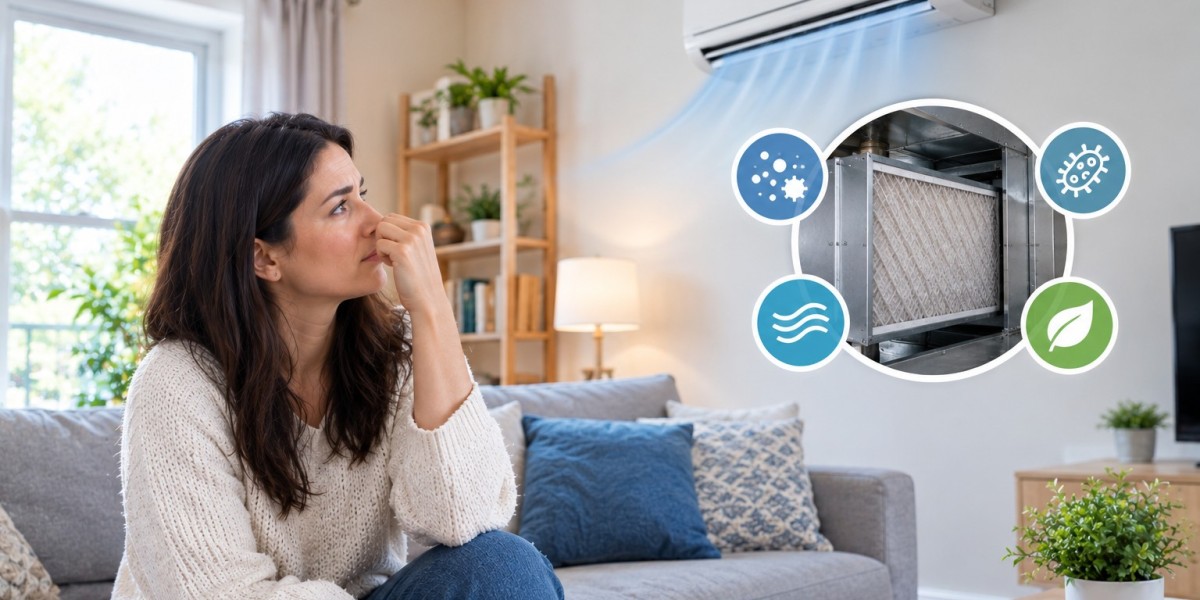

Your heating and cooling system does more than control temperature. It's constantly moving, filtering, and sometimes recirculating the exact air you're breathing all day. When it's working right, you don't notice it at all. When it's not, the effects sneak up on you slowly, through allergies, odors, and in some cases, something a lot more serious hiding underneath the floor.
The Hidden Link Between HVAC and Air Quality
1. Your HVAC Doesn't Just Heat and Cool
Think of your HVAC system as the lungs of your house. Air gets pulled in, filtered, conditioned, and pushed back out through ducts into every room. If any part of that chain breaks down, a dirty filter, a leaky duct, a failing fan, the air quality in your home shifts with it, even if the temperature stays exactly where you set it.
2. What "Bad Air" Actually Means Indoors
Indoor air quality covers more than dust. It includes humidity levels, airborne particles, volatile organic compounds, and yes, gases like radon that enter from the ground rather than the air handler itself. A struggling HVAC system can make several of these worse at once, which is why one musty smell rarely has just one cause.
Signs Your HVAC Is Hurting Your Air Quality
1. Dust, Odors, and Allergy Flare-Ups
If you're dusting more often than you used to, or waking up congested despite no seasonal allergies, your system might be recirculating particles instead of filtering them out. A clogged or outdated filter stops catching the small stuff and starts pushing it right back into your living room.
2. Humidity Swings and Mold Growth
An HVAC system that's oversized, undersized, or simply aging struggles to maintain consistent humidity. Too much moisture creates the perfect environment for mold behind walls and under flooring, especially in basements, which happen to be the same spaces most prone to other air quality issues in St. Louis homes.
Can Your HVAC Make Radon Worse?
1. Negative Pressure and Soil Gas
Here's something most homeowners never connect to their HVAC system: the way your system pressurizes or depressurizes your home can actually influence how much radon gets pulled up from the soil. When an HVAC system creates negative pressure indoors, often from exhaust fans, dryer vents, or an improperly balanced return system, it can increase the vacuum effect that draws soil gas, including radon, up through foundation cracks and sump pits.
2. Why Testing Matters More Than Assuming
You can't eyeball this one. Radon is invisible, odorless, and completely undetectable without proper equipment, which is exactly why Radon Testing St. Louis professionals rely on calibrated monitors rather than guesswork. If your HVAC system has recently been replaced, rebalanced, or upgraded, that's actually a good trigger point to retest, since changes in airflow and pressure can shift radon levels even in a home that tested fine before.
Fixing the Problem at the Source
1. Duct Cleaning and Filter Upgrades
Start simple. Replace filters on a regular schedule, have ducts inspected for leaks or buildup, and consider a higher MERV-rated filter if allergy symptoms are a recurring issue in your household. This won't fix a radon problem, but it clears out one layer of air quality concerns so you can isolate what's actually causing discomfort.
2. Pairing HVAC Fixes With Radon Mitigation
If testing confirms elevated radon, HVAC adjustments alone won't solve it. You need a dedicated system. Radon Mitigation St Louis contractors typically install sub-slab depressurization, a setup that uses a fan and PVC piping to pull radon from beneath the foundation and vent it safely above the roofline, independent of your HVAC system entirely. The two systems work alongside each other rather than competing, your HVAC manages comfort and general air circulation, while the radon system handles the one pollutant HVAC was never built to catch.
Keeping Your System From Causing Future Problems
1. Routine Maintenance Schedules
A twice-yearly HVAC tune-up catches small issues, a weakening fan motor, a cracked duct seal, before they turn into bigger air quality problems. It's a lot like getting an oil change. Skip it long enough and the damage compounds quietly in the background.
2. When to Call a Professional
If you've addressed filters, ducts, and humidity and something still feels wrong with your air, particularly in a basement or ground-floor space, that's your signal to bring in a radon specialist. Radon Testing St. Louis typically takes about 48 hours for a short-term reading, giving you a clear answer instead of ongoing uncertainty about what's actually in your air.
Conclusion
Your HVAC system shapes your indoor air quality far more than most people realize, but it isn't built to catch everything, especially something like radon seeing up from the soil below. Keep your system maintained, replace filters on schedule, and treat persistent air quality issues as a signal to test rather than something to mask with candles or an air freshener. Once you know what's actually in your air, fixing it becomes a lot more simple.
Frequently Asked Questions
1. Can a new HVAC system fix a radon problem?
No. HVAC systems manage comfort and circulation, not soil gas intrusion, so a dedicated mitigation system is still needed.
2. How often should HVAC filters be changed for air quality?
Every 60 to 90 days is standard, although homes with pets or allergies may need more frequent changes.
3. Can HVAC settings increase radon levels?
Yes, negative pressure created by certain HVAC configurations can pull more soil gas, including radon, into the home.
4. How do I know if my air quality issue is HVAC-related or radon-related?
Testing is the only reliable way to tell, since radon is undetectable without proper equipment.
5. Should I retest radon after replacing my HVAC system?
Yes, changes in airflow and pressure can change radon levels even in previously tested homes.