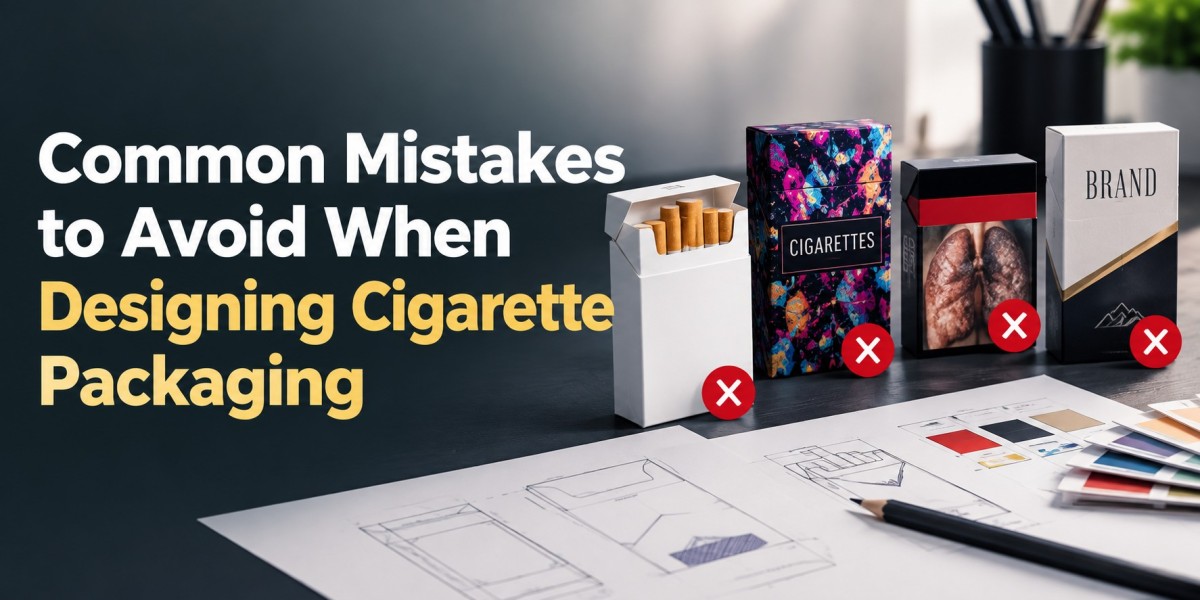

Designing custom cigarette boxes involves a narrower margin for error than most other packaging categories, given the strict regulatory requirements and limited available design space once mandatory content is accounted for. Even well-intentioned design decisions can result in costly reprints, compliance issues, or packaging that fails to achieve its intended brand impression. Understanding the most common mistakes in this process helps brands avoid problems that are often far more expensive to correct after production than to prevent during the design stage.
Underestimating Regulatory Space Requirements
One of the most frequent mistakes brands make is finalizing creative design concepts before fully accounting for how much surface area mandatory health warnings and labeling requirements will actually occupy. Designing without this constraint firmly in mind often results in cramped, awkward layouts once regulatory content is added, forcing last-minute compromises that weaken the overall design. Starting the design process with regulatory space requirements clearly mapped out, rather than treating them as an afterthought, consistently produces more cohesive, polished results.
Overlooking Regional Regulatory Variations
Tobacco packaging regulations vary significantly across different markets, and brands operating or distributing across multiple regions sometimes mistakenly assume a single compliant design will work everywhere. This oversight can lead to costly reprints or, more seriously, distribution delays and compliance penalties in markets where the design doesn't meet local requirements. Confirming region-specific regulatory requirements before finalizing any design intended for multi-market distribution is an essential step that's easy to overlook under production time pressure.
Choosing Materials Without Considering Finishing Compatibility
Some brands select a base material primarily for cost or sustainability reasons without confirming how well it will support their intended finishing techniques. Foil stamping, embossing, and certain coating types perform differently depending on the underlying material, and discovering this mismatch after production has begun can result in disappointing final results that don't match the original design vision. Testing material and finishing compatibility during the design phase, rather than assuming any material will work with any finish, helps avoid this costly disconnect.
Overcrowding the Limited Available Design Space
Given how much surface area regulatory content already occupies, some brands try to compensate by cramming additional graphics, taglines, or design elements into the remaining space, resulting in a cluttered, overwhelming design rather than a polished, premium impression. Restraint tends to serve tobacco packaging design better than density a clean, focused design within the limited available space typically communicates brand quality more effectively than an attempt to fit in every possible design element.
Ignoring Color Consistency Across Production Runs
Color consistency matters significantly for brand recognition, yet some brands underestimate how much color can vary between production runs without precise color matching specifications in place. Relying on standard CMYK printing without PMS color matching for brands with specific, exact color requirements can result in noticeable inconsistency between batches, undermining the reliable, recognizable identity a brand is trying to build. Suppliers such as Custom Cardboard Boxes offer precise PMS color matching specifically to prevent this kind of inconsistency across repeated production runs.
Skipping Physical Proofs Before Full Production
Reviewing a design only in digital form, without requesting a physical proof before committing to a full production run, is a mistake that can lead to significant, costly surprises. Colors, finishes, and structural details often look and feel different once physically produced compared to a digital rendering, and catching discrepancies at the proof stage is far less expensive than discovering them after thousands of units have already been manufactured.
Neglecting Structural Testing for Distribution Conditions
Some brands focus heavily on visual design while giving insufficient attention to how the packaging will actually perform structurally throughout distribution and retail handling. Skipping structural testing under realistic shipping and handling conditions can result in packaging that looks great in initial photos but fails to protect the product adequately once it moves through the actual distribution chain, ultimately undermining the premium impression the design was meant to create.
Failing to Plan for Future Design Updates
Regulatory requirements in the tobacco category continue to evolve, and some brands design packaging without building in any flexibility for future updates, resulting in a more disruptive and costly redesign process whenever regulations change. Working with a manufacturing partner capable of adapting designs efficiently, rather than treating every regulatory update as a complete redesign project, helps brands stay compliant with less operational disruption over time.
Designing With Precision From the Start
Most mistakes in cigarette packaging design trace back to insufficient planning around regulatory constraints, material and finishing compatibility, or production consistency. Brands that address these considerations early in the design process rather than discovering them after production has already begun consistently avoid the costly reprints, compliance issues, and inconsistent results that plague less carefully planned packaging projects. Given how much is at stake both financially and legally in this particular category, treating design planning with appropriate rigor from the outset remains one of the most effective ways to avoid these common and avoidable mistakes.