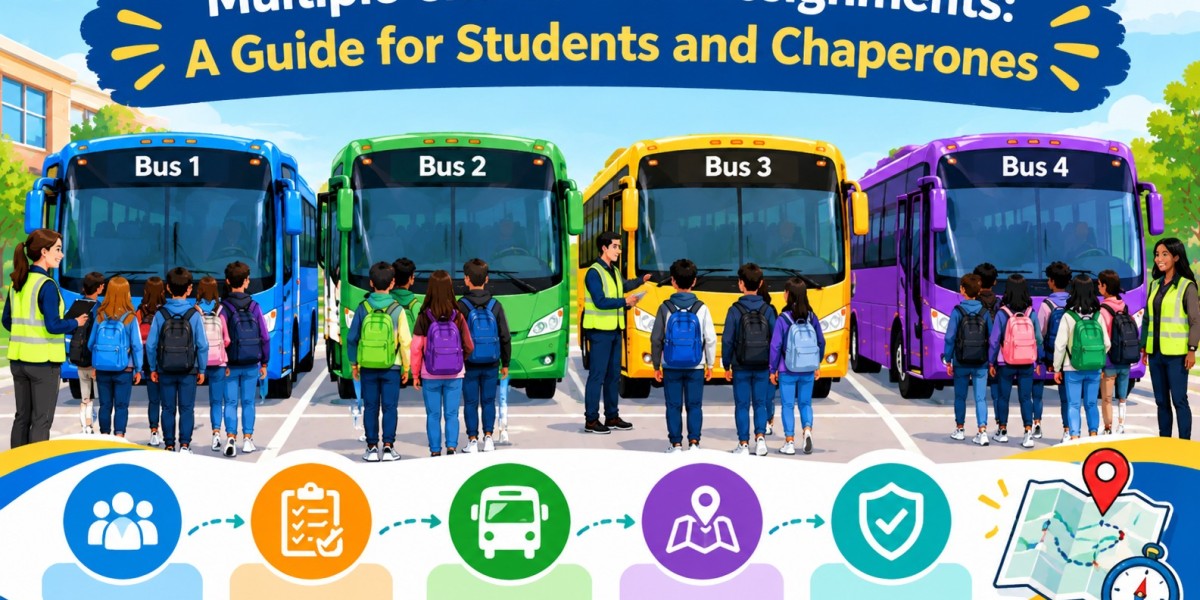

Organizing transportation for a large school group requires careful planning, especially when students need to travel on several charter buses. Teachers and trip coordinators must balance passenger numbers, supervision responsibilities, student needs, and departure schedules while making sure everyone knows where they belong. A well-structured school charter bus assignment plan can help schools coordinate students and chaperones across several vehicles while keeping the trip organized from departure through the return journey.
Begin With an Accurate Passenger Count
Before assigning anyone to a particular bus, schools should determine the total number of students and adults traveling. The count should include students, teachers, administrators, coaches, and approved chaperones.
It is also important to understand the usable seating capacity of each vehicle. The advertised capacity may not always represent the number of seats a school should plan to fill. Accessibility requirements, equipment, luggage, and other trip considerations can affect the practical capacity.
Leaving a small amount of flexibility can make the assignment process easier. If a student needs to move closer to a supervising adult or attendance changes before departure, spare capacity can prevent the entire seating plan from having to be rebuilt.
Select a Primary Grouping Method
Schools should establish a clear method for dividing students before assigning individual names to buses. The appropriate method depends on the type of trip.
For a field trip, grouping students by classroom or grade level can make supervision easier because teachers already know their students. For athletic competitions, keeping team members together may be more practical. Music groups, academic teams, clubs, and other organizations may benefit from traveling with their coaches or advisors.
The itinerary should also influence assignments. If different groups will visit separate locations or follow different schedules, students should be assigned according to their destination and activity.
Having one primary grouping method prevents transportation assignments from becoming unnecessarily complicated.
Assign Chaperones Before Students
A well-organized multi-bus plan should place chaperones before filling the available student seats. Each vehicle should have a designated lead adult who understands their responsibilities.
The bus lead can maintain the roster, coordinate with the driver, conduct passenger checks, communicate with the trip coordinator, and manage approved changes involving that particular group.
Schools should consider adult experience as well as numbers. A teacher familiar with a particular class may be better positioned to supervise that group than an adult who does not regularly work with the students.
The school should also follow its own supervision policies when determining the appropriate student-to-adult ratio. Each bus should meet the applicable requirement rather than relying only on the combined ratio for the entire trip.
Consider Student-Specific Requirements
Some students may need particular transportation arrangements. These considerations should be handled before the remaining students are distributed across buses.
For example, a student with mobility requirements may need an accessible vehicle. A student who requires medication should be assigned to a bus where the responsible adult and necessary supplies are available according to school procedures.
Other students may have documented educational accommodations, seating requirements, or supervision considerations. These needs should be incorporated into the assignment plan without unnecessarily sharing sensitive information with people who do not need it.
Addressing these circumstances early reduces the likelihood of making last-minute changes that could affect multiple buses.
Balance Passenger Loads
After assigning chaperones and students with specific requirements, schools can distribute the remaining students among the available vehicles.
Balanced loads generally make boarding, supervision, and headcounts easier. A bus that is significantly fuller than another may take longer to board and may create uneven responsibilities for chaperones.
However, perfectly equal numbers should not always take priority over logical grouping. Keeping a class, team, or activity group together may be more useful than achieving exactly the same number of students on every vehicle.
If a large group must be divided, it should be separated into clearly defined clusters with specific supervising adults responsible for each section.
Give Each Bus a Clear Identity
Students should be able to identify their assigned bus without confusion. Numbering each vehicle is a simple solution, while adding colors can make identification even easier.
For example, Bus 1 could be represented by blue, Bus 2 by green, and Bus 3 by orange. The same color can be used on student badges, chaperone materials, and signs placed inside the bus windows.
This visual system can be particularly useful at busy destinations. Students returning from an activity can quickly identify their assigned vehicle instead of walking between several similar buses.
If a replacement vehicle is introduced, the transportation coordinator should immediately communicate the updated bus identification to students and staff.
Create Bus-Specific Rosters
A master passenger list is useful for the trip coordinator, but every bus should also have its own roster.
The bus-specific roster should identify the students and adults assigned to that vehicle. Chaperones can use it when students board, after rest stops, following meals, and before beginning the return journey.
Printed copies can provide a useful backup when mobile devices lose power or connectivity becomes unavailable. Schools should update rosters whenever an approved assignment changes so the documents remain consistent with the actual passenger groups.
Different versions of transportation records can also be prepared for different staff members. A driver may only need a passenger count and lead contact, while a bus chaperone may require a more detailed student list.
Establish a Consistent Boarding Process
Student assignments work best when the boarding procedure follows a predictable sequence.
Students can first gather with their assigned class, team, or activity group rather than immediately approaching the buses. The supervising adult can conduct an initial attendance check before leading the group to the assigned vehicle.
Once everyone boards, the bus lead should compare the passengers with the roster. The trip coordinator can then receive confirmation from each bus before the group departs.
The same approach should be used after major stops. Students should know which bus they arrived on and where they are expected to return after lunch, activities, rest stops, or other scheduled breaks.
Keep Students With Their Assigned Buses
Students may want to change buses to sit with friends, but unofficial changes can quickly create inaccurate passenger records.
Schools should communicate before departure that students are expected to remain with their assigned groups unless an authorized adult approves a change.
If a student must move between vehicles, the responsible chaperones should update both rosters and notify the trip coordinator. This ensures that the passenger records continue to reflect who is actually traveling on each bus.
Prepare for Unexpected Changes
A transportation assignment can change even when planning has been thorough. A student may be absent, a chaperone may cancel, or a vehicle may need to be replaced.
Schools should have a simple process for handling these situations. An absent student should be marked accordingly on the appropriate roster. If a chaperone becomes unavailable, an approved replacement can be assigned or groups can be adjusted while maintaining the school's supervision requirements.
If a vehicle breaks down or needs replacement, students should remain with their supervising adults while the transportation provider and trip coordinator determine the next step.
Preparing these procedures in advance allows staff to respond more calmly when unexpected circumstances occur.
Communicate Assignments Before Travel Day
Students and chaperones should receive their transportation assignments before the trip. Students should know their bus number or color, meeting location, departure time, and supervising adult.
Chaperones should receive their responsibilities, roster, schedule, and communication information. Teachers can also review the assignment system with students before departure so there are fewer questions when buses arrive.
Clear communication is especially important for large groups because even a small amount of uncertainty can slow the boarding process.
Conclusion
Managing multiple charter bus assignments for students and chaperones requires a structured approach. Schools should begin by confirming passenger numbers, selecting a logical grouping method, assigning adults, and addressing student-specific transportation needs.
Balanced passenger loads, clear bus identification, accurate rosters, and consistent boarding procedures can help make multi-bus travel easier to coordinate. Maintaining assignments throughout the journey also allows chaperones to conduct reliable headcounts and reduces confusion after stops.
With careful preparation before departure, schools can create an organized transportation system that helps teachers, chaperones, students, and drivers work together throughout the entire trip.