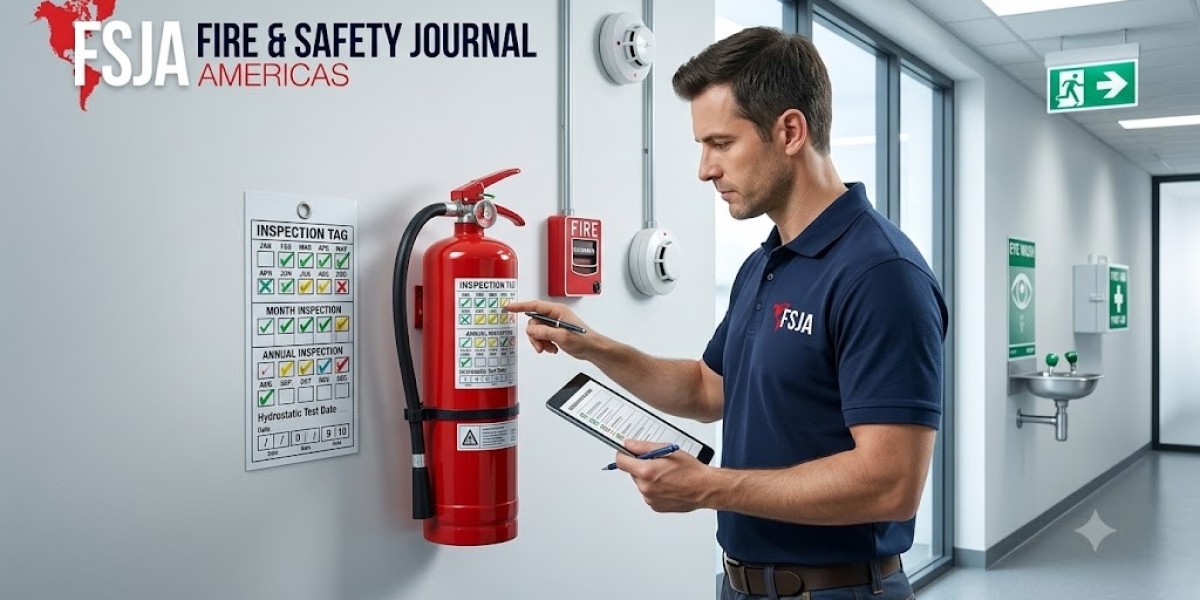

Fire extinguishers are among the most accessible pieces of fire protection equipment in workplaces, commercial buildings, warehouses, schools and public facilities. However, simply having an extinguisher mounted on a wall does not guarantee that it will work when an emergency occurs. Regular inspection and maintenance are necessary to identify problems such as pressure loss, corrosion, physical damage, blocked access and missing safety components.
One of the most common questions asked by building managers and safety professionals is how often do fire extinguishers need to be inspected ? The answer depends on the applicable regulations, the type of extinguisher, the environment and the difference between a visual inspection, annual maintenance and periodic testing.
Why Fire Extinguisher Inspections Matter
A fire can develop rapidly, leaving very little time to locate and operate an extinguisher. If the equipment has lost pressure, been damaged or become inaccessible, the problem may not be discovered until the moment it is needed.
Routine inspections help confirm that extinguishers remain:
- In their designated locations
- Clearly visible and accessible
- Properly charged
- Free from obvious physical damage
- Protected from corrosion and leakage
- Equipped with the correct safety pin and tamper seal
- Properly identified with readable operating instructions
OSHA requires employers covered by its general industry portable extinguisher standard to inspect extinguishers visually every month and to provide an annual maintenance check.
So, How Often Do Fire Extinguishers Need to Be Inspected?
For many workplaces in the United States, the practical baseline is a monthly visual inspection. OSHA's general industry requirements specifically call for portable extinguishers to be visually inspected monthly. An annual maintenance check is also required.
This distinction is important. A monthly inspection is primarily intended to identify visible conditions that could prevent the extinguisher from being available or ready for use. Annual maintenance is a more detailed service activity.
NFPA 10 materials also describe inspection intervals not exceeding 31 days, with provisions for more frequent manual inspection where conditions indicate that it is necessary.
Therefore, when asking how often do fire extinguishers need to be inspected, building owners should not simply look for one universal date. They should consider the applicable fire code, workplace regulations, extinguisher type, manufacturer's instructions and requirements imposed by the authority having jurisdiction.
What Should Be Checked During a Monthly Inspection?
A monthly inspection does not necessarily mean completely dismantling every extinguisher. Instead, it should identify conditions that could affect readiness.
The person performing the inspection should check whether the extinguisher is in its assigned location and can be reached without obstruction. OSHA's guidance also identifies checks for readable instructions, pressure indication, intact pins and seals, physical damage, corrosion and leakage.
The gauge should be examined where the extinguisher has one. A pressure reading outside the manufacturer's acceptable range can indicate a problem requiring service.
The cylinder should also be examined for dents, rust, chemical residue or other deterioration. Even seemingly minor corrosion can become important when equipment is stored in humid or chemically aggressive environments.
Annual Maintenance Is Different
A common mistake is treating the monthly visual inspection as a substitute for professional maintenance.
Annual maintenance is more comprehensive. OSHA requires an annual maintenance check for portable fire extinguishers used in workplaces covered by its standard.
During professional maintenance, the technician may assess components such as the valve assembly, hose, nozzle, pressure condition and extinguisher body. The exact procedures depend on the extinguisher design and applicable requirements.
This means the answer to how often do fire extinguishers need to be inspected should always distinguish between routine inspection and formal maintenance.
When More Frequent Checks May Be Appropriate
Not every environment presents the same level of exposure.
An extinguisher located inside a clean office may experience relatively stable conditions. An extinguisher positioned near an industrial process, loading dock, commercial kitchen or outdoor area may encounter dust, moisture, vibration, temperature changes or corrosive substances.
Higher-risk environments may justify more frequent attention. NFPA materials recognize that daily or weekly inspection can be appropriate where conditions indicate the need for greater frequency.
Businesses should therefore consider environmental conditions rather than treating the calendar as the only factor.
What Happens If an Extinguisher Fails Inspection?
If an extinguisher is damaged, discharged, leaking, improperly pressurized or otherwise unsuitable, it should not simply remain on the wall.
The defective unit should be removed from service and handled according to applicable maintenance procedures. OSHA also requires equivalent protection when portable extinguishers are removed from service for maintenance and recharging.
This is especially important in facilities where a particular extinguisher provides coverage for a defined hazard.
Keep Inspection Records
Documentation is an important part of a fire protection program.
Records can show:
- Inspection dates
- Equipment identification numbers
- Problems discovered
- Corrective actions
- Maintenance dates
- Hydrostatic testing information where applicable
- Technician or inspector details
OSHA requires annual maintenance dates to be recorded and retained for the specified period, while hydrostatic testing also has certification-record requirements.
Digital inspection systems can make this easier by linking individual extinguishers to asset numbers, locations and service histories.
Hydrostatic Testing Is Another Requirement
Inspection and maintenance should not be confused with hydrostatic testing.
Hydrostatic testing evaluates the pressure-bearing integrity of the extinguisher cylinder or shell. The required interval varies according to extinguisher type. Under OSHA's table, some extinguisher types have five-year test intervals while others have 12-year intervals. Certain conditions, such as new corrosion or mechanical damage, can also trigger testing requirements.
Consequently, knowing how often do fire extinguishers need to be inspected is only one part of managing extinguisher compliance.
Common Inspection Mistakes
Several avoidable mistakes can weaken an inspection program.
One is checking only whether the extinguisher is physically present. A unit can be present but have no pressure, a damaged hose or a blocked access path.
Another mistake is failing to check the inspection tag or service history. Equipment with an overdue maintenance requirement should be identified before an emergency occurs.
A third issue is inconsistent documentation. If inspection records are incomplete, managers may not know which units were checked or which defects were previously identified.
A Practical Inspection Routine
A workplace can establish a simple process:
- Identify every extinguisher by location or asset number.
- Inspect each unit according to the required schedule.
- Check accessibility and visibility.
- Examine the gauge, body, pin, seal, hose and nozzle.
- Look for corrosion, leakage or physical damage.
- Record the inspection.
- Remove defective equipment from service.
- Arrange professional maintenance where required.
- Track annual maintenance and periodic testing.
- Review the program regularly.
Industry publications such as Fire and Safety Journal Americas can also help safety professionals stay informed about changes in fire protection practices and technology.
Conclusion
The question how often do fire extinguishers need to be inspected cannot be answered properly by looking at a single inspection date. For many US workplaces, monthly visual inspections and annual maintenance provide the basic framework under OSHA's general industry requirements, while applicable fire codes and extinguisher-specific testing requirements add further obligations.
A strong inspection program combines regular visual checks, professional maintenance, appropriate testing, accurate documentation and prompt corrective action. The objective is simple: ensure that when an extinguisher is needed, it is accessible, correctly positioned and ready to perform.