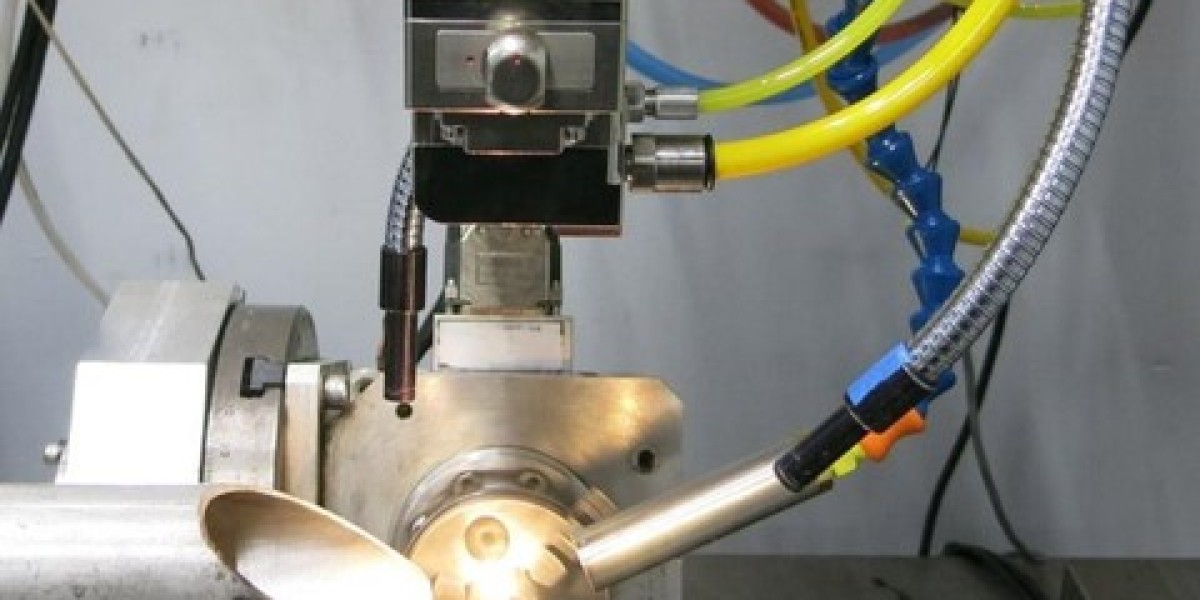

A laser beam welding tool is a modern solution for joining metal components with focused laser energy. Unlike conventional welding methods that use an electric arc or flame, laser welding directs a concentrated beam onto a specific area of the workpiece. The intense energy melts the material at the joint, creating a strong and controlled weld as the molten area cools.
Laser welding technology is increasingly used in manufacturing, automotive production, electronics, machinery, metal fabrication, and other industries where accuracy and consistent results are important. As manufacturers look for faster production processes and cleaner welding methods, laser-based equipment has become an increasingly practical option for different metalworking applications.
What Is a Laser Beam Welding Tool?
A laser beam welding tool is equipment designed to join metal parts by concentrating laser energy onto a selected welding area. The beam can be precisely controlled to produce a narrow and focused heat zone. Depending on the machine design, operators can work with different metals and material thicknesses while adjusting welding parameters according to the application.
Modern laser welding systems may be configured for manual, handheld, automated, or robotic operation. Handheld systems are particularly useful for workshops and production environments where operators need flexibility when working with different components.
How Laser Beam Welding Works
The working principle of laser welding is based on concentrated thermal energy. A laser source generates the beam, which is delivered through an optical system toward the welding point. The focused beam produces high energy density within a small area.
When the beam contacts the metal, the surface absorbs the laser energy and heats rapidly. Depending on the power and welding settings, the material may melt to a controlled depth. Filler wire can also be introduced when the application requires additional material during welding.
Several parameters influence the welding process, including laser power, welding speed, beam focus, material type, joint design, and shielding gas. Proper adjustment of these settings helps maintain consistent weld quality and reduces unnecessary heat transfer to surrounding areas.
Materials Suitable for Laser Welding
Laser welding can be used with many commonly processed metals. Stainless steel is frequently selected for applications requiring clean and durable joints. Carbon steel, aluminum, galvanized materials, titanium, and certain metal alloys can also be processed with suitable laser equipment and correctly configured parameters.
Material preparation remains important regardless of the welding method. Dirt, oil, oxidation, and excessive surface contamination can affect the welding process. Cleaning the surfaces before welding helps establish more consistent contact and improves process stability.
For specialized materials, manufacturers should determine suitable laser power, wavelength, speed, shielding requirements, and joint preparation before beginning full-scale production.
Applications Across Different Industries
The use of a laser beam welding tool extends across numerous industrial environments. In automotive manufacturing, laser welding can be used for body components, structural parts, exhaust components, and other metal assemblies.
In sheet metal fabrication, laser welding is suitable for joining panels, enclosures, cabinets, frames, and precision components. Manufacturers producing stainless steel equipment can use laser systems for applications where controlled heat input and clean weld lines are important.
The technology is also used in machinery manufacturing, electronics, medical equipment production, kitchen equipment, metal furniture, and custom fabrication. Its ability to deliver focused energy makes it useful for components where conventional welding may introduce excessive heat into nearby areas.
Handheld Laser Welding Tools
Handheld laser welding systems have become increasingly popular among workshops because they provide greater freedom of movement. Instead of positioning every component around a fixed welding setup, an operator can guide the welding head along the required joint.
A handheld system can be used for different fabrication tasks, including stainless steel assemblies, metal frames, doors, cabinets, machinery parts, and customized products. Operators can adjust the welding parameters according to material thickness and joint requirements.
Training is still essential. Although laser welding can simplify many fabrication processes, proper handling, protective equipment, workpiece preparation, and parameter selection are necessary for safe and consistent operation.
Precision and Heat Control
One of the important aspects of laser welding is the concentration of energy within a relatively small area. This allows manufacturers to control where heat is applied during the welding process.
Controlled heat input can be especially useful when working with thin sheets or components that may be affected by excessive thermal exposure. A narrow weld area can also help manufacturers maintain the appearance of finished products.
For industries producing visible metal surfaces, controlling the welding path and parameters can help create cleaner-looking joints. Post-welding finishing requirements can vary depending on the material, joint design, and desired appearance.
Choosing the Right Welding System
Selecting the appropriate laser beam welding tool depends on the intended application rather than simply choosing the highest available power. Manufacturers should consider material type, thickness, production volume, joint configuration, welding speed, and operating environment.
For occasional fabrication work, a compact handheld system may be appropriate. High-volume manufacturing operations may require an automated or robotic configuration integrated into a production line.
The laser source is another important consideration. Fiber laser technology is widely used for metal processing because it can deliver a concentrated beam suitable for many industrial welding applications.
Manufacturers should also consider the welding head, cooling system, control interface, shielding gas arrangement, wire-feeding requirements, maintenance support, and availability of replacement components.
Improving Production Workflows
Integrating laser welding into a production workflow requires more than installing a machine. Workpieces should be properly aligned, surfaces should be prepared, and operators should establish repeatable welding parameters.
For businesses producing similar components in large quantities, standardized settings can help maintain consistency between different production batches. Operators can document suitable parameters for particular materials and thicknesses and use those settings as a starting point for future jobs.
Regular maintenance is equally important. Optical components, cooling systems, protective windows, and other machine parts should be inspected according to the manufacturer's maintenance schedule. Keeping the equipment properly maintained helps support stable operation over time.
Safety and Operator Training
Laser welding requires appropriate safety procedures because high-powered laser equipment can create serious hazards. Operators should follow the manufacturer's safety instructions and use the appropriate protective equipment for the specific laser system.
The working area should be designed according to applicable laser safety requirements. Proper ventilation and fume extraction may also be necessary because welding different metals can generate fumes and particles.
Training should cover machine operation, parameter adjustment, workpiece handling, emergency procedures, protective equipment, and routine maintenance. Only properly trained personnel should operate industrial laser welding equipment.
The Growing Role of Laser Welding
As manufacturing continues to demand greater precision and efficient production processes, laser welding technology is becoming relevant to an expanding range of applications. The development of more accessible handheld systems is also allowing smaller workshops to explore laser-based welding.
For manufacturers producing stainless steel products, machinery, sheet metal assemblies, automotive components, and customized metal structures, laser welding can become part of a modern fabrication workflow.
Final Thoughts
A laser beam welding tool provides a modern approach to joining metal components through concentrated laser energy. From handheld fabrication to automated industrial production, laser welding can be adapted to many different manufacturing requirements.