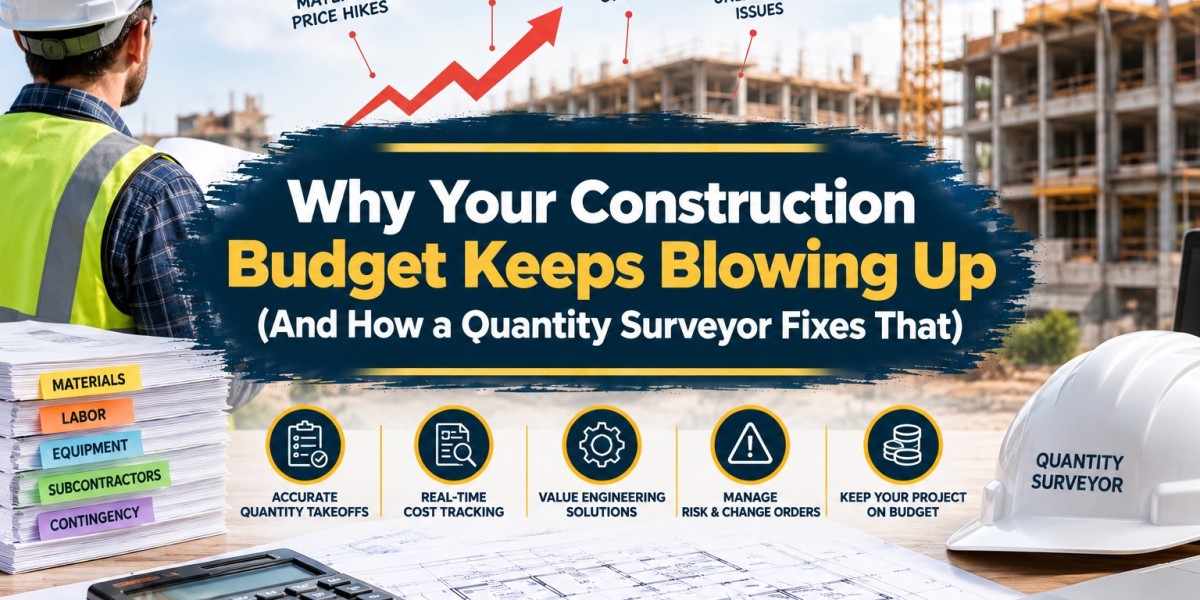

Ask any contractor who's finished a project over budget, and they'll usually tell you the same thing: it wasn't one big mistake. It was a dozen small ones, a material price hike here, a missed measurement there, a change order nobody cost out properly that quietly stacked up until the final number looked nothing like the original estimate.
This is the exact gap that quantity surveying exists to close. And yet, on smaller projects especially, it's often the first role that gets skipped to save money which is a bit like skipping the smoke detector to save on batteries.
The Hidden Cost of Skipping Proper Cost Management
Construction budgets rarely fail because of one catastrophic error. They fail because of accumulated drift. A subcontractor orders slightly more material than needed. A design change gets approved verbally without anyone recalculating the labor hours. A tender goes out with quantities estimated by eye instead of measured properly.
None of these individually sink a project. Together, over the course of a six-month build, they can push costs 15-20% past the original budget and by the time anyone notices, the money's already spent.
What Actually Goes Wrong on Site
Quantities of materials are estimated rather than precisely measured from drawings
Labor and time costs aren't recalculated when the design changes mid-project
Tender documents are vague enough that contractors price the same job differently
Nobody is tracking valuations at each stage, so overspend isn't caught until it's too late
What a Quantity Surveyor Actually Does Day to Day
This is where the role earns its keep. A quantity surveyor isn't just someone who "does the numbers" once at the start. Good cost management runs through the entire lifecycle of a build.
Before Construction Starts
Early involvement is where a QS adds the most value, even though it's the stage most often rushed. This includes preparing accurate cost estimates from drawings, working with the client to set a realistic budget, and putting together tender documents precise enough that every contractor bidding is pricing the exact same scope of work which alone prevents a huge amount of confusion later.
During the Build
Once construction is underway, the job shifts to tracking. This means measuring completed work against what was budgeted, managing variations and changing orders so their cost impact is understood before they're approved (not after), and keeping a running record of where the budget actually stands versus where it was projected to be.
At Project Close
The final account reconciling what was actually spent against what was quoted, resolving any disputed costs, and closing out contracts cleanly is often where projects either end smoothly or end in a legal headache. A properly maintained cost record throughout the build makes this stage almost boring, in the best way.
Why This Role Matters More Than People Assume
There's a common assumption that quantity surveying is only necessary for large commercial developments, office towers, hospitals, stadiums. In reality, math doesn't care about project size. A homeowner doing a major renovation faces the exact same risk of scope creep and price drift as a developer building a shopping center; the numbers are just smaller.
If you're trying to understand the role itself in more depth what the day-to-day work looks like, the qualifications involved, and how the job differs across residential, commercial, and civil projects Universe Estimating has put together a thorough breakdown of what a quantity surveyor actually does, which is a solid starting point whether you're hiring one or considering it as a career path.
The Real Value: Prevention, Not Just Reporting
The easiest way to think about this role is as an early warning system. A good quantity surveyor doesn't just tell you after the fact that you're over budget they catch the moment a decision is about to push costs sideways and flag it before the concrete's poured.
That's a very different kind of value than a spreadsheet update at the end of the month. It's the difference between managing a budget and just watching it happen.
Bringing It Back to the Build
Construction projects rarely fail because people didn't work hard enough. They fail because the financial side wasn't tracked as closely as the physical one. Bringing in proper cost management early rather than treating it as an afterthought once numbers start looking off is consistently one of the cheapest forms of insurance a project can have.