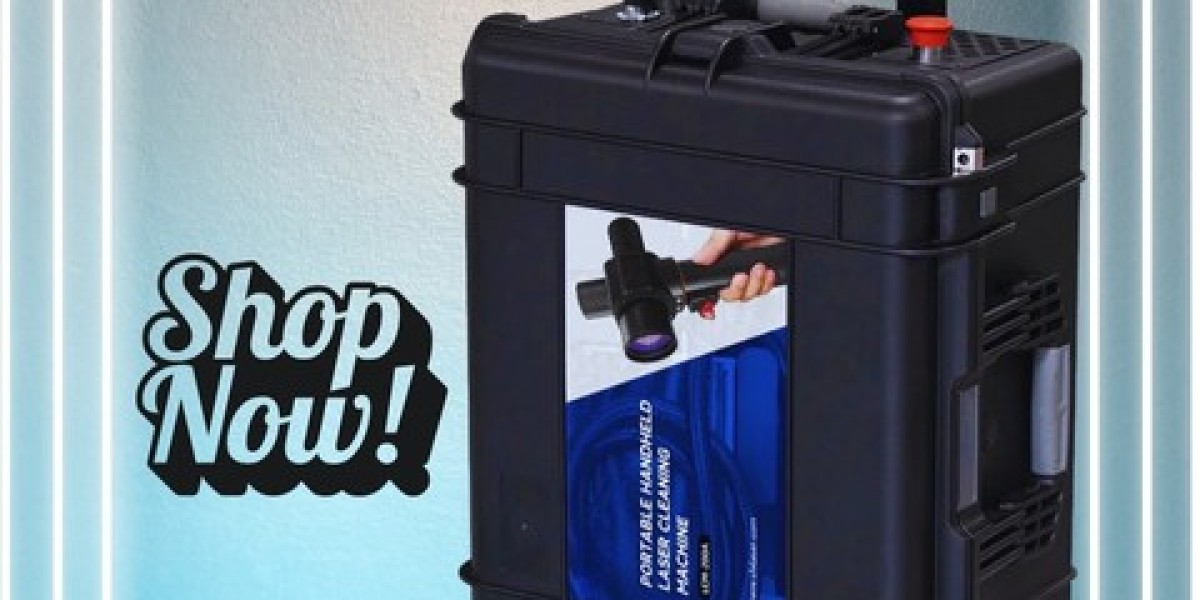

A laser cleaner machine is a modern industrial cleaning system designed to remove unwanted materials from surfaces by using concentrated laser energy. Instead of relying on abrasive tools, chemical solutions, or large quantities of water, laser cleaning uses controlled laser pulses to interact with contaminants and separate them from the underlying material.
This technology is increasingly used in manufacturing, metalworking, automotive production, restoration, maintenance, and fabrication. Depending on the application, a laser cleaner machine can be used to remove rust, paint, oil, grease, oxidation, coatings, and other surface residues from metals and selected materials.
The cleaning process is based on precise energy control. The laser beam is directed toward the contaminated area, where the unwanted layer absorbs the laser energy. The resulting interaction loosens or removes the contamination while the operator controls the cleaning parameters according to the material and application.
How Does Laser Cleaning Work?
Laser cleaning works through a controlled interaction between laser energy and surface contaminants. When the laser beam reaches a dirty or coated surface, the unwanted material absorbs energy differently from the base material. With suitable settings, this difference allows the contamination to be removed while minimizing unnecessary impact on the surface underneath.
Modern machines provide adjustable parameters for different cleaning requirements. Operators can select suitable power, pulse settings, scanning speed, and beam patterns depending on the type and thickness of the material being removed.
For example, removing light oxidation from a metal component may require different settings from removing several layers of industrial paint. This flexibility makes a laser cleaner machine suitable for a broad range of professional cleaning tasks.
Removing Rust from Metal Surfaces
Rust removal is one of the most common applications of industrial laser cleaning. Metal components exposed to moisture and oxygen can develop rust that affects appearance, maintenance, and further processing.
Traditional rust removal methods often involve grinding, blasting, or chemical treatment. Laser cleaning provides another approach by directing controlled energy toward the oxidized layer.
A laser cleaner machine can be used on components such as steel structures, machinery parts, tools, molds, automotive components, and fabricated metal products. After the rust layer has been removed, the surface can be prepared for painting, welding, coating, inspection, or further manufacturing.
The exact cleaning procedure depends on the metal, rust condition, and required surface finish. Proper parameter selection remains important for achieving consistent results.
Laser Paint Removal
Removing old paint can be necessary during equipment refurbishment, maintenance, manufacturing, and restoration. A laser cleaner machine can target paint layers on suitable surfaces without requiring large amounts of chemical stripping agents.
Paint removal applications can include industrial machinery, metal frames, automotive parts, fabricated components, and restoration projects. The operator can adjust the laser parameters according to the coating thickness and the material beneath it.
This controlled process is particularly useful when only selected areas need to be cleaned. It can also help prepare surfaces for repainting, welding, inspection, or repair.
Cleaning Oil, Grease, and Industrial Residues
Industrial equipment can accumulate oil, grease, carbon deposits, and other residues during regular operation. These contaminants can make maintenance more difficult and may interfere with subsequent manufacturing processes.
Laser cleaning can be applied to suitable components where controlled removal of surface contamination is required. A laser cleaner machine allows operators to work on specific areas rather than treating an entire component unnecessarily.
This can be useful in workshops, factories, automotive facilities, and maintenance environments where metal parts need regular preparation before repair or production.
Applications in Manufacturing
Manufacturing facilities often require reliable surface preparation before welding, coating, painting, bonding, or inspection. Contamination left on a component can interfere with these processes.
Laser cleaning can be incorporated into production workflows to prepare selected surfaces before the next manufacturing stage. For example, a manufacturer may use laser cleaning to remove oxidation or residue from a metal component before welding.
The ability to precisely control the cleaning area also makes the technology suitable for components where conventional abrasive cleaning may be difficult to apply consistently.
Handheld Laser Cleaning for Flexible Work
Portable and handheld laser cleaning systems are designed for applications where components cannot easily be moved to a fixed cleaning station. An operator can position the laser cleaning head over the required surface and work across the contaminated area.
Handheld systems are commonly considered for maintenance workshops, fabrication facilities, construction-related equipment, automotive components, and large metal structures.
The practical workflow depends on the machine configuration, laser power, cleaning material, and working environment. Operators should always follow the manufacturer's operating instructions and use appropriate laser safety equipment.
Choosing the Appropriate Cleaning System
Selecting a laser cleaner machine requires consideration of the application rather than simply choosing the highest available power. Different contaminants and materials require different cleaning approaches.
Important considerations include the type of material being cleaned, contaminant thickness, required cleaning speed, working area, operating frequency, portability, and intended production volume.
For occasional workshop maintenance, a portable system may be appropriate. A manufacturer handling large quantities of components may require a system designed for repetitive production work.
It is also important to consider technical support, machine controls, replacement parts, training, and after-sales service when evaluating equipment for long-term use.
Preparing a Surface for Welding and Coating
Surface preparation is an important stage before welding and coating. Rust, oil, paint, oxidation, and other residues can interfere with the consistency of the process.
A laser cleaner machine can be used to prepare selected areas before welding by removing unwanted surface contamination. Similarly, cleaning before coating can provide a more controlled starting surface.
For professional applications, the cleaning parameters should be tested on the actual material before full-scale processing. This helps determine the appropriate settings for the required surface condition.
Maintenance and Industrial Restoration
Industrial equipment can become difficult to maintain when contamination accumulates over time. Components may need to be cleaned before inspection, repair, restoration, or replacement.
Laser cleaning provides a targeted method for working on suitable surfaces. It can be particularly useful for restoring metal components where careful surface treatment is required.
Restoration specialists can also consider laser cleaning for certain historical or valuable metal objects, although every restoration project requires material-specific testing and professional handling to avoid unwanted surface changes.
Safety and Responsible Operation
Laser cleaning equipment requires proper safety procedures because industrial lasers can present serious hazards to eyes and skin. The machine should be operated only by trained personnel who understand the equipment and its safety requirements.
The working area should be managed according to the machine manufacturer's requirements, with appropriate protective equipment, controlled access, ventilation, and suitable laser safety measures.
Operators should also consider fumes or particles generated during the removal of paint, coatings, oil, or other contaminants. Appropriate extraction and workplace controls may be necessary depending on the material being removed.
The Growing Role of Laser Cleaning
As industries continue to look for controlled and efficient methods of surface preparation, laser cleaning technology is becoming an increasingly visible option. Its ability to target specific contaminants makes it relevant to many professional applications.
From rust removal and paint stripping to industrial maintenance and surface preparation, a laser cleaner machine can become part of a modern workshop or manufacturing workflow when correctly selected and operated.
The technology is not limited to one industry. Metal fabrication, automotive manufacturing, machinery maintenance, restoration, construction, and general industrial processing can all have applications where laser-based cleaning is worth evaluating.
Final Thoughts
A laser cleaner machine offers a modern approach to removing rust, paint, oxidation, oil, grease, and other unwanted surface contamination. Its controlled laser process allows businesses to address specific cleaning requirements across a variety of industrial and maintenance applications.