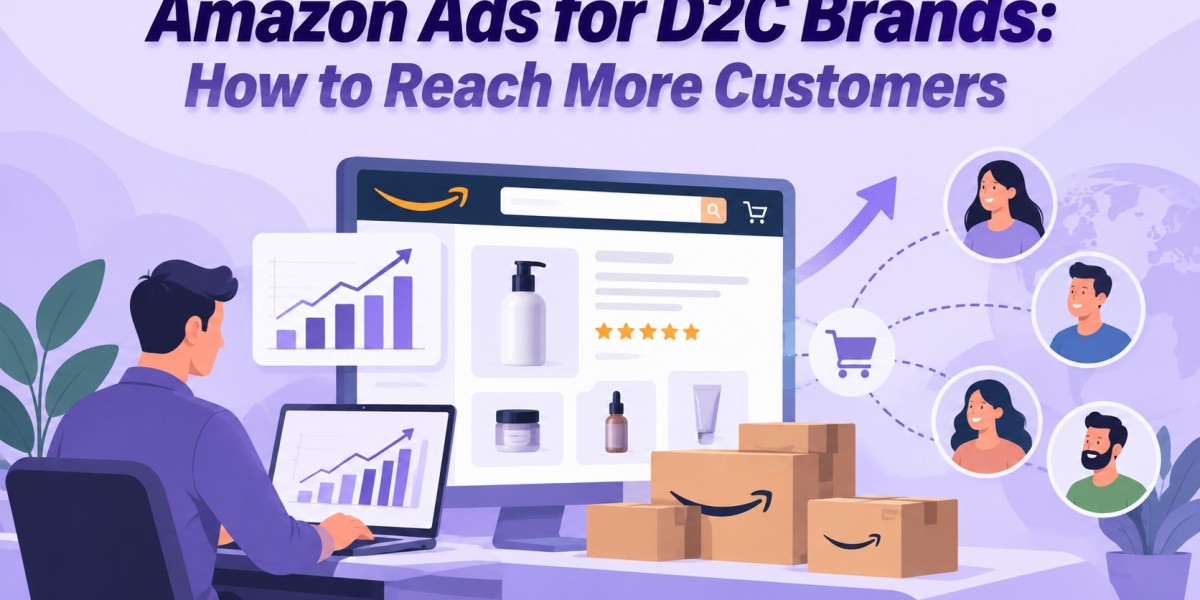

Direct-to-consumer brands live and die by customer acquisition cost. You can build a great product and a slick website, but if nobody finds you, none of that matters. This is where Amazon Ads for D2C brands changes the game. Amazon isn't just a marketplace anymore; it's a search engine millions of shoppers use when they're ready to buy. Advertising there puts your brand in front of people actively looking for solutions, not just scrolling for entertainment.
This article breaks down how Amazon Ads work for D2C businesses, which ad types actually move the needle, and how to structure a campaign that brings in real customers instead of just clicks.
Why D2C Brands Are Turning to Amazon Ads
D2C brands often rely on their own website and social media for sales. That works, but it has a ceiling. Amazon adds a channel where buyer intent is already high.
Shoppers on Amazon are usually further along in the decision-making process. They're comparing products, reading reviews, and ready to hit "buy now." Advertising on this platform means you're meeting demand instead of creating it from scratch.
There's also a trust factor. Many customers feel safer buying from a brand they find on Amazon, thanks to fast shipping, easy returns, and buyer protection. For a D2C brand trying to earn first-time trust, this matters a lot.
Book Your Free Consultation: https://www.imarcamplify.com/contact-us
Main Types of Amazon Ads Worth Using
Amazon offers several ad formats, and picking the right mix depends on your goals.
Sponsored Products are the workhorse of most campaigns. These ads appear directly in search results and product pages, blending in naturally with organic listings. They're ideal for driving direct sales on specific products.
Sponsored Brands show up at the top of search results with your logo, a custom headline, and multiple products. These build brand recognition while still funneling shoppers toward a purchase.
Sponsored Display ads follow shoppers who viewed your product but didn't buy, or target audiences based on interests and shopping behavior. This format works well for retargeting and staying visible after the first visit.
For D2C brands with a bigger budget, Amazon DSP (Demand-Side Platform) allows advertising both on and off Amazon, reaching audiences across the web using Amazon's shopping data.
How to Build a Campaign That Actually Converts
Running Amazon Ads without a clear structure often wastes budget. A few practices make a real difference.
Start with strong product listings before spending on ads. Clear images, honest descriptions, and a handful of genuine reviews all improve conversion rates once traffic arrives.
Use a mix of keyword match types. Broad match helps you discover new search terms, while exact match keeps spend focused on proven winners. Reviewing search term reports weekly helps you spot which keywords are wasting money.
Set separate campaigns for branded and non-branded keywords. This makes it easier to track performance and control budget for each type of intent.
Keep an eye on ACoS (Advertising Cost of Sale), but don't obsess over it alone. A slightly higher ACoS on a new product launch can be worth it if it builds review volume and ranking momentum.
Common Questions D2C Brands Ask
Do small D2C brands really need Amazon Ads, or can organic listings work alone? Organic ranking takes time, especially for new listings with few reviews. Ads give visibility from day one while your organic presence catches up.
How much budget should a D2C brand start with? There's no fixed number, but starting with a modest daily budget on a few core Sponsored Products campaigns lets you gather data before scaling spend.
Is it better to manage Amazon Ads in-house or outsource them? Managing campaigns well takes ongoing testing, bid adjustments, and reporting. Many growing D2C brands choose professional amazon ads services to handle this so their internal team can focus on product and fulfillment.
Mistakes That Quietly Drain Ad Budget
A few habits show up again and again in underperforming accounts. Ignoring negative keywords lets irrelevant searches burn through spend. Skipping regular bid adjustments means ads either overpay for clicks or lose visibility entirely. And treating Amazon Ads as a "set it and forget it" channel almost always leads to declining returns over time.
Reviewing performance weekly, even briefly, catches these issues before they add up.
Getting Expert Help When You Need It
Running ads on Amazon well isn't just about turning campaigns on. It requires ongoing keyword research, bid strategy, and creative testing to keep costs down as competition grows. IMARC Amplify works with D2C brands on exactly this, managing Amazon Ads alongside broader performance marketing efforts so campaigns stay optimized as the account scales.
Final Thoughts
Amazon Ads for D2C brands offer a direct path to shoppers who are ready to buy, not just browse. Success comes from choosing the right ad types, structuring campaigns with intent in mind, and reviewing performance consistently. Whether you manage it in-house or bring in outside help, the brands that treat Amazon Ads as an ongoing strategy, not a one-time setup, are the ones who see it pay off.