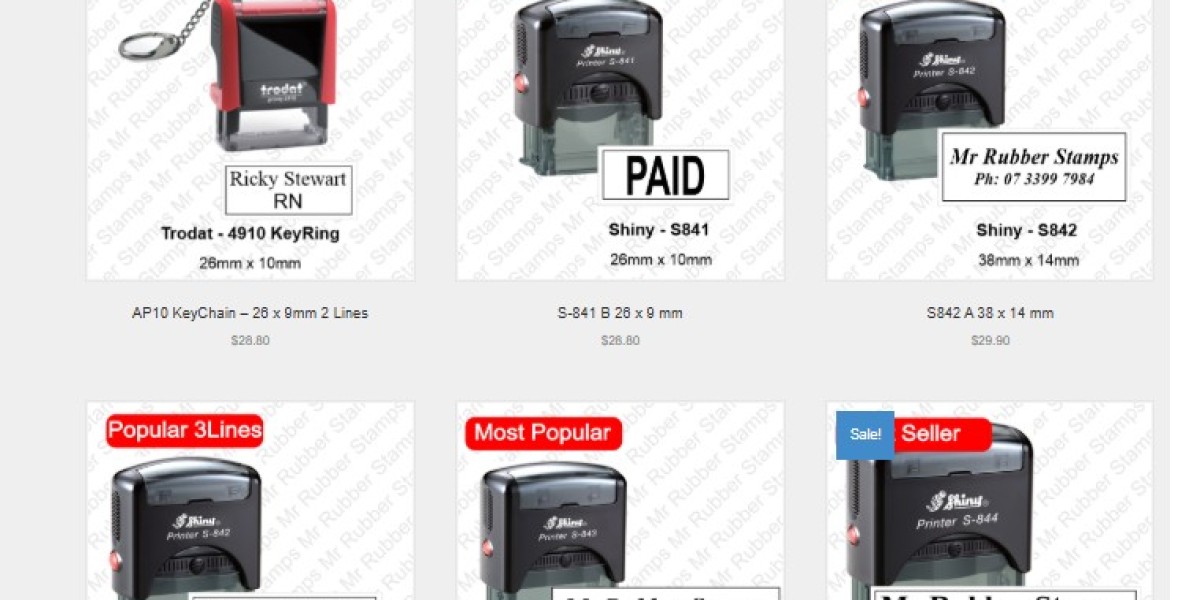

Self Ink Stamps: A Practical Guide to Choosing the Right Stamp
Rubber stamps remain a useful tool for businesses, offices, organisations and individuals that need to mark documents quickly and consistently. From approving paperwork to adding business details, the right stamp can save time while keeping documents neat and professional.
Among the available options, Self Ink Stamps are particularly convenient because the ink pad is built into the stamp mechanism. This makes them simple to use, easy to carry and suitable for repeated stamping throughout the day.
What Are Self Ink Stamps?
Self-inking stamps are rubber stamps with an integrated ink pad inside the stamp body. When the stamp is pressed onto a surface, the stamping mechanism automatically re-inks the rubber die as it returns to its original position.
Unlike traditional stamps that require a separate ink pad, a self-inking design keeps the stamping process contained within one unit.
This can be especially useful when documents need to be stamped frequently. Users can simply press the stamp down and lift it again without having to manually apply ink each time.
Why Choose a Self-Inking Stamp?
A good stamp should make a routine task easier rather than adding another step to it. Self-inking models offer several practical advantages:
- Quick operation: Stamp documents with a simple press.
- Built-in ink pad: No separate ink pad is required for normal use.
- Consistent impressions: The integrated mechanism helps distribute ink evenly.
- Compact design: They are convenient for desks, counters and mobile use.
- Less mess: The enclosed design reduces the chance of accidentally handling a separate ink pad.
- Suitable for frequent use: They can be useful for repetitive administrative tasks.
For workplaces where stamping is part of the daily workflow, convenience can make a noticeable difference.
Common Uses for Self Ink Stamps
Self-inking stamps can be customised for many different purposes. The wording and size can be selected according to what needs to appear on the document.
Common examples include:
Business Information
A stamp can be used to add a business name, address, phone number or other standard information to paperwork.
Approval and Administration
Office teams may use stamps for routine administrative processes, provided the wording accurately reflects the organisation's internal procedures.
Address and Contact Details
A customised stamp can make it easier to add consistent contact information to envelopes, forms and other suitable materials.
Professional or Organisational Identification
Clubs, associations and other organisations may use rubber stamps to identify paperwork or add standard details where appropriate.
Repetitive Office Tasks
Whenever the same information needs to be written repeatedly, a suitable stamp can reduce manual effort and help maintain consistency.
Choosing the Right Stamp Size
The best stamp size depends on the amount of information that needs to be included.
A short business name or simple word may only require a compact stamp. Longer text, multiple lines or additional information may require a larger stamping area.
Before ordering, consider:
- How much text needs to appear
- Whether a logo is required
- The available space on the document
- The desired impression size
- How frequently the stamp will be used
Avoid trying to fit too much information into a very small stamp. Clear, readable text is generally more useful than a crowded impression.
Self-Inking vs Traditional Rubber Stamps
Both self-inking and traditional rubber stamps have their place.
A self-inking stamp is convenient when speed and repeated use are important. Its built-in ink pad makes it ready for stamping without requiring a separate pad.
A traditional rubber stamp is paired with an external ink pad. This approach can provide greater flexibility when different ink colours or specialised inks are required.
The better choice depends on how the stamp will be used. For routine office stamping, a self-inking model can be a practical option. For applications requiring more flexibility, a traditional stamp may be more appropriate.
What Makes a Quality Rubber Stamp?
The quality of a stamp depends on more than its appearance. The rubber die, stamp mechanism, ink and manufacturing process all contribute to the final result.
A well-made stamp should produce a clear impression when used correctly. The text should be legible, lines should remain defined and the mechanism should operate smoothly.
It is also worth considering the materials used to manufacture the stamp and whether the supplier has experience producing different types and sizes of rubber stamps.
Tips for Getting Clear Stamp Impressions
Even a quality stamp can produce poor results if it is used incorrectly. A few simple habits can help maintain clear impressions.
Use the stamp on a reasonably flat surface. Uneven surfaces can affect how evenly the rubber contacts the paper.
Apply steady pressure. Pressing too lightly may result in incomplete text, while excessive force is usually unnecessary.
Keep the stamp clean. Ink residue and dust can gradually affect the clarity of an impression.
Store it appropriately. Keeping the stamp protected when not in use can help prevent unnecessary wear.
Replace the ink pad when necessary. If impressions become consistently faint despite correct use, the internal ink supply may need attention.
Buying Custom Self Ink Stamps
When ordering a customised stamp, accuracy is important. Check the spelling, numbers, punctuation and layout before approving the design.
It is also useful to consider the intended application. A stamp used several times each day may benefit from a durable, ergonomic design, while a stamp used occasionally may have different requirements.
Working with an experienced Australian rubber stamp supplier can also make the ordering process easier, particularly when several stamp types or sizes are needed.
Why Local Production Can Matter
Producing rubber stamps on site can provide greater control over the manufacturing process. It can also make it easier for a supplier to manage customised orders and maintain consistency.
Mr Rubber Stamps is a privately owned and operated Australian rubber stamp business with 20 years of experience producing and supplying rubber stamps to the Australian market. The business uses Trodat and Colop self-inking and traditional stamp products and produces its rubber stamps on site through Quick Ezy Stamps.
The right stamp ultimately depends on the information being stamped, the frequency of use and the level of convenience required. For businesses and individuals looking for a practical option for repetitive stamping, a properly selected self-inking stamp can be a useful addition to everyday stationery.
For more information about Self Ink Stamps, available sizes and related rubber stamp options, visit: https://www.mrrubberstamps.com.au/products/self-inking-stamps
Choosing a suitable stamp is a small decision that can make routine paperwork faster, more consistent and easier to manage.
Frequently Asked Questions
1. What are Self Ink Stamps used for?
Self Ink Stamps are commonly used for repetitive stamping tasks such as adding business information, standard wording, contact details or other customised text to suitable documents and materials.
2. Do self-inking stamps need a separate ink pad?
No. A self-inking stamp has an integrated ink pad inside its mechanism, so a separate pad is not normally needed for everyday use.
3. Are self-inking stamps suitable for businesses?
Yes. They can be useful for businesses that regularly need to apply the same information to documents, forms, envelopes or other appropriate materials.
4. How do I choose the right self-inking stamp size?
Consider the amount of text, the number of lines, whether a logo is needed and the space available on the item being stamped. More information generally requires a larger stamping area.
5. How can I keep a self-inking stamp working properly?
Use it on suitable surfaces, apply steady pressure, keep the stamping area clean and store it appropriately. If impressions become faint, the internal ink supply may need to be replenished or replaced.