
Digital conversations are more than a convenient way to exchange information. They have become places where people experiment with words, invent expressions, and spread new language habits. A phrase can begin in a small online community and eventually appear in messages, comments, videos, and everyday speech. This rapid movement explains why digital communication continues to create language trends that feel fresh, informal, and constantly changing.
Technology Speeds Up Language Change
Before social platforms became common, new expressions often spread through local communities, television, music, books, or face-to-face conversations. Today, digital platforms can move a phrase across large audiences almost instantly. A popular post or video can introduce thousands of people to an unfamiliar expression within a short period.
Once users begin repeating it, the expression may become recognizable far beyond its original community. This creates a cycle in which people discover, copy, adapt, and eventually transform new language.
Creativity Drives New Expressions
Online communication encourages experimentation. People combine words, shorten phrases, change spellings, and create playful expressions that would rarely appear in formal writing. These inventions often develop because users want their messages to feel distinctive.
Humor also plays a major role. A clever phrase can become popular because it captures a familiar feeling in a memorable way. When others repeat it, the expression gains recognition and may eventually become part of ordinary conversation.
Communities Give Words New Life
Every online community has its own habits. Gamers, students, hobby groups, fandoms, and social media circles may develop vocabulary that reflects their shared interests. Members understand these expressions because they encounter them repeatedly in familiar situations.
People outside the community may initially find the language confusing. However, repeated exposure can make unfamiliar terms easier to understand. Sometimes an expression eventually leaves its original group and becomes common among a much wider audience.
Shortcuts Reflect Modern Habits
The popularity of abbreviations is closely connected to the speed of digital communication. People often send messages while doing something else, so concise language feels practical. Short expressions allow users to respond quickly without writing complete sentences every time.
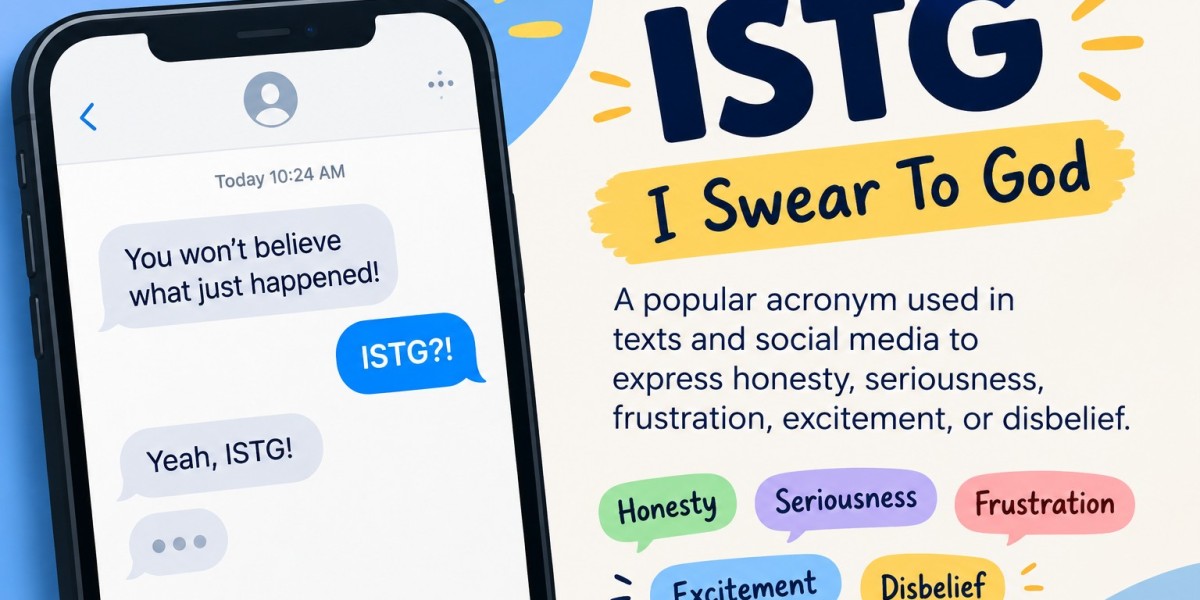
An abbreviation can also communicate attitude. Someone learning about istg meaning may notice how the expression can add emphasis to a casual statement and signal a strong reaction. Its meaning becomes clearer when readers consider the surrounding conversation rather than examining the letters alone.
Trends Change With Audience
Language trends rarely remain exactly the same. An expression may start with one group, become popular among younger users, and later be adopted by broader audiences. As more people use it, its tone or meaning can shift.
Some expressions disappear quickly because they are connected to a temporary joke or trend. Others survive because they are useful, memorable, or easy to incorporate into ordinary speech. Popularity therefore depends on more than novelty.
Understanding Context Is Essential
Because online language changes quickly, context is often more reliable than memorizing definitions. Readers can examine the topic, surrounding messages, tone, and relationship between participants to understand unfamiliar expressions.
This approach is especially useful when one abbreviation has several possible meanings. Instead of assuming that a familiar definition always applies, readers can look at how the term is being used in that particular conversation.
Everyday Speech Feels the Impact
Digital language does not always stay online. Expressions that become popular in messages and social media can eventually appear in spoken conversations, school discussions, and casual interactions. People carry vocabulary between different parts of their lives.
This movement shows that online communication and everyday speech are increasingly connected. The boundary between internet language and ordinary conversation is less fixed than it once was.
The Future of Language Trends
New platforms will continue influencing how people communicate. As communication tools change, users will find new ways to shorten messages, express reactions, and create shared references. Some trends will disappear almost immediately, while others may become lasting parts of language.
What makes digital language interesting is its constant movement. Users are not simply receiving language from others; they are actively shaping it through everyday communication.
Conclusion
Digital conversations continue creating language trends because they combine speed, creativity, community, and global connection. New expressions can emerge quickly, travel across audiences, and change meaning as different people adopt them. While some trends are temporary, others become familiar parts of everyday speech. Paying attention to context and usage makes these changes easier to understand. As people continue communicating through evolving digital platforms, language will keep adapting alongside them, reflecting the creativity and habits of the communities that use it.